
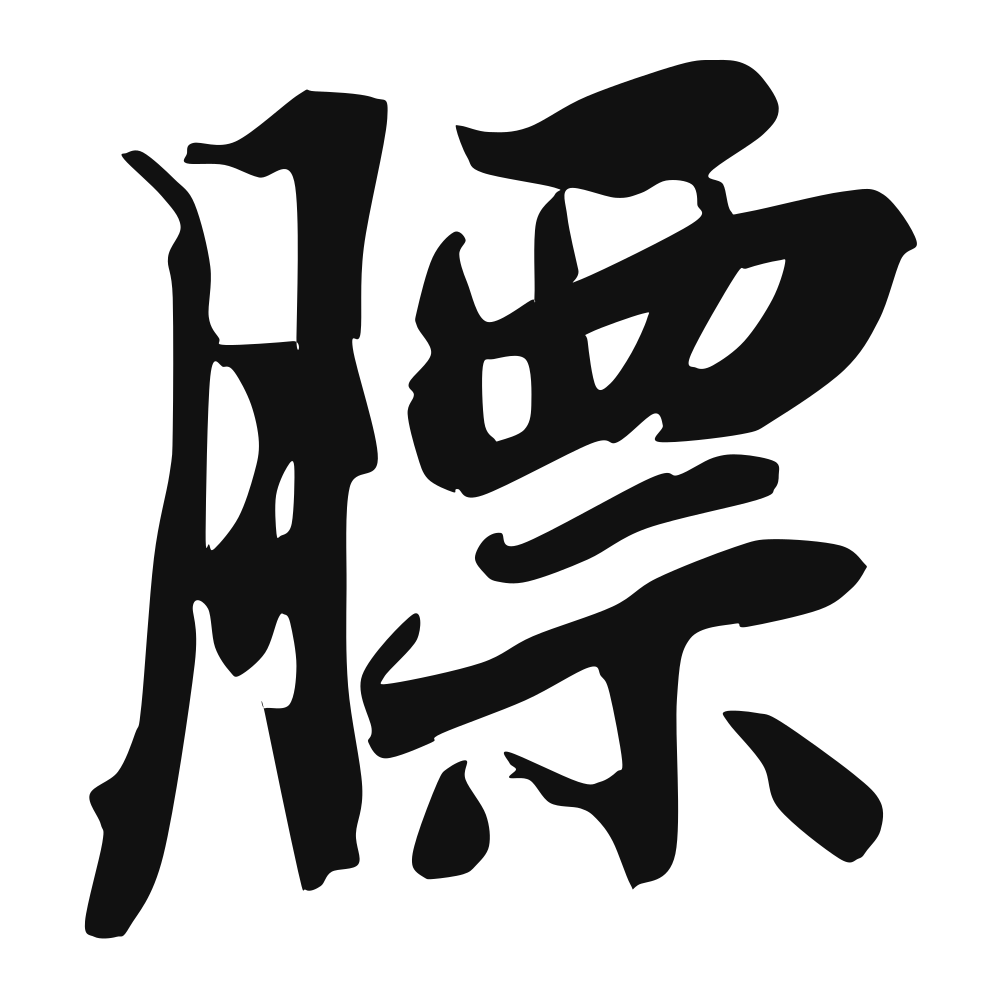
膘
(usu. of livestock) fat
Closest English meanings
fat (of animals)
The Calligrapher — Lù Jiǎnzhī 陆柬之
Tang calligrapher and nephew of Yu Shinan; his running-script 'Essay on Literature' survives
Tang calligrapher (), master of running script — known for 《文赋》. Tang dynasty
Cultural Story
膘 is the fat laid down under an animal's hide — the herdsman's ledger of the year. Nomad and farmer alike watched livestock 上膘, gain weight, on autumn pasture, and feared the winter's 掉膘, when hay ran thin and animals wasted. A beast of good 膘情, prime fat condition, fetched double at market; lean meant loss, a winter of anxiety.
Common words & phrases
- 肥膘 fat (on meat)
- 上膘 gain weight (animal)
- 掉膘 lose weight (animal)
- 长膘 fatten
- 膘情 fat condition
Read the story behind the character
On the ranch your uncle inspects each ox's 肥膘, the layer of fat on the meat, running a thumb along the ribs. Autumn grass means the herd will 长膘, fatten nicely, before the frost; a lean spring meant every animal 掉膘, losing weight fast. At the livestock fair he studies each animal's 膘情, its fat condition, before bidding.
Why this character belongs on skin
Out on the steppe, herders speak of a horse by this single word. Biāo is the fat that lies along a working animal's back and ribs—not vanity, not excess, but fuel: the reserve that carries a mount through winter grass and long campaigns. A horse of good biāo gleams. Its strength is stored where the eye can read it, and horsemen run a hand along the flank like bankers counting notes. There is a wisdom here the gym has forgotten. The body is not a sculpture to be starved toward abstraction; it is a vessel built to endure, and endurance has always required substance. To wear this character is to honor the flesh that sees you through. Not softness. Reserve. The quiet shine of an animal ready for weather.
Own this character
Purchase delivers the original SVG of this glyph, brushed by Lù Jiǎnzhī 陆柬之, ready to place on skin, paper, or screen.