
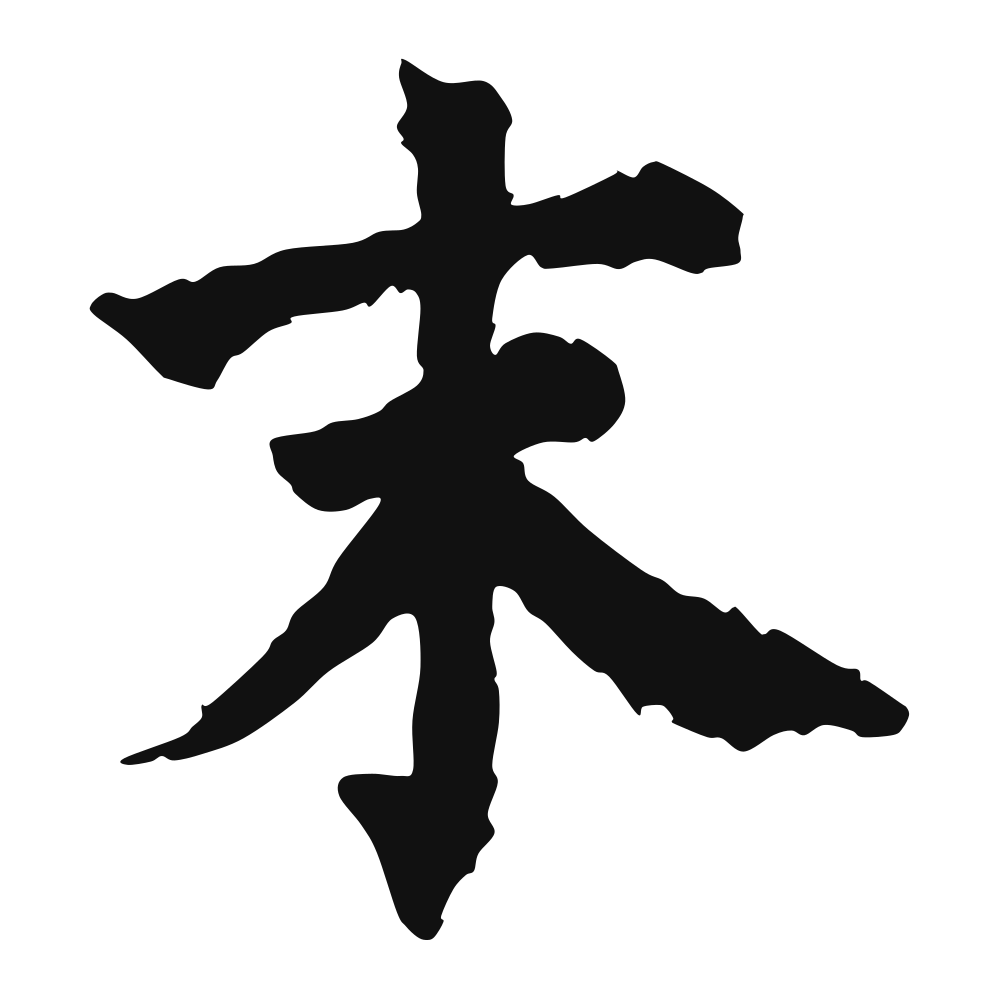
末
tip; end; final stage; latter part; inessential detail; powder; dust; opera role of old man
Closest English meanings
end·tip·last·powder
The Calligrapher — Lù Yóu 陆游
Song poet of prolific, vigorous running and cursive script.
Song calligrapher (), master of running script/cursive script — known for 《自书诗卷》. Song dynasty
Cultural Story
末 is 木 with a stroke at the top — the tip of the tree, the far small end of a thing. The Mohists and Confucians debated 本末, root and branch, which matters more. In old drama the 末 was a role, the supporting man. The character always means the tail end, the part farthest from where a tree's strength begins.
Common words & phrases
- 末尾 end · tail · conclusion
- 周末 weekend
- 期末 end of term · final period
- 末日 doomsday · end of the world
- 末了 finally · in the end · lastly
- 粉末 powder · dust
Read the story behind the character
末 marks the endings of schedules: 周末 is the two days everyone waits for, 期末 the pile of exams in June. 末日 is the apocalypse of a disaster film; 粉末 is what the baker sifts over a cake. 末了 is the word a grandmother uses before her last sentence. The character is the period at the end.
Why this character belongs on skin
末 is the tip of a tree — the uppermost branch, the far end of things, the last. Its mirror is 本, the root; together they teach that everything has a beginning and a falling-away. The Daoists saw the end not as failure but as completion, the leaf returning to the ground it rose from. To carry 末 is to stop fearing the finish. It is a mark for those who have made peace with mortality, who know that the sweetness of an evening is the fact that it ends. Place it where your own ending will one day come — the wrist, the chest — as a quiet pact: I will not pretend forever. I will arrive at my last line with eyes open. The character is small. Its honesty is not.
Own this character
Purchase delivers the original SVG of this glyph, brushed by Lù Yóu 陆游, ready to place on skin, paper, or screen.