
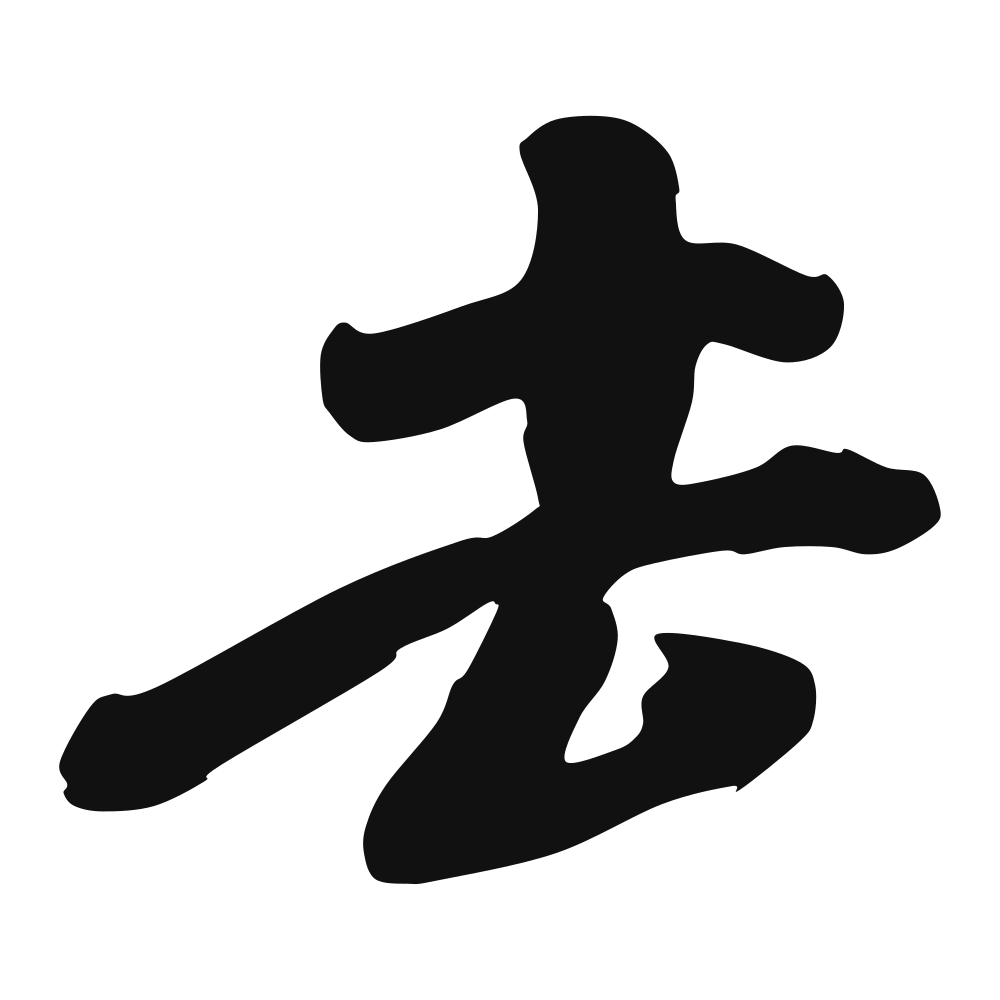
去
to go; to go to (a place); (of a time etc) last; just passed; to send; to remove; to get rid of; to reduce; to be apart from in space or time; to die (euphemism); to play (a part); (when used either before or after a verb) to go in order to do sth; (after a verb of motion indicates movement away from the speaker); (used after certain verbs to indicate detachment or separation)
Closest English meanings
go·leave·remove·past
The Calligrapher — Mǐ Fú 米芾
Song eccentric genius of dynamic, 'flying' running script.
Song calligrapher (1051–1107), master of running script — Song eccentric genius ('crazy Zhang, idiot Mi') whose running script alternates discipline with glee. Song dynasty
Cultural Story
去 once meant to leave rather than to go toward. Tao Yuanming wrote "return, for the fields grow wild" -- 归去来兮. The general Huo Qubing took his name from "remove illness", 去病, a wish cast at a child. The word carried departure and cleansing both: a place left behind, a trouble taken away. Its direction has since reversed in speech.
Common words & phrases
- 去年 last year
- 去掉 remove · get rid of
- 出去 go out
- 过去 past · go by
- 失去 lose
- 回去 return · go back
Read the story behind the character
Someone notes the trip was 去年; a stain is 去掉 with a damp cloth. A phone is 失去 on the subway and the account is frozen. Friends 出去 for noodles; the meeting 过去 without a decision. The word now points ahead as often as back -- to a year gone, a thing removed, a place left, a loss endured. It measures both departure and disappearance in daily speech.
Why this character belongs on skin
去 is to go, to leave, to depart — the foot lifting, the distance opening between you and what was. Its old form showed a person leaving a place, and the character has always carried both loss and liberation: you cannot depart without leaving something behind. The Daoist walks on; the exile walks away; the lover closes the door. To wear 去 is to honor movement itself, the courage to become absent, to trust there is somewhere else worth arriving at. It is a mark for the restless, the ones who know stillness can be a cage. Place it where you would leave from — the ankle, the small of the back, the place that turns toward the road. Let it say you are not finished where you stand. You are only passing through, and the leaving is its own kind of arriving.
Own this character
Purchase delivers the original SVG of this glyph, brushed by Mǐ Fú 米芾, ready to place on skin, paper, or screen.