
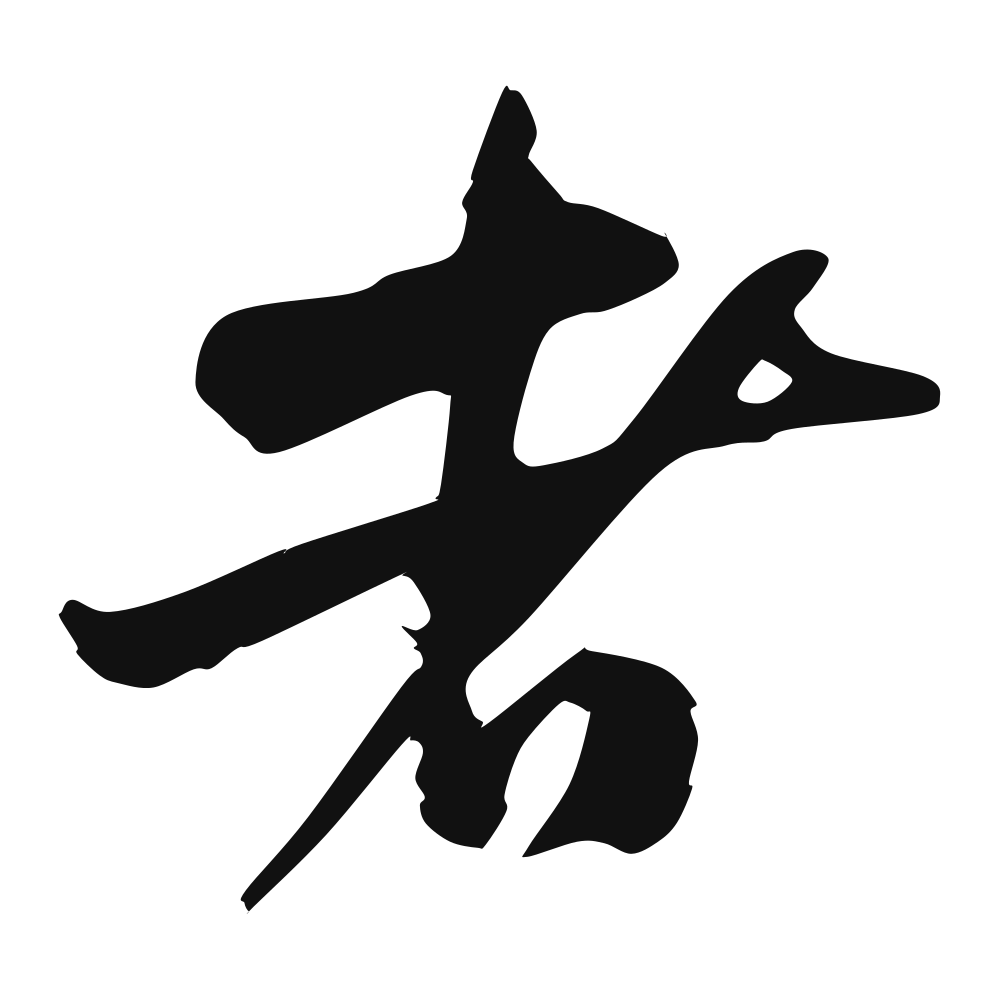
者
(after a verb or adjective) one who (is) ...; (after a noun) person involved in ...; -er; -ist; (used after a number or 後|后[hou4] or 前[qian2] to refer to sth mentioned previously); (used after a term, to mark a pause before defining the term); (old) (used at the end of a command); (old) this
Closest English meanings
person who·one who·-er·he who·the one
The Calligrapher — Mǐ Fú 米芾
Song eccentric genius of dynamic, 'flying' running script.
Song calligrapher (1051–1107), master of running script — Song eccentric genius ('crazy Zhang, idiot Mi') whose running script alternates discipline with glee. Song dynasty
Cultural Story
者 is the great nominalizer of classical Chinese — a grammatical pivot more than a picture; scholars debate whether its oldest form showed a decorated vessel or a tally of words on documents. Confucius used it constantly: the knowing delight in water, the benevolent in mountains — 知者 and 仁者 — turning any verb into a person.
Common words & phrases
- 作者 author · writer · composer
- 读者 reader · peruser · readership
- 学者 scholar · learned person · academic
- 老者 old person · elder · senior
- 前者 former · the former · previous one
- 记者 journalist · reporter · correspondent
Read the story behind the character
The suffix still manufactures people from actions. A novel's 作者 (author, writer, composer) signs the dedication; its 读者 (reader, peruser, readership) write angry letters; reporters chase 学者 (scholar, learned person, academic) for quotes while a 记者 (journalist, reporter, correspondent) waits outside the door. The 前者 (former, the former, previous one) of the two plans is cheaper, and the 老者 (old person, elder, senior) beside you just wants a seat.
Own this character
Purchase delivers the original SVG of this glyph, brushed by Mǐ Fú 米芾, ready to place on skin, paper, or screen.