
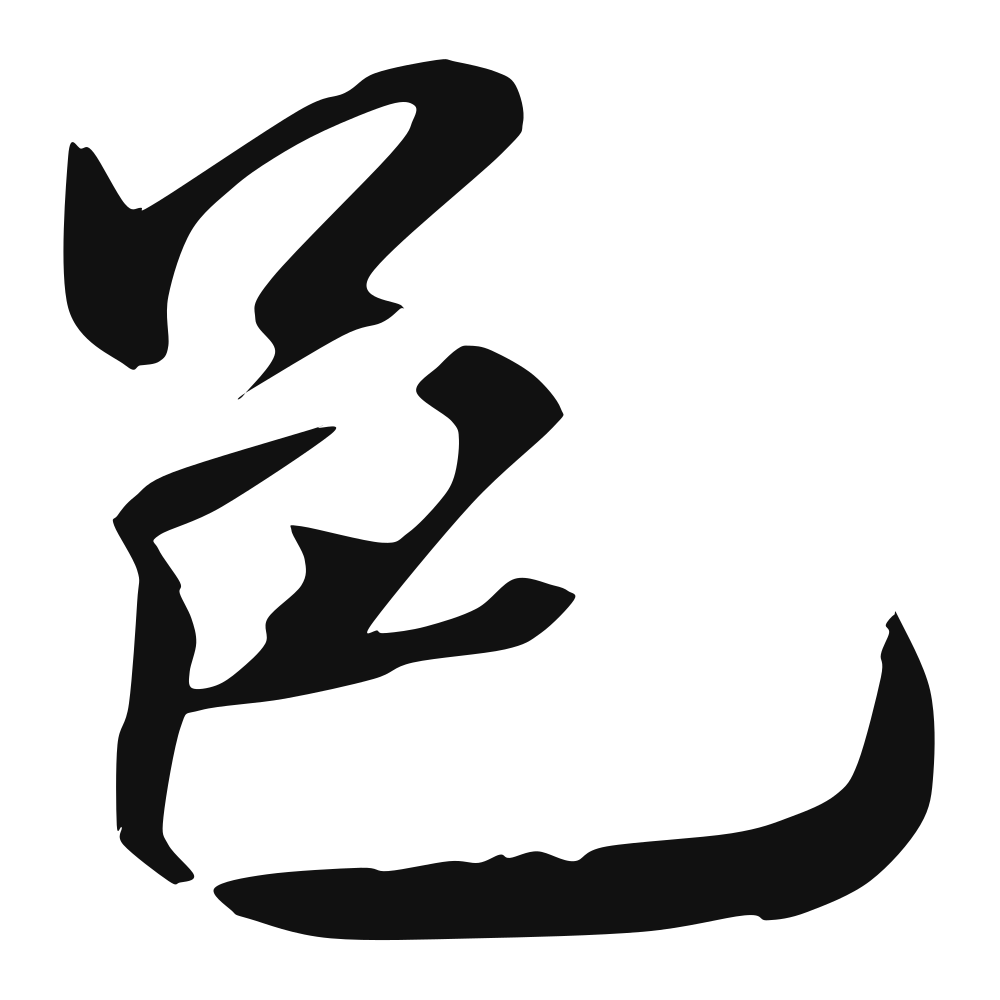
The Calligrapher — Mǐ Fú 米芾
Song eccentric genius of dynamic, 'flying' running script.
Song calligrapher (1051–1107), master of running script — Song eccentric genius ('crazy Zhang, idiot Mi') whose running script alternates discipline with glee. Song dynasty
Cultural Story
Confucius said, in the Analects, 十室之邑,必有忠信如丘者焉 — even a town of ten households holds someone as true as I. The character 邑 — town, walled settlement — named the smallest human cluster the sage would honour. 采邑 were the fiefs lords granted, 都邑 the great capitals, and 邑人 the townsfolk who worked the same narrow streets.
Common words & phrases
- 城邑 city · town
- 都邑 capital city
- 采邑 fief · manor
- 邑人 townsfolk
Read the story behind the character
A heritage guidebook describes the old 城邑 walled town and the 都邑 that once ruled the plain. At the county museum a placard explains how a noble's 采邑 became the modern district, and a local 邑人 — a townsfolk born inside the gates — leads visitors through the lanes. The character still names any settled place where people have lived for centuries.
Why this character belongs on skin
Before nations, there was the walled settlement—the 邑, the town the ancients raised against the wild, the fief a lord held and a people called home. 囗 around a mound, the human claim staked on raw earth. The West built its cities on this same instinct and forgot the intimacy of the small fortified home; the Chinese kept 邑 as the root of every word for country and capital. To wear 邑 is to honor the belonging older than flags—the village that knew your name, the wall you helped raise, the place that made you plural. It is citizenship as hearth, not bureaucracy. The mark is for the exiled and the rooted alike, everyone carrying a hometown under the skin. Carry it where the heart sits, the original town. A tattoo that says: I came from somewhere walled and warm, and I carry its boundary still.
Own this character
Purchase delivers the original SVG of this glyph, brushed by Mǐ Fú 米芾, ready to place on skin, paper, or screen.