
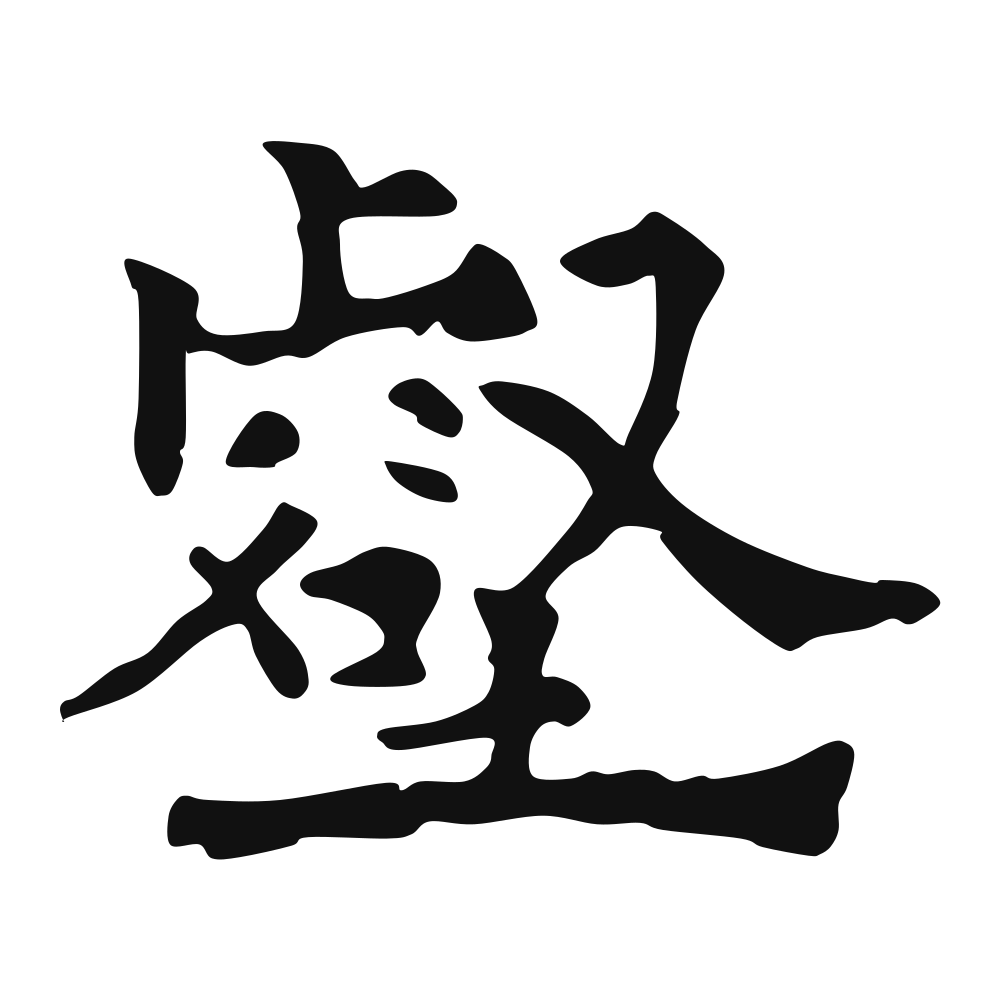
壑
gully; ravine; Taiwan pr. [huo4]
Closest English meanings
ravine·gully
The Calligrapher — Ōuyáng Tōng 欧阳通
Tang regular-script master known for powerful, square strokes.
Tang calligrapher (?–691), master of regular script — known for 《道因法师碑》. Tang dynasty
Cultural Story
壑 is a ravine, the gash cut in the land. The 庄子 (Zhuangzi) speaks of 沟壑 as the humble resting place of the poor dead; 丘壑 (hills and ravines) became a painter's ideal of natural composition. 欲壑 (a ravine of desire) warns of a greed that no amount of filling can satisfy. The character is the earth opened and never quite closed.
Common words & phrases
- 沟壑 ravine · gully
- 丘壑 hills and ravines
- 欲壑 insatiable greed
Read the story behind the character
Hikers cross a 沟壑 (gully) on a mountain trail with a walking pole; landscape apps flag 丘壑 for plein-air painters. The phrase 欲壑 (insatiable greed) headlines corruption cases in the papers. Travel vlogs film a 壑 bridged by a single rope for the thrill. The word keeps its old shape — a cut in the ground, or in a character, that swallows whatever is poured in.
Own this character
Purchase delivers the original SVG of this glyph, brushed by Ōuyáng Tōng 欧阳通, ready to place on skin, paper, or screen.