
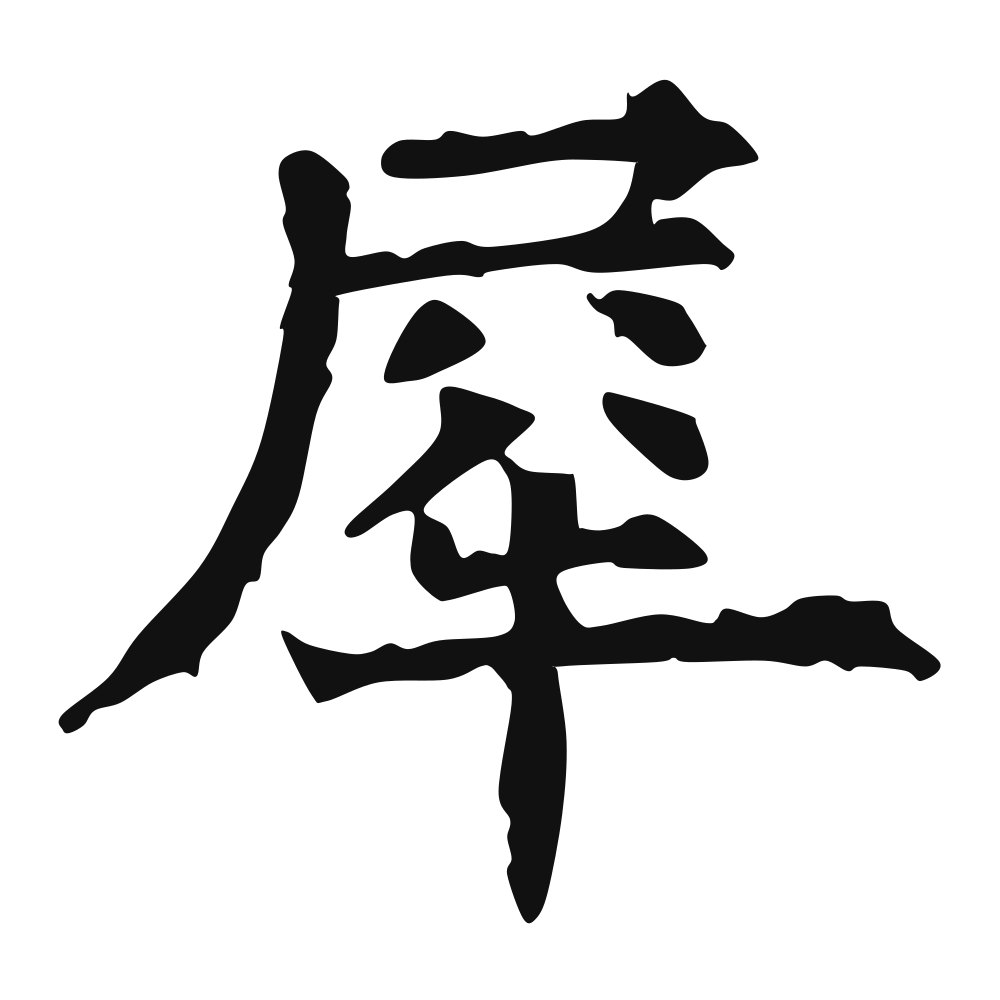
The Calligrapher — Ōuyáng Tōng 欧阳通
Tang regular-script master known for powerful, square strokes.
Tang calligrapher (?–691), master of regular script — known for 《道因法师碑》. Tang dynasty
Cultural Story
犀 is the rhinoceros, whose horn was prized for cups and medicine. The Shijing and Zhanguoce mention 犀甲 rhino-armor for warriors; the 犀牛 roamed the southern hills. By metaphor, a mind 犀利 sharp and incisive cut like the horn. The char is the great beast of the south and the edge, of armor, of wit, and of clear sight.
Common words & phrases
- 犀牛 rhinoceros
- 犀利 sharp · incisive · keen
- 犀角 rhino horn
Read the story behind the character
The 犀牛 rhinoceros is a zoo favorite and a conservation cause; traditional medicine once craved 犀角 rhino horn, now banned. We praise a 犀利 sharp, incisive critic who cuts to the truth, and a 犀利 comment that lands exactly right. From the endangered 犀牛 to a writer's 犀利 pen, the char still means power and a keen, unbearable edge.
Why this character belongs on skin
The ox radical crowned with a heavy horn—犀, the rhinoceros, whose single eye and armor hide gave Chinese medicine its prized horn and the language its sharpest metaphor: 犀利, insight that pierces hide and pretense alike. Zhuangzi wrote of the rhinoceros that cannot be penned; it lives by being ungraspable, its bulk a form of freedom. There is romance in that kind of weight—the animal that does not flee, does not perform, simply is, horn first. You know people like this: blunt, certain, oddly gentle with the few they allow close. Ink 犀 and borrow the hide. Let the world learn your density. Perception like a horn, patience like a boulder, and the calm of something that has stopped being prey.
Own this character
Purchase delivers the original SVG of this glyph, brushed by Ōuyáng Tōng 欧阳通, ready to place on skin, paper, or screen.