
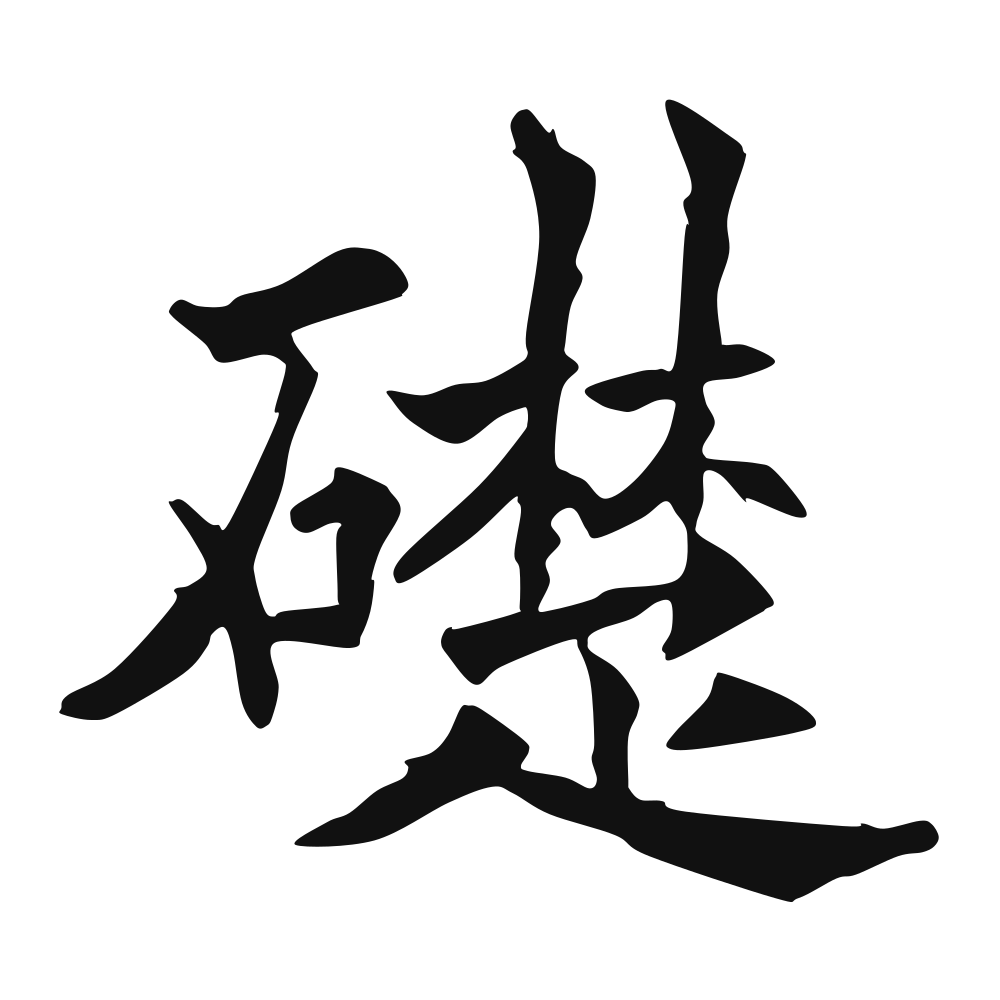
The Calligrapher — Ōuyáng Tōng 欧阳通
Tang regular-script master known for powerful, square strokes.
Tang calligrapher (?–691), master of regular script — known for 《道因法师碑》. Tang dynasty
Cultural Story
础 is the stone beneath the wooden pillar — invisible until the house leans. Song essayist Su Xun turned it into weather wisdom: 月晕而风,础润而雨 — a haloed moon heralds wind, and when the base stones sweat, rain is coming. Building science and proverb shared one observation: foundations announce futures before the sky does.
Common words & phrases
- 基础 foundation · basis · base
- 础石 foundation stone · plinth
Read the story behind the character
Foundations are a favorite metaphor of study and state. Teachers insist on 基础 (foundation, basis) before the hard exam questions; economists track 基础设施 (infrastructure) spending; beginners grind through 基础语法. In the building itself, inspectors still check the 础石 (foundation stone, plinth) for settling — and on damp mornings the old rain forecast still works.
Why this character belongs on skin
Beneath every pillar that has stood a thousand years is the stone that no one sees. The character is the plinth, the foundation block laid in the earth to bear the weight of the hall above — literal ground, the unsung support. The Confucians spoke of establishing oneself on a firm root before reaching toward heaven; the base is where that root meets the world. A building is praised for its roof, but it is the foundation that holds through the earthquake and the flood. To mark the skin with this word is to claim the role of the quiet load-bearer, the one who does not need the photograph as long as the structure stands. It is an ink of steadiness, a vow of reliability worn where only you know it rests. Let it be the stone under your own life's column — unseen, unshaken, the reason everything you love stays upright.
Own this character
Purchase delivers the original SVG of this glyph, brushed by Ōuyáng Tōng 欧阳通, ready to place on skin, paper, or screen.