
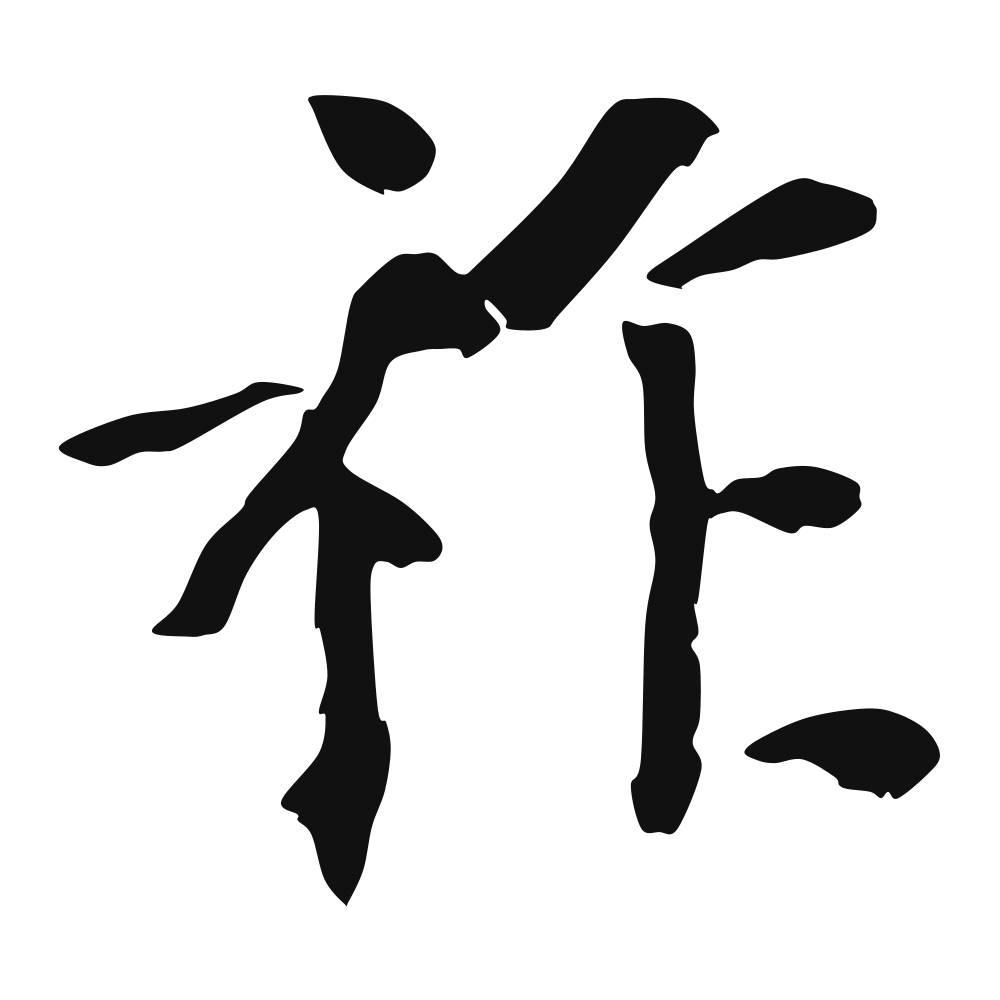
祚
blessing; the throne
Closest English meanings
blessing·throne·fortune
The Calligrapher — Ōuyáng Tōng 欧阳通
Tang regular-script master known for powerful, square strokes.
Tang calligrapher (?–691), master of regular script — known for 《道因法师碑》. Tang dynasty
Cultural Story
祚 is fortune as a throne sees it: Heaven’s blessing bestowed as legitimacy, so chronicles trace how a dynasty’s 帝祚, imperial mandate, rose with virtue and fell with ruin. Memorialists begged Heaven to lengthen the royal 祚; to lose it was to lose history’s lease.
Common words & phrases
- 帝祚 imperial throne
- 福祚 blessing · good fortune
Read the story behind the character
Outside historical fiction, 祚 is scarce: court novels speak of the young emperor’s 福祚, blessed fortune, and ministers scheming to extend the 帝祚, dynastic reign. Museum captions and costume dramas are where most people ever meet the character.
Why this character belongs on skin
Start in a throne room: incense, bronze bells, and the word on every minister's lips— 祚, the fortune of a dynasty, heaven's mandate resting on a house. The character means blessing of the highest order, but also the throne itself and the years a reign endures; histories record 国祚, the span of a realm, as precisely as a lifespan. It carries weight no lesser word for luck can hold: this is destiny at state scale, glory and mortality braided together, because every 祚 ends— every dynasty, every reign, every man. The stoic would love it: wear the crown knowing it is on loan. To choose this character is to choose gravity, the knowledge that what is great is also brief, and therefore precious. Ink like this sits well over the ribs, near the heartbeat— an empire of one, mortal and magnificent.
Own this character
Purchase delivers the original SVG of this glyph, brushed by Ōuyáng Tōng 欧阳通, ready to place on skin, paper, or screen.