
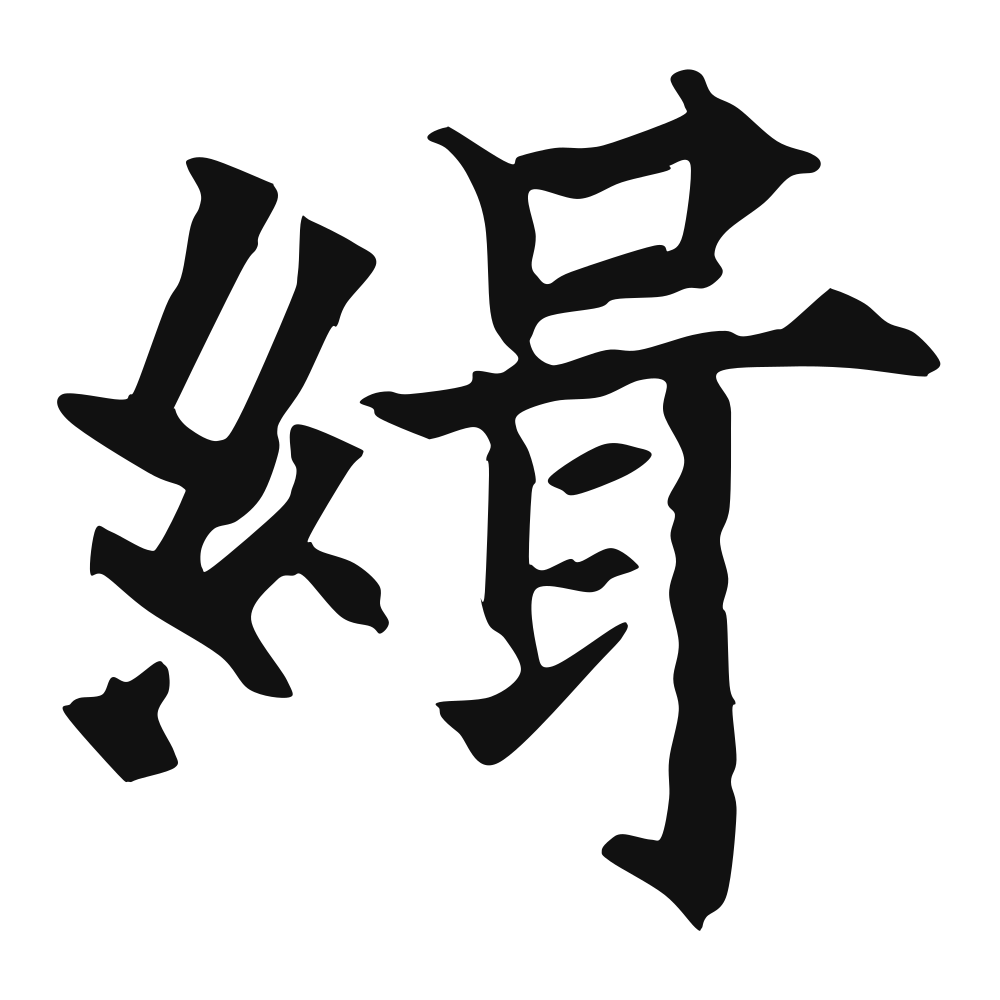
缉
to seize; to arrest; Taiwan pr. [qi4]; to stitch finely
Closest English meanings
arrest·seize
The Calligrapher — Ōuyáng Tōng 欧阳通
Tang regular-script master known for powerful, square strokes.
Tang calligrapher (?–691), master of regular script — known for 《道因法师碑》. Tang dynasty
Cultural Story
缉 began with thread: twisting fibers tight into a cord, plaiting an edge so it would not fray. A cord grips whatever it encircles, so 缉 slid toward seizing — constables 缉拿 a thief by the collar. Qing yamen posted 缉捕 notices on city gates, the ancestors of today's wanted posters, paper nets waiting to close.
Common words & phrases
- 缉拿 arrest · apprehend
- 缉捕 apprehend
- 通缉 wanted
Read the story behind the character
Police dramas keep the old grip alive: squads 缉拿 (arrest, apprehend) smugglers at the dock, 缉毒 units dominate streaming charts, and a 通缉 (wanted) notice with a blurred face still flashes on the evening news. The sewing sense survives in craft blogs that 缉边 — stitch a hem — on an old foot-pedal machine.
Why this character belongs on skin
Silk radical beside 咠, mouths at an ear—缉, once the patient art of spinning thread edge to edge, stitching a seam that outlives the tailor; later, the sharp-eyed work of 缉拿, tracking down what flees. Two meanings braided in one glyph: the needle and the pursuit, both closing gaps. Hemming is quiet law—fabric held, edge matched, done well enough that no one ever notices, which is the whole point. Justice, too, is seamwork on a larger cloth. There is devotion in any hand that closes things carefully. Ink 缉 small, near the pulse: a vow to keep stitching—what was torn mended, what drifted brought back, the long patient labor of holding a life together at the edges, one pass at a time.
Own this character
Purchase delivers the original SVG of this glyph, brushed by Ōuyáng Tōng 欧阳通, ready to place on skin, paper, or screen.