
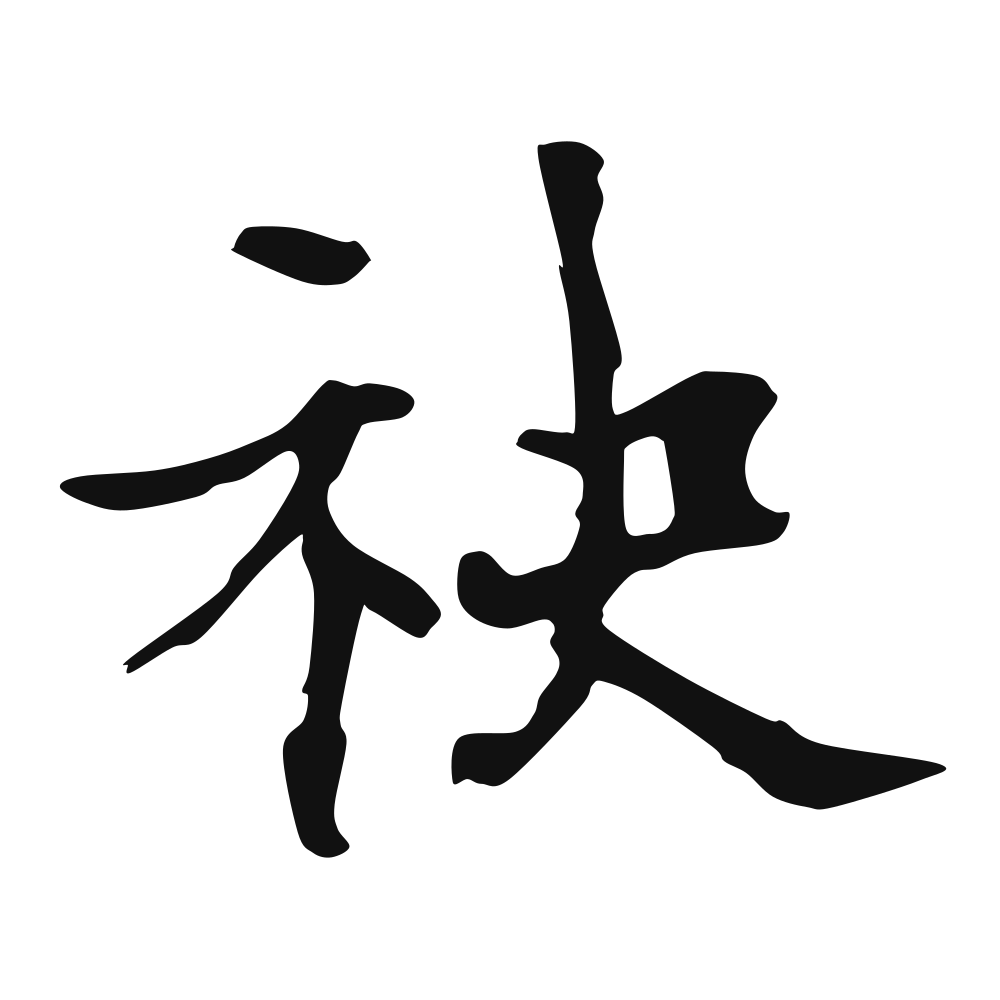
The Calligrapher — Ōuyáng Tōng 欧阳通
Tang regular-script master known for powerful, square strokes.
Tang calligrapher (?–691), master of regular script — known for 《道因法师碑》. Tang dynasty
Cultural Story
Outside Chang'an the Baqiao bridge was where friends broke a willow branch and parted, fen mei, sleeve from sleeve, the green twig a promise to return. The parting pavilion made the sleeve the unit of farewell, two mei that would not meet again for years. The gesture is older than most poems that record it.
Common words & phrases
- 联袂 join hands · together
- 分袂 part · say farewell
Read the story behind the character
Two dancers take the stage lianmei, sleeves linked, for the closing number, and at the station a pair of friends fenmei with a quick hug before separate trains. The character names the sleeve as the instrument of meeting and parting alike, the strip of cloth that joins a hand or releases it on a platform.
Why this character belongs on skin
Watch the sleeve first: silk catching wind as a dancer turns, a wide cuff lifting like a wing. 袂 is that sleeve— and in classical Chinese it became a shorthand for gesture itself. To raise one's 袂 is to begin; sleeves wiped away tears at partings; friends separated by the whole width of a sleeve, 分袂, and poets grieved that small width like an ocean. Lovers linked sleeves at a festival, sleeve to sleeve, which is why 联袂 still means to appear together. The sleeve is intimacy made of air: it touches what the hand is not yet brave enough to touch. A character like this suits the inside of an arm or the shoulder's slope— anywhere the line of the body suggests fabric in motion, a sleeve about to lift, about to let go, about to begin.
Own this character
Purchase delivers the original SVG of this glyph, brushed by Ōuyáng Tōng 欧阳通, ready to place on skin, paper, or screen.