
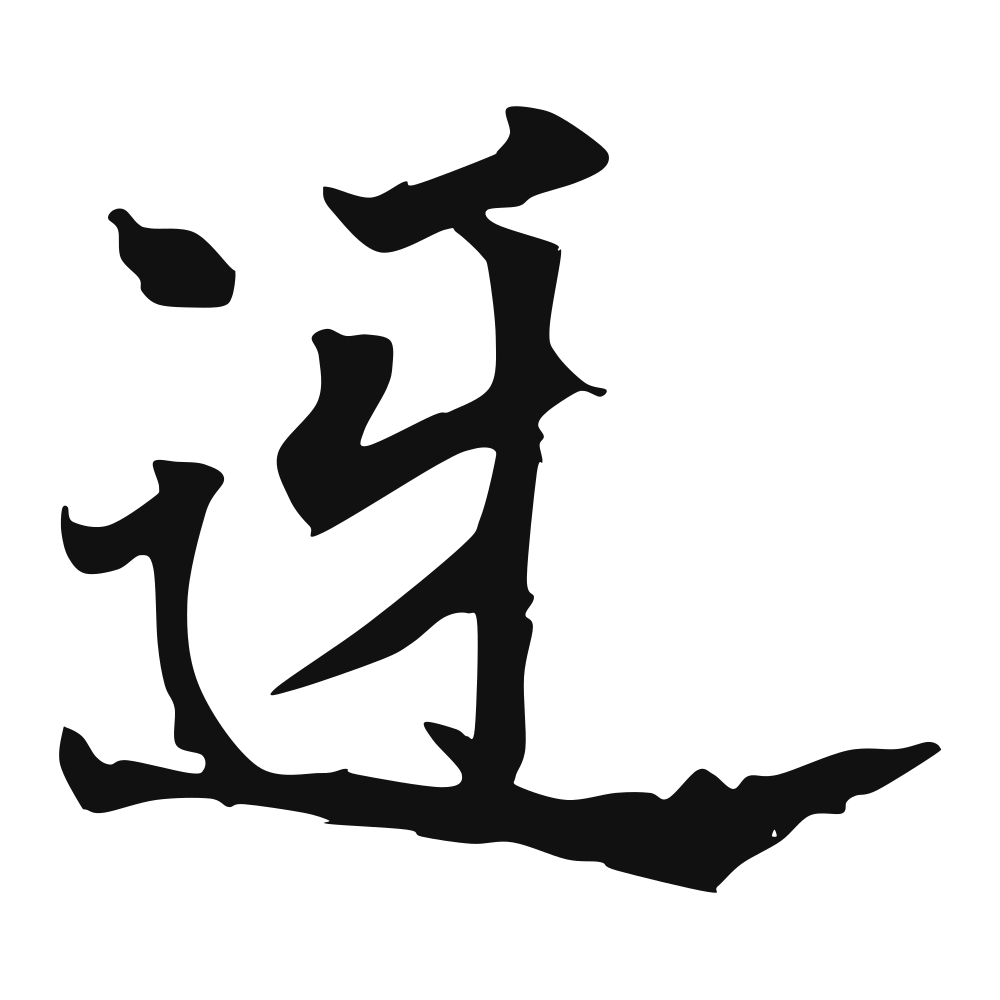
迓
to receive (as a guest)
Closest English meanings
to meet·to welcome·to receive
The Calligrapher — Ōuyáng Tōng 欧阳通
Tang regular-script master known for powerful, square strokes.
Tang calligrapher (?–691), master of regular script — known for 《道因法师碑》. Tang dynasty
Cultural Story
In early ritual language, ya meant to walk out and meet a guest before he arrived — the polite host hurrying down the steps, the official greeting an envoy at the city gate. The Shuowen glosses it simply as 'to meet going toward,' and it survives in solemn phrases about welcoming honored visitors.
Common words & phrases
- 迎迓 to welcome · to receive
Read the story behind the character
When a delegation steps off the train, a protocol officer may still use the literary word yingya — welcome and receive — in the official program. In everyday life you just say jie: you jie the visiting aunt at the airport and carry her suitcase.
Why this character belongs on skin
There is a word older than handshakes: yà, to go out and meet someone, to walk toward a guest before they arrive. In the classical texts it carries ceremony — the host stepping past his own threshold, into the road, into the wind, because welcome is not a posture but a journey. Think of the father in the parable of the prodigal son, running down the dust of the lane while the boy was still far off. That is this character's whole theology: love that moves first. Most of us wait to be approached, arms crossed, doors half-shut. This ink says otherwise. Placed over the ribs or along the forearm, it is a quiet vow — that you will be the one who walks out to meet whatever is coming: a stranger, a year, a version of yourself you abandoned. Greeting is a form of courage. Wear it where the pulse is close.
Own this character
Purchase delivers the original SVG of this glyph, brushed by Ōuyáng Tōng 欧阳通, ready to place on skin, paper, or screen.