
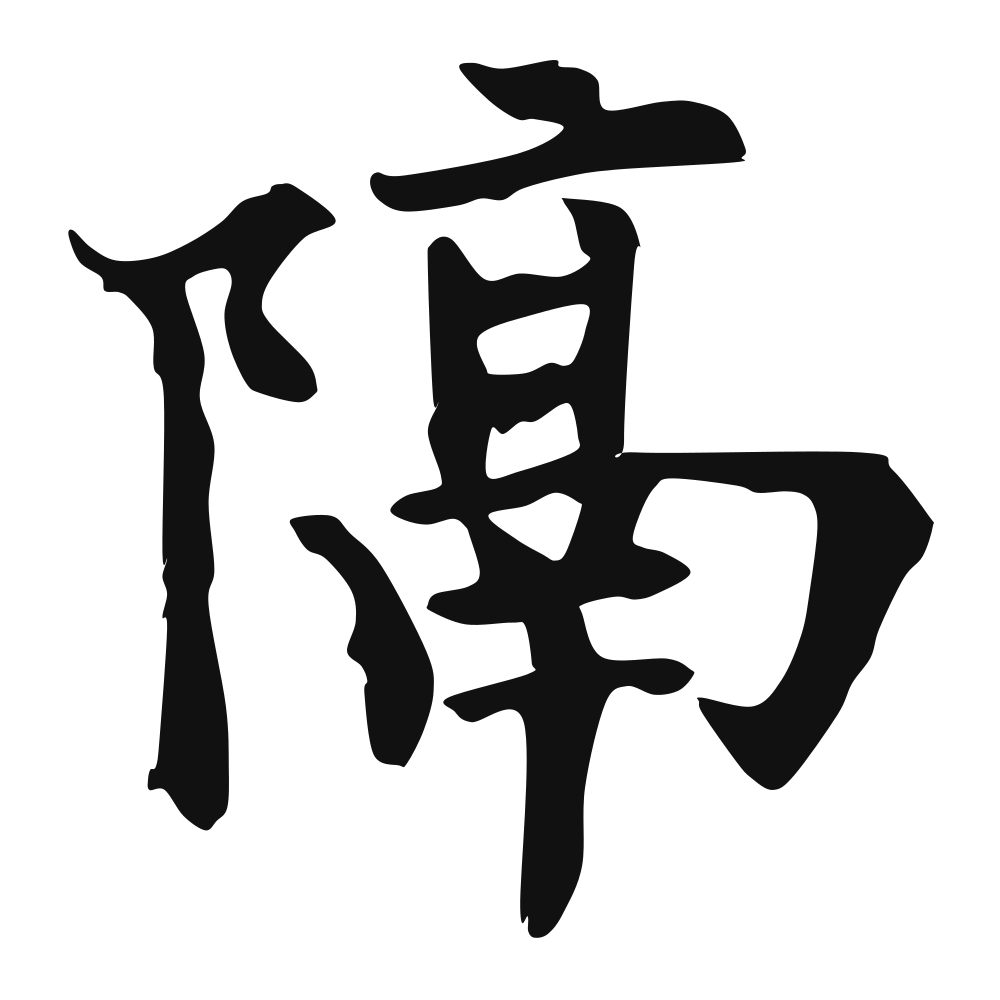
隔
to separate; to partition; to stand or lie between; at a distance from; after or at an interval of
Closest English meanings
separate·partition·at intervals
The Calligrapher — Ōuyáng Tōng 欧阳通
Tang regular-script master known for powerful, square strokes.
Tang calligrapher (?–691), master of regular script — known for 《道因法师碑》. Tang dynasty
Cultural Story
隔 joins the hill radical 阝 with 鬲. The Shuowen gives to separate, to partition. Originally it meant a wall or screen dividing spaces; classical verse laments the 隔 between lovers or mountains. It carried the sense of intervals and distance kept apart.
Common words & phrases
- 隔离 isolate · separate · quarantine
- 间隔 interval · space · spacing
- 隔壁 next door · neighbor
- 隔开 separate · partition · divide
Read the story behind the character
Hospitals 隔离 (isolate) patients, and seats sit at an 间隔 (interval). The 隔壁 (next door) neighbor borrows sugar, while a wall 隔开 (separates) rooms. During pandemics 隔 became a daily word for distance kept between people.
Why this character belongs on skin
The mound radical 阝 beside 鬲, an ancient steaming vessel—隔, the little hill that stands between you and the pot, heat deferred, intimacy postponed. Distance is the tenderest wound: a friend across an ocean, a lover one room away, the dead separated by the oldest mound of all. Yet the vessel still steams; through walls, warmth finds its way. Su Shi wrote a thousand miles of moonlight to close a gulf—隔千里共婵娟, the same moon over both of us. Separation, rightly held, becomes the proof of connection: you cannot be far from what never left you. Ink 隔 if you have loved across distance, and wear the wall not as defeat but as testimony that something on the other side is worth steaming through.
Own this character
Purchase delivers the original SVG of this glyph, brushed by Ōuyáng Tōng 欧阳通, ready to place on skin, paper, or screen.