
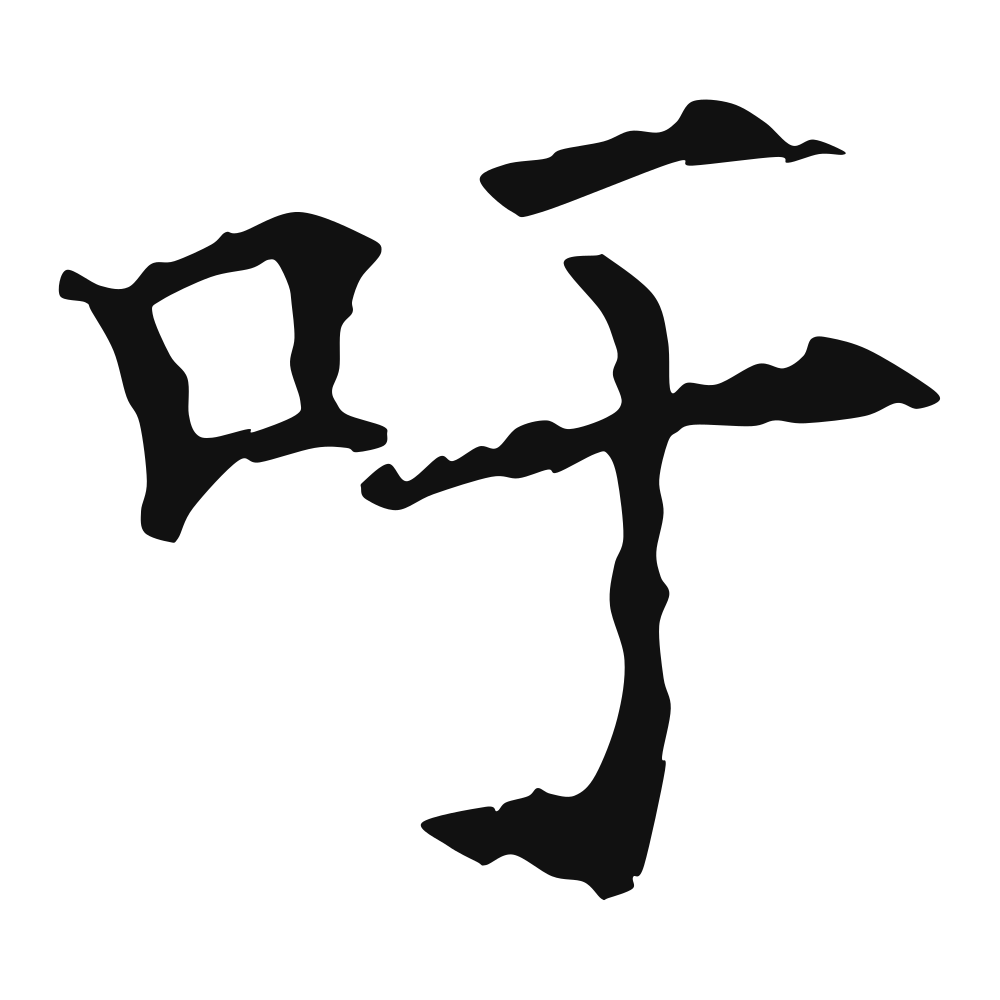
吁
sh; hush; to implore
Closest English meanings
appeal·call on
The Calligrapher — Ōuyáng Xún 欧阳询
Tang regular-script master whose 'Ouyang style' is a basic learning model.
Tang calligrapher (557–641), master of regular script/running script — Tang codifier of regular script; crisp, architectural strokes you could measure with a ruler. Tang dynasty
Cultural Story
吁 was a cry flung upward. The phrase 长吁短叹 -- long sighs and short laments -- pictured a heart worn by its own breathing. A petitioner would 吁天, crying to heaven for justice. The word was the voice raised beyond the room, the appeal that asked the sky to listen. It carried more weight than a sigh, less than a shout.
Common words & phrases
- 呼吁 appeal · call on · plea
- 吁请 appeal · request
Read the story behind the character
A charity 呼吁 for the flooded towns; a letter 吁请 the council to act. The word does the work of public asking -- the appeal, the request, the call flung outward. It names the organized plea and the personal one, the fundraiser's banner and the open letter. It is the voice that reaches past the hearer to whoever holds the power to answer.
Why this character belongs on skin
A long breath let out — relief, weariness, the sound you make when words fail and the chest simply empties. 吁 is the sigh, the exclamation, the unspoken thing finally exhaled. We are trained to swallow these breaths, to perform composure. But the sigh is honest; it is the body speaking the truth the mouth won't. To wear 吁 is to honor the inarticulate self, the part that feels too much to say. Not weakness. The deepest things often arrive as a breath, not a sentence. The character is rare, almost secret — a quiet mark for a quiet man. It says some of what you carry can only be breathed out, against the skin, into the dark, where the weight lessens just enough to go on.
Own this character
Purchase delivers the original SVG of this glyph, brushed by Ōuyáng Xún 欧阳询, ready to place on skin, paper, or screen.