
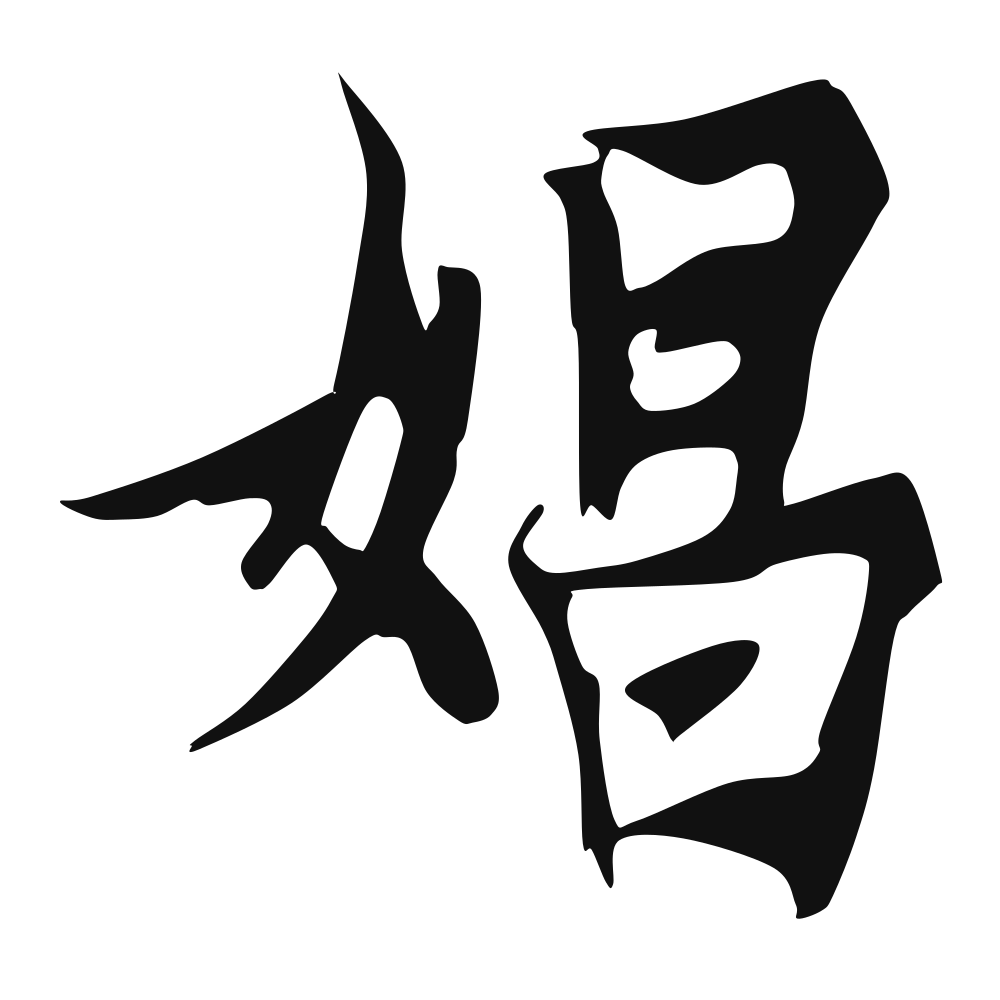
The Calligrapher — Ōuyáng Xún 欧阳询
Tang regular-script master whose 'Ouyang style' is a basic learning model.
Tang calligrapher (557–641), master of regular script/running script — Tang codifier of regular script; crisp, architectural strokes you could measure with a ruler. Tang dynasty
Cultural Story
In the classical tradition 娼, like 妓, names a woman who sells herself; histories and novels depict 娼妓 in entertainment quarters, their lives both pitied and policed. The 暗娼 — a secret prostitute — appears in legal codes as a hidden offense, marking how tightly the state tried to bound such commerce.
Common words & phrases
- 娼妓 prostitute
- 暗娼 secret prostitute
Read the story behind the character
In the modern world 娼 is a stark, legal word. News stories report cracking down on 娼妓 rings, and the term 暗娼 names hidden prostitution the police work to expose. Unlike costume-drama glamour, the modern usage is sober and judicial, reminding readers of real exploitation behind the old, softened characters.
Why this character belongs on skin
There is a light that society casts and then condemns those who stand in it. This character joins the woman to the word for brightness — a woman at the lamp, in the oldest quarter of the city, where lanterns were law and law was bought. The Chinese gave her a name built from light, and then built walls around her. Every tradition has met her: the Magdalene of the gospels, the courtesans who wrote the only love letters worth saving, the goddesses men prayed to and women died as. To carry this mark is not to claim her trade but her truth — that shame is a story told by the ones holding the lantern. Grace does not ask what you were. It asks only that you walk out of the fire with the light still in your hand. Let the ink keep it there.
Own this character
Purchase delivers the original SVG of this glyph, brushed by Ōuyáng Xún 欧阳询, ready to place on skin, paper, or screen.