
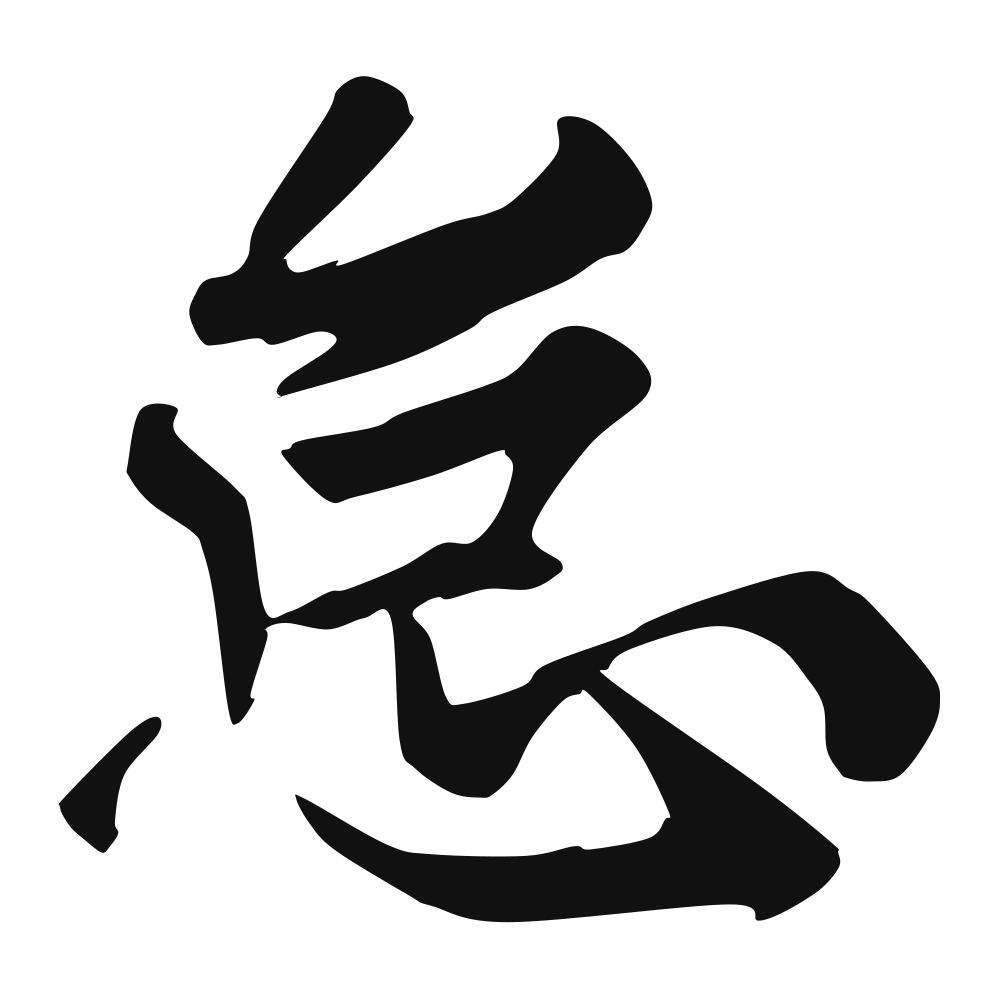
怠
idle; lazy; negligent; careless
Closest English meanings
idle·neglect·slack
The Calligrapher — Ōuyáng Xún 欧阳询
Tang regular-script master whose 'Ouyang style' is a basic learning model.
Tang calligrapher (557–641), master of regular script/running script — Tang codifier of regular script; crisp, architectural strokes you could measure with a ruler. Tang dynasty
Cultural Story
怠 is the slack hand and the slighted guest. 怠慢 was the host's failure to rise, the small disrespect that a proud visitor remembered, and the word kept that negligence — not hatred but the easing-off, the care that was owed and simply was not paid. A fault of the unready hand.
Common words & phrases
- 怠慢 neglect · slight
- 懈怠 slack · sluggish
- 怠工 go slow · slack
Read the story behind the character
怠工 is the slow pace a grievance wears, 懈怠 the slump a reviewer notes, 怠慢 the apology a host owes late. The guest is a client now; the ease is a strike. We still fail to rise, and call it rest until someone names it neglect, which the old host learned the cost of.
Why this character belongs on skin
There is a thief who comes without a weapon. He enters when the watch grows tired, when the hand that held the bow relaxes by a degree, when the vow feels safe enough to be forgotten. The ancients named him dài — not the violence of surrender, but the soft negligence of a soldier who stops scanning the treeline. A kingdom fell to him; a love cooled to him; a discipline rotted under him, and no one noticed until the roof was gone. He is the most honest of masters, for he asks nothing of you but rest, and rest becomes ruin only when it is unnamed. To carry this character is to make a pact with vigilance: I know the lull, I name it, and I do not let it bury me. Ink it as a ward, a single word that keeps the sleeping guard awake.
Own this character
Purchase delivers the original SVG of this glyph, brushed by Ōuyáng Xún 欧阳询, ready to place on skin, paper, or screen.