
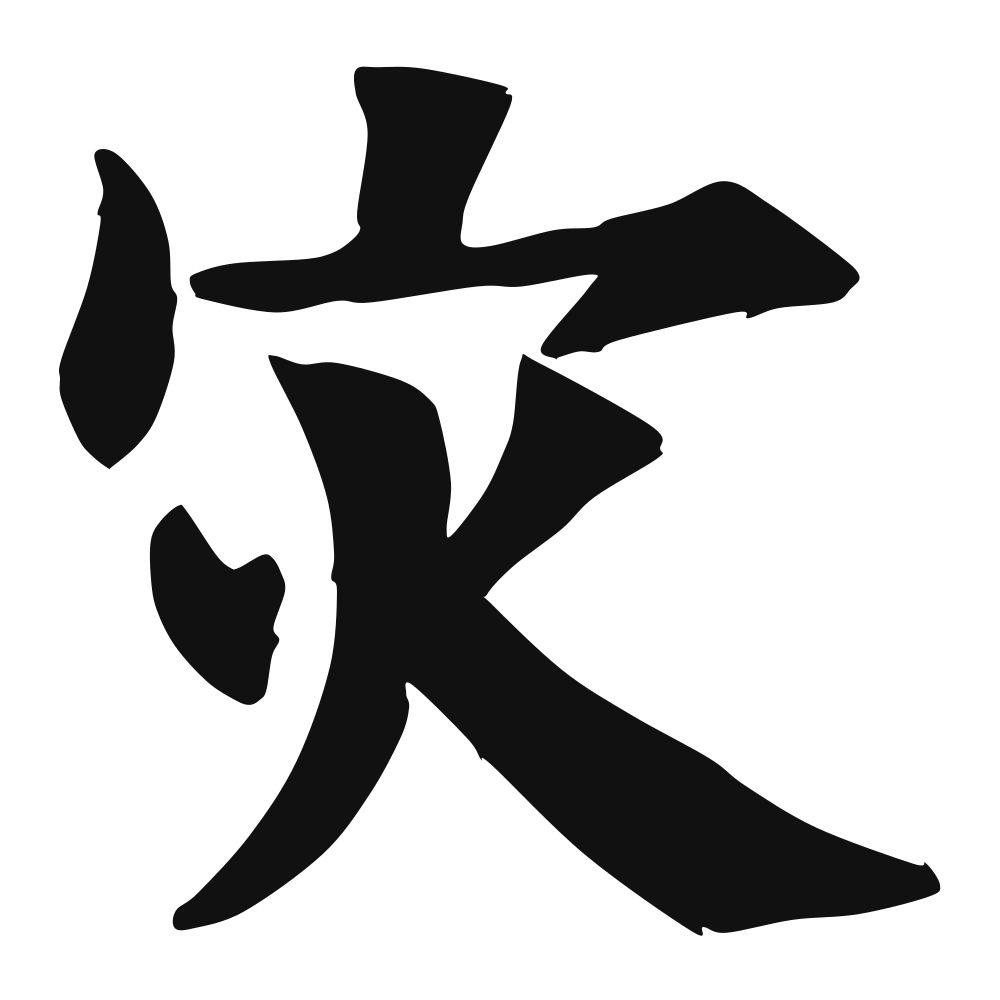
灾
disaster; calamity
Closest English meanings
disaster·calamity·catastrophe·misfortune·curse
The Calligrapher — Ōuyáng Xún 欧阳询
Tang regular-script master whose 'Ouyang style' is a basic learning model.
Tang calligrapher (557–641), master of regular script/running script — Tang codifier of regular script; crisp, architectural strokes you could measure with a ruler. Tang dynasty
Cultural Story
灾 is a stark graph: a 火 (fire) breaking out under a roof, the household burnt, the Shuowen gives 天火也, heaven-sent fire. In the Histories and the Spring and Autumn Annals, recording a 灾 was a moral act, a sign the ruler had lost heaven's favor; the 天灾 (natural disaster) of flood or drought was a political warning. The Classics list 火灾 (fire) among the great calamities. A character of pure misfortune, 灾 is the moment the safe house becomes a ruin and the state must ask what it did wrong.
Common words & phrases
- 灾难 disaster · calamity · catastrophe
- 灾害 calamity · disaster · damage
- 火灾 fire · conflagration
- 天灾 natural disaster · act of nature
- 灾区 disaster area · stricken zone
Read the story behind the character
灾 is the word when things go wrong. News from the 灾区 (disaster area) shows 灾难 (disaster, calamity) after the quake, and a kitchen 火灾 (fire) sends everyone out the window. Farmers fear a 天灾 (natural disaster) that wipes the crop, and insurers tally the 灾害 (calamity, disaster) each typhoon season. From emergency alerts to relief donations, 灾 anchors the vocabulary of loss, the old roof-fire graph that now covers floods, quakes, and every misfortune nature or negligence sends.
Why this character belongs on skin
Fire breaks out beneath the roof, and the house is no longer a shelter but a threat. 灾 is calamity drawn exactly as it happens—flame under the eaves, the home turning against itself. The ancients read disaster not as punishment but as weather, the natural hazard of being alive in a fragile world. The Daoist accepts the fire; the survivor walks out and rebuilds. There is a particular clarity that comes only after ruin, when the false structures have burned and what remains is real. To carry 灾 is not to court destruction but to honor having lived through it—the scar that proves you were in the fire and came back. Some marks celebrate triumph. This one respects the burn. Let it sit where the heat was, a quiet testament to survival you owe no one. The roof may fall. You did not. That is the whole of the lesson, and it is enough to keep.
Own this character
Purchase delivers the original SVG of this glyph, brushed by Ōuyáng Xún 欧阳询, ready to place on skin, paper, or screen.