
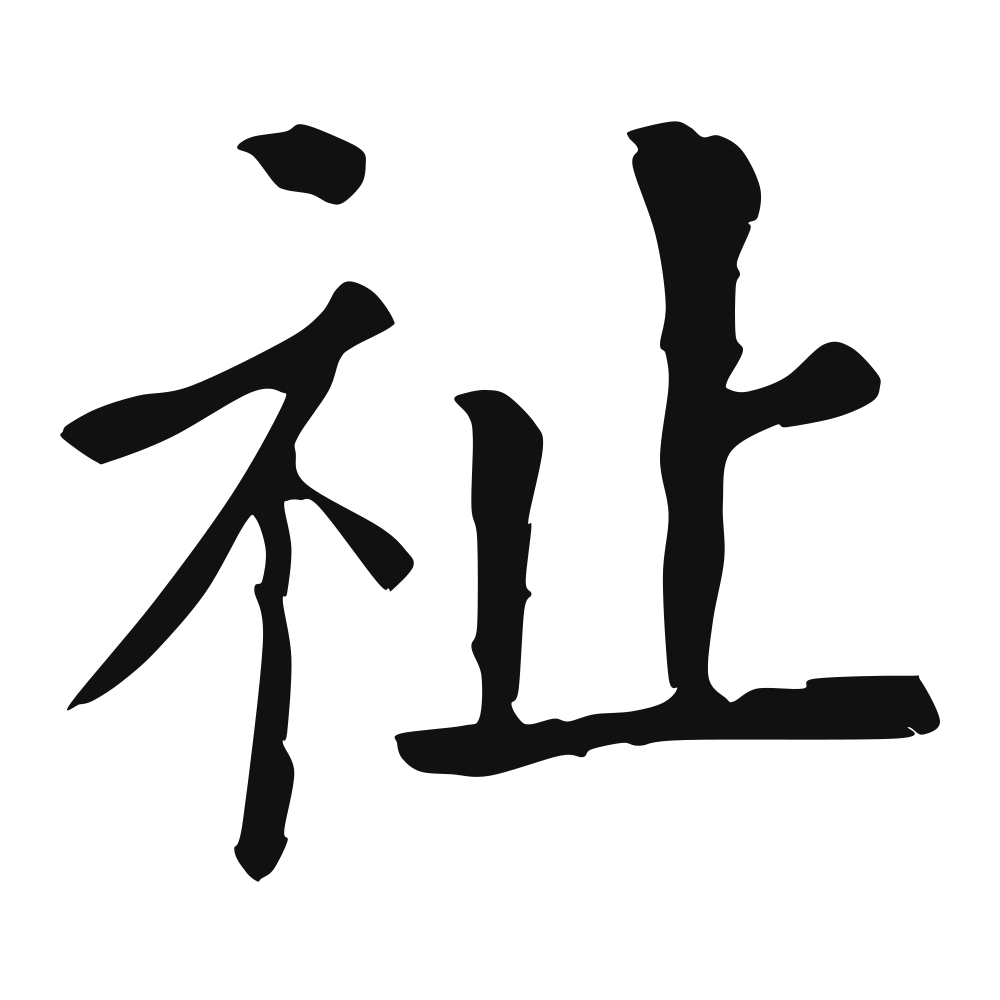
祉
felicity
Closest English meanings
happiness·blessing·good fortune
The Calligrapher — Ōuyáng Xún 欧阳询
Tang regular-script master whose 'Ouyang style' is a basic learning model.
Tang calligrapher (557–641), master of regular script/running script — Tang codifier of regular script; crisp, architectural strokes you could measure with a ruler. Tang dynasty
Cultural Story
The Shuowen is simple: 祉 means blessing, happiness granted from above. Bronze inscriptions and canonical prayers use it in solemn wishes — may the ancestral powers grant harvest, health and 祉 to the house that serves them — a word of altars and state odes, not of markets.
Common words & phrases
- 福祉 blessing · happiness · welfare
Read the story behind the character
Modern writers reach for 祉 when they want dignity: government reports promise to advance the people’s 福祉, welfare; charity appeals speak of elderly 福祉, well-being. In casual conversation it never appears — it is the ceremonial dress of the word “happiness.”
Why this character belongs on skin
祉 is blessing with its feet on the ground—the altar radical joined to a character meaning to stop, to stay, as if true fortune were not fortune at all but arrival: the good that comes and remains. The bronze inscriptions used it in royal prayers—may blessing 祉 settle upon the king, upon the harvest, upon the children. It is the difference between luck, which visits, and 祉, which abides: health that holds, a marriage that holds, a peace you stop being surprised by. Every tradition prays for this—the Hebrew shekinah that dwells, the Chinese 福祉 that stays the night and never leaves. To ink 祉 is a quiet benediction over your own skin: not a wish for riches, but for the good that stays. Some prayers are best said once, in permanence.
Own this character
Purchase delivers the original SVG of this glyph, brushed by Ōuyáng Xún 欧阳询, ready to place on skin, paper, or screen.