
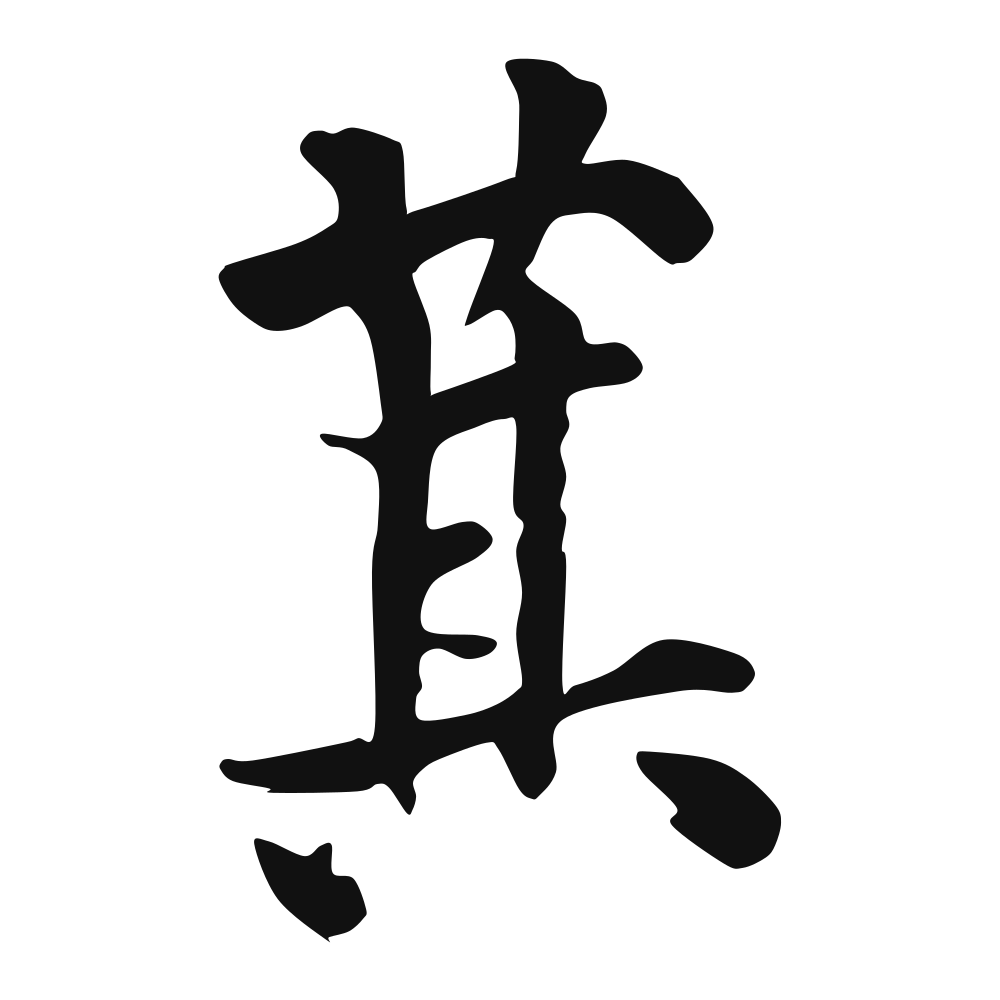
The Calligrapher — Ōuyáng Xún 欧阳询
Tang regular-script master whose 'Ouyang style' is a basic learning model.
Tang calligrapher (557–641), master of regular script/running script — Tang codifier of regular script; crisp, architectural strokes you could measure with a ruler. Tang dynasty
Cultural Story
萁 is the beanstalk — the straw that, in Cao Zhi's seven-step poem, burns beneath the pot cooking the beans it grew with: 煮豆燃萁. The Wei prince, ordered by his brother the emperor to compose a poem within seven paces or die, turned the kitchen into an indictment of fratricide, and walked away alive. The idiom outlived the dynasty as shorthand for kin destroying kin.
Common words & phrases
- 豆萁 beanstalk
- 煮豆燃萁 fratricidal strife
Read the story behind the character
A literature class acts out the seven paces, students stepping and reciting 煮豆燃萁 with mock solemnity while the teacher explains the beanstalk's betrayal. A TV drama about warring brothers ends with the eldest quoting it and dissolving the lawsuit — kin not burning kin after all. In the countryside, actual beanstalks dry beside stoves as kindling for the pot they grew beside, the poem's scene repeating without the tragedy.
Why this character belongs on skin
There is a famous and terrible poem inside this character. Cao Zhi, ordered by his own brother to compose verses on pain of death, spoke of beans burning on a fire—the fire fed by their own beanstalk, the qi. We of the same root, he said, why do you press me so? He lived; the poem outlived the dynasty. So qi is not just a stalk of straw. It is the sibling who becomes your fuel and your flame, family intimacy that scorches, the tragedy of kin turned kindling. And it is something else besides: the low thing, the discarded thing, that gives its body so the food gets cooked. Buddhism would call that compassionate sacrifice; the warrior's code would call it duty. To wear this character is complicated and brave—it admits you have been burned by those closest to you, and that you have also burned yourself for others. Ask it what it means and it answers quietly: everything consumes its own root. Wear the qi, and let your scars be eloquent.
Own this character
Purchase delivers the original SVG of this glyph, brushed by Ōuyáng Xún 欧阳询, ready to place on skin, paper, or screen.