
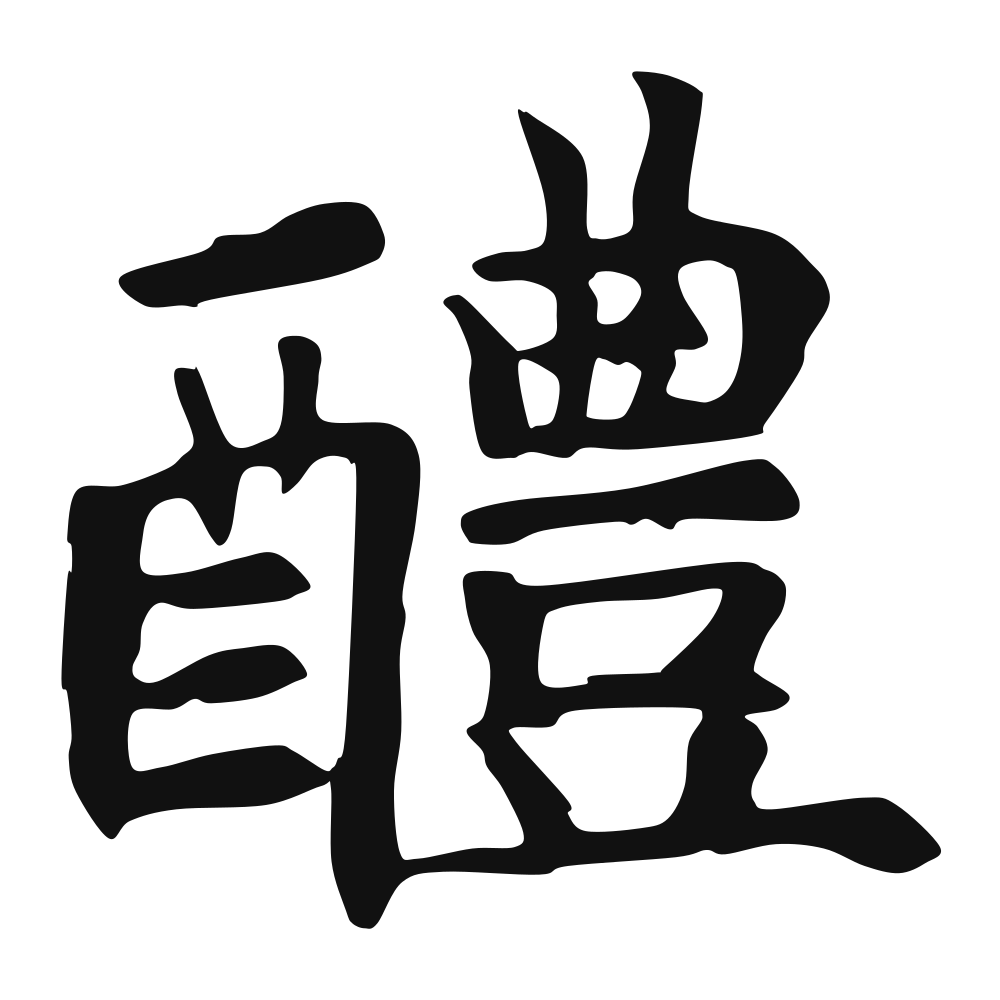
The Calligrapher — Ōuyáng Xún 欧阳询
Tang regular-script master whose 'Ouyang style' is a basic learning model.
Tang calligrapher (557–641), master of regular script/running script — Tang codifier of regular script; crisp, architectural strokes you could measure with a ruler. Tang dynasty
Cultural Story
The sweet 醴 wine poured at the Zhou altar gave its name to the 醴泉, the spring whose water tasted of honey and was taken as a sign of good rule, and Ouyang Xun carved the 醴泉铭 to mark one such spring at the ninefold palace. The 醴 thus joined a cup and a source. From those inscriptions the character kept the sense of a sweetness welling from the earth itself.
Common words & phrases
- 醴泉 sweet spring
- 醴酒 sweet wine
Read the story behind the character
A museum case holds a model of the 醴泉 beside a rubbing of the Tang inscription, and a guide explains the 醴酒 once poured for the emperor's ancestors. A town still carries the spring's name. The character now rests under glass and on a plaque, the sweet wine and the sweet spring of the old omen displayed as craft and as a ruler's luck made stone.
Own this character
Purchase delivers the original SVG of this glyph, brushed by Ōuyáng Xún 欧阳询, ready to place on skin, paper, or screen.