
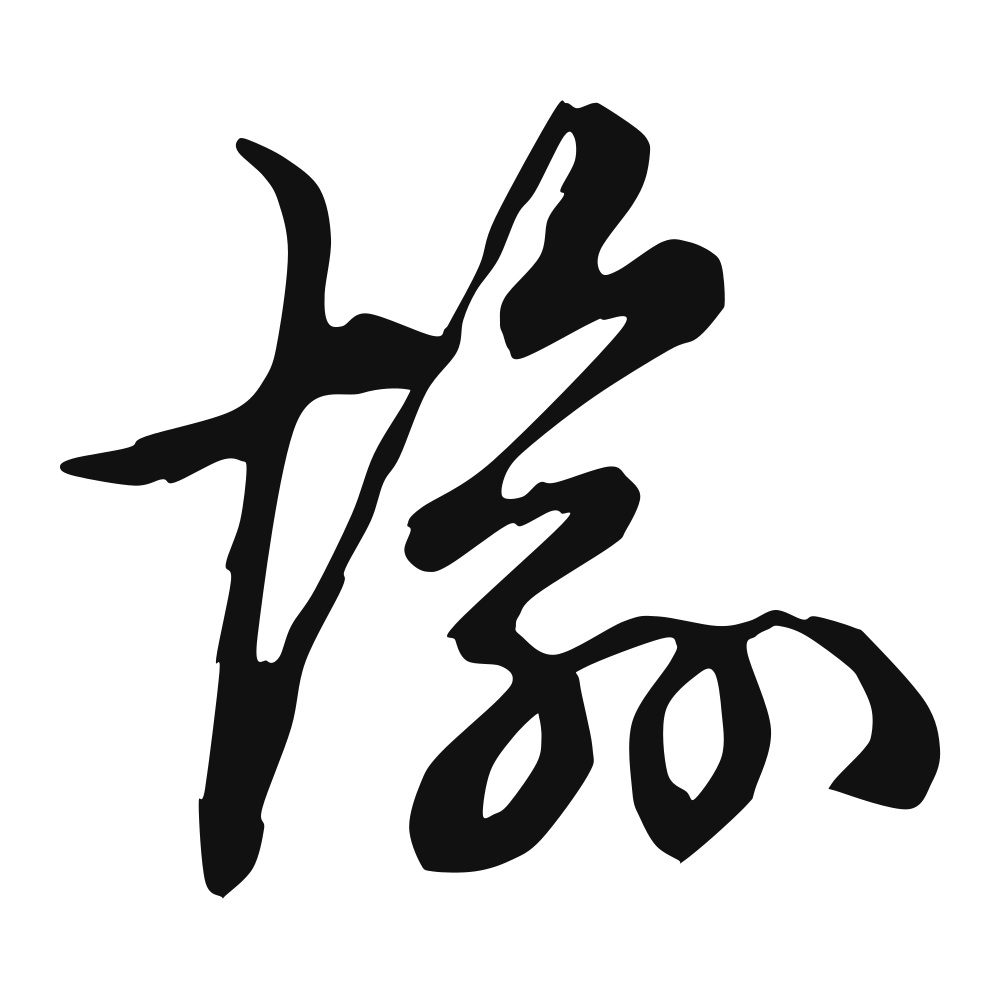
The Calligrapher — Péi Xiū 裴休
Tang chancellor and calligrapher; author of the Guifeng Stele in regular script.
Tang calligrapher (), master of regular script — known for 《圭峰碑》. Tang dynasty
Cultural Story
愉 is pleasure taken without guilt. The odes sing of a people 愉愉 at the rite, happily obedient, and the word kept a festive, communal glow. The heart with 俞, assent, is joy that agrees with the occasion. It is the cheer of the banquet, not the solitude of delight.
Common words & phrases
- 愉快 happy · pleasant · cheerful
- 愉悅 joyful · cheerful
- 歡愉 joyful · cheerful
Read the story behind the character
愉 is the mild glad: 愉快 the holiday, 愉悦 the evening that worked out, 欢愉 the rare uncomplicated joy. It is the word on the postcard and the farewell card, contentment smoothed for public use. We reach for it when the feeling is good and, importantly, uncomplicated.
Why this character belongs on skin
Here is delight with its machinery showing: heart radical on the left, and beside it 俞, an old character thought to suggest a boat moving with the current — unhurried, unforced, carried. 愉 is pleasure in that key: not ecstasy's fireworks but the pleasure of things going with you for once. The morning when the coffee is exactly right. A long lunch where nobody checks the time. Chinese physicians said 愉快 — a glad heart — keeps the qi moving, that joy is literally circulation. There is a quiet theology in that: happiness as flow rather than possession. Wear 愉 as permission, signed by a culture three thousand years deep, to take pleasure seriously — as medicine, as current, as the water you were always meant to ride.
Own this character
Purchase delivers the original SVG of this glyph, brushed by Péi Xiū 裴休, ready to place on skin, paper, or screen.