
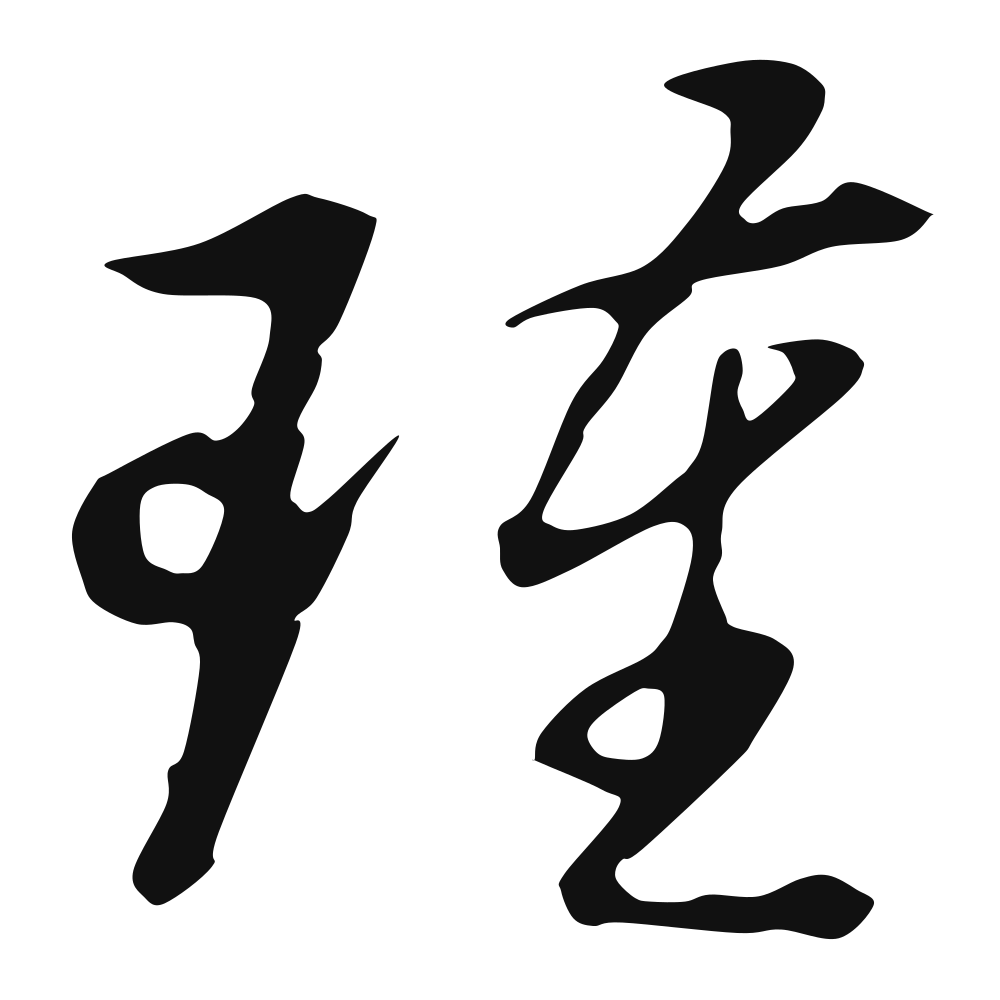
瑾
brilliancy (of gems)
Closest English meanings
beautiful jade
The Calligrapher — Péi Xiū 裴休
Tang chancellor and calligrapher; author of the Guifeng Stele in regular script.
Tang calligrapher (), master of regular script — known for 《圭峰碑》. Tang dynasty
Cultural Story
Jin is beautiful jade, prized as much for what it symbolized as for its sheen. The Songs of Chu, mourning Qu Yuan, praised the noble man 怀瑾握瑜 — holding jin and yu jade to his heart — making the character shorthand for inner virtue that needs no polish to show.
Common words & phrases
- 瑾瑜 fine jade · virtue
Read the story behind the character
The character has retreated into names, where it thrives: 瑾 promises a child jade-quality character, and pairs with 瑜 in 瑾瑜, fine jade. Readers of Three Kingdoms fiction meet it in Zhou Yu's courtesy name Gongjin, the commander history remembers as flawless.
Why this character belongs on skin
Hold the stone to the light and watch it breathe—瑾 is the finest jade, the gem the Chinese loved above gold, above pearls, above almost everything. The jade radical announces the family; the character itself names the rare, warm, flawless grade. And jade in China was never mere wealth. Confucius listed its virtues like a man reciting scripture: smooth and soft, yet hard at the core; warm in the hand, yet ringing when struck. 瑾瑜 appeared in classical texts as shorthand for a person of unimpeachable character—beauty that is also integrity, polish that is also principle. That is the standard this character quietly sets. Not perfection, which is brittle, but jade-quality: kindness with a spine, grace with density, a self that improves rather than cracks under the file. You have met people like this; you have tried, some years, to be one. Ink 瑾 as your private hallmark—a stone-shaped vow that what you show the world and what endures beneath it will finally, firmly, be the same beautiful thing.
Own this character
Purchase delivers the original SVG of this glyph, brushed by Péi Xiū 裴休, ready to place on skin, paper, or screen.