
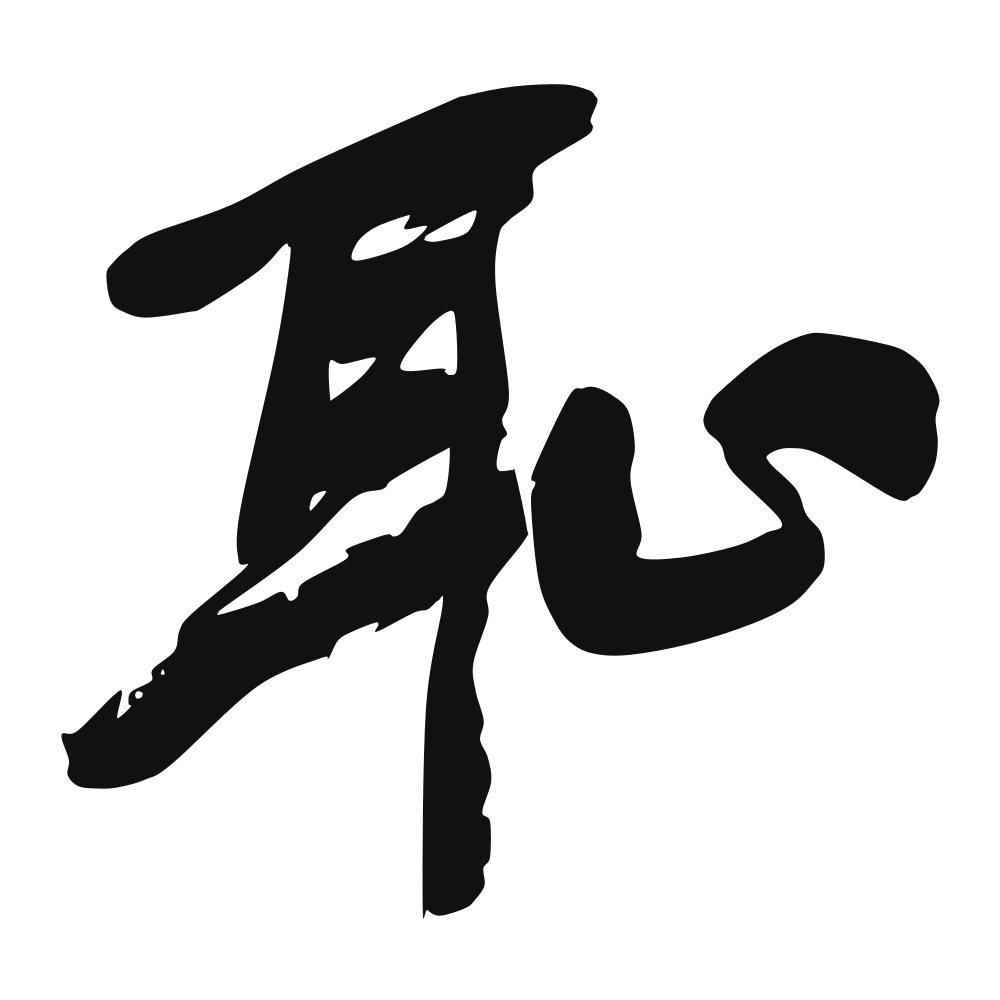
耻
(bound form) shame; humiliation; disgrace
Closest English meanings
shame·disgrace
The Calligrapher — Qiú Jìng 仇靖
Han clerical-script master famed for the Xixia Song stele.
Han calligrapher (), master of clerical script — known for 《西狭颂》. Han dynasty
Cultural Story
The ancient form 恥 joined ear and heart: shame is disgrace heard and lodged in the chest. Confucius taught his disciples to act with a sense of shame; ritualists ranked knowing shame beside courage, and statesmen wrote that a state may be poor, may be weak, but must never become shameless — for then it has lost everything.
Common words & phrases
- 耻辱 shame · disgrace
- 可耻 shameful
- 羞耻 shame · humiliation
- 耻笑 ridicule · sneer at
- 无耻 shameless
- 耻于 ashamed to
Read the story behind the character
The vocabulary of honor still polices daily life: a viral post asks whether lying on a resume is 可耻 (shameful); teammates feel 羞耻 (shame, humiliation) after a heavy loss; trolls online 耻笑 (ridicule, sneer at) a beginner's accent. Museums frame national 耻辱 (shame, disgrace) as memory and warning, while a proud teenager declares herself 耻于 (ashamed to) cheat — then does the homework anyway.
Why this character belongs on skin
The old script put shame right at the ear — as if dishonor were something overheard, a whisper that makes the neck burn. Chǐ is disgrace, the mark of having fallen below your own line. Yet the Daoist knows the man without chǐ is a wind with no direction; shame is the compass, the small fire that tells you where you strayed. To feel it is to have a self worth guarding. Christian penitence begins here, in the flush, not the pardon. Wear it where the neck meets the spine, the place that reddens. Let it be the honest scar of a standard you hold, proof you have failed and cared. A man unashamed of nothing has risked nothing true. The ink is your witness that you felt the burn and did not look away.
Own this character
Purchase delivers the original SVG of this glyph, brushed by Qiú Jìng 仇靖, ready to place on skin, paper, or screen.