
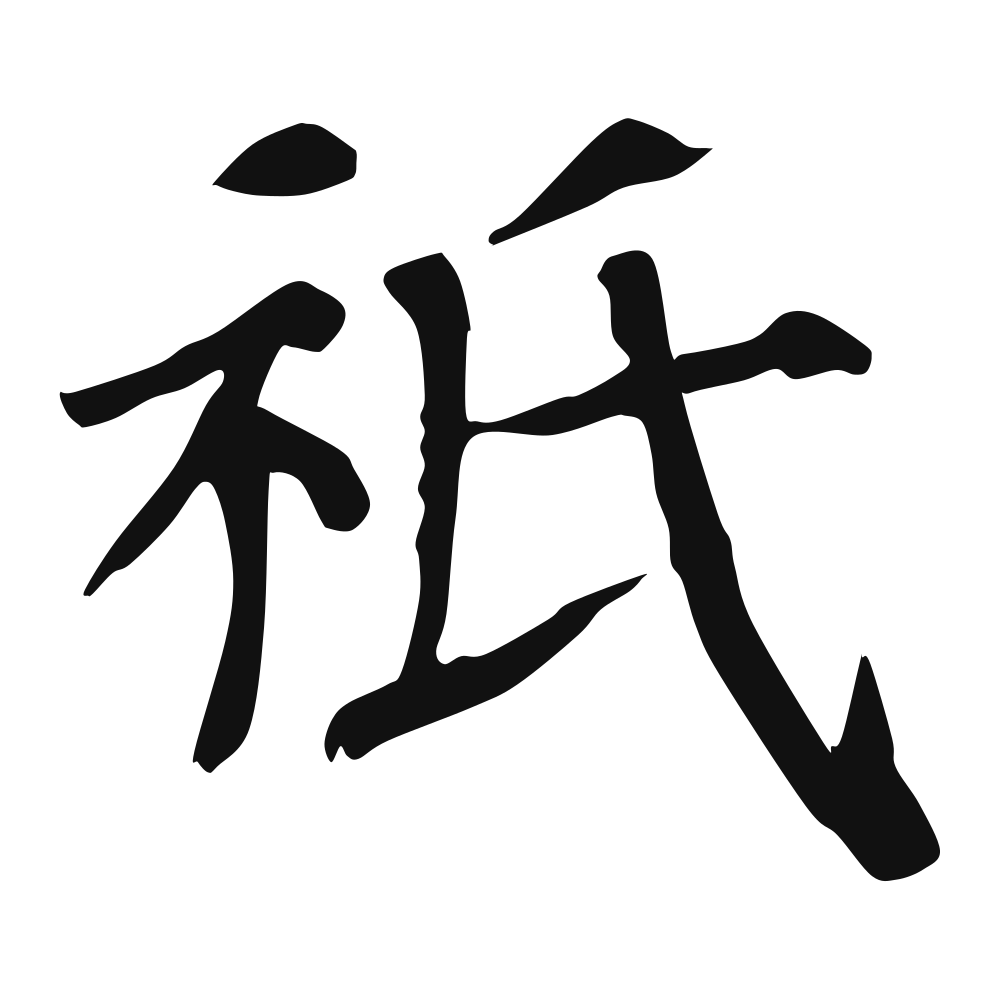
祗
respectful (ly)
Closest English meanings
reverent·respectful·to revere·to respect
The Calligrapher — Qú Lìngwèn 瞿令问
Tang seal-script master famed for his suspended-needle seal (xuanzhen).
Tang calligrapher (), master of seal script — known for 《峿台铭》. Tang dynasty
Cultural Story
祗 is reverence made muscular: the Shuowen defines it as respect. Bronze inscriptions pair it with duty — 祗敬 before the spirits, 祗奉 toward a king’s command — the trained attentiveness a ritualist owed to everything that stood above him, ancestors and edicts alike.
Common words & phrases
- 祗敬 revere · respect
- 祗承 receive respectfully
- 祗畏 revere and fear
- 祗奉 serve reverently
Read the story behind the character
祗 has retreated almost entirely into the study: classical readers meet 祗畏, awe-struck respect, and 祗承, dutifully receiving, in old letters and edicts. Occasionally it graces a given name, chosen by parents who want a note of solemn, old-fashioned courtesy.
Why this character belongs on skin
It begins with a bow— not the shallow nod of politeness but the slow bow of a person who means it. 祗 is reverence with hands: 祗敬, 祗候, the deference of a disciple before a master, a son before his father's memory. The character joins the spirit radical to a root meaning sincere and complete, so the respect it names is total— nothing held back, nothing performed. Confucius built his entire ethic on this keel: ritual is nothing without inner reverence, the bow must come from the spine's own decision. There is quiet power in it. The reverent person moves differently— listens fully, keeps promises, treats small things as sacred. To wear 祗 is to declare a disciplined heart, one that has chosen what it honors. Ink like this suits the inner wrist: a reminder visible every time you lift your hand to the world.
Own this character
Purchase delivers the original SVG of this glyph, brushed by Qú Lìngwèn 瞿令问, ready to place on skin, paper, or screen.