
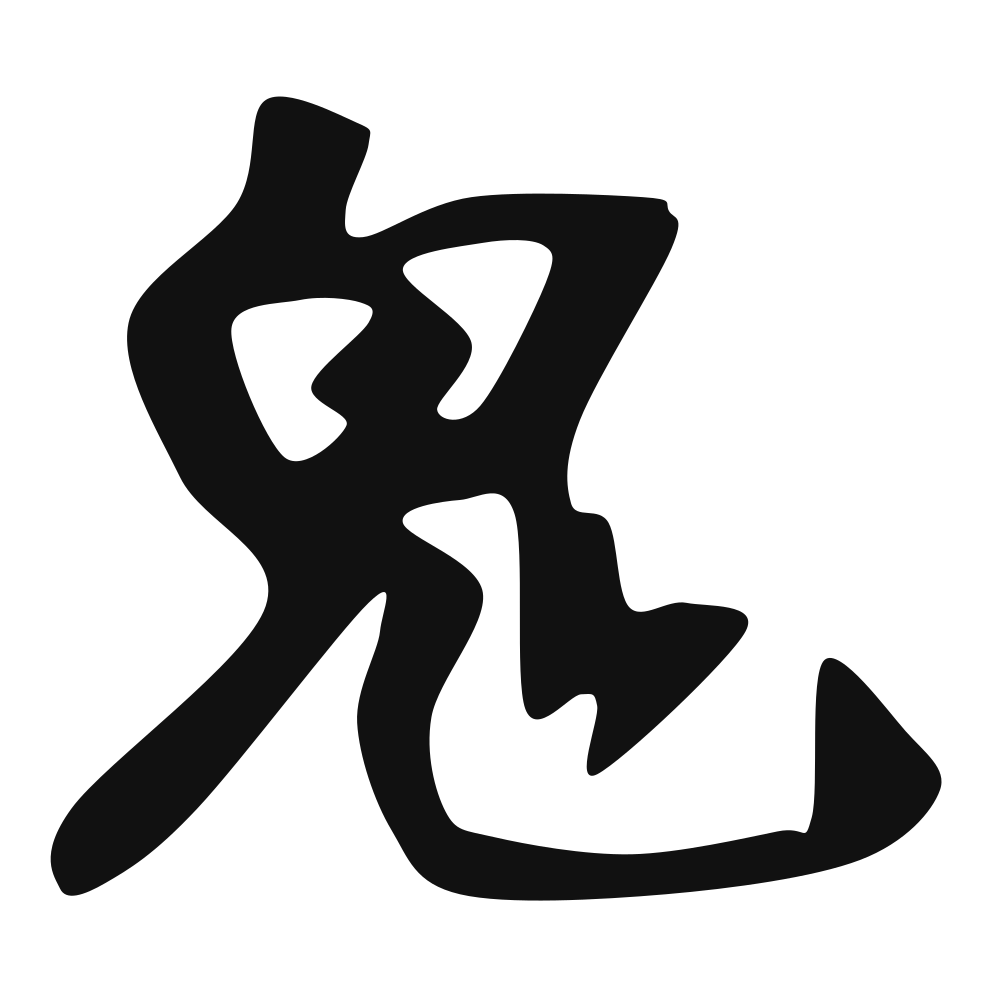
鬼
disembodied spirit; ghost; devil; (suffix) person with a certain vice or addiction etc; sly; crafty; resourceful (variant of 詭|诡[gui3]); one of the 28 constellations of ancient Chinese astronomy
Closest English meanings
ghost·devil·spirit·sly
The Calligrapher — Qú Lìngwèn 瞿令问
Tang seal-script master famed for his suspended-needle seal (xuanzhen).
Tang calligrapher (), master of seal script — known for 《峿台铭》. Tang dynasty
Cultural Story
鬼 is drawn as a kneeling figure with an oversized head—the masked or transformed dead. The 《説文解字》 says 人所归为鬼, "what people return to is a ghost," tying it to the soul after death.
Common words & phrases
- 鬼魂 ghost · soul
- 鬼怪 ghosts · demons
- 魔鬼 devil · demon
- 鬼脸 grimace · funny face
- 胆小鬼 coward
Read the story behind the character
鬼 means ghost, devil, or the sly: 鬼魂 a soul, 鬼怪 ghosts and demons, 魔鬼 the devil, and 鬼脸 a funny grimace. Call a timid friend a 胆小鬼, a coward. The character haunts festivals, folktales, and the playful masks of children.
Why this character belongs on skin
There is a cold spot in the room where someone used to stand. 鬼 is the ghost, the spirit of the dead who did not fully leave, and the cunning, uncanny edge in the living who move like no one else. The ancients feared and fed them; the Daoist learned to laugh at them; the Buddhist saw in every 鬼 a being once as real as you. To know the ghost is to know mortality intimately—that you, too, will thin into memory and wind. We spend our lives denying this; the wise keep a seat for it. To wear this mark is not to court darkness but to make peace with the unseen, to admit the dead travel with the living. Let it rest on your skin like a shadow at noon—proof that you are not afraid of what passes through, and that you, too, will one day be a gentle haunting.
Own this character
Purchase delivers the original SVG of this glyph, brushed by Qú Lìngwèn 瞿令问, ready to place on skin, paper, or screen.