
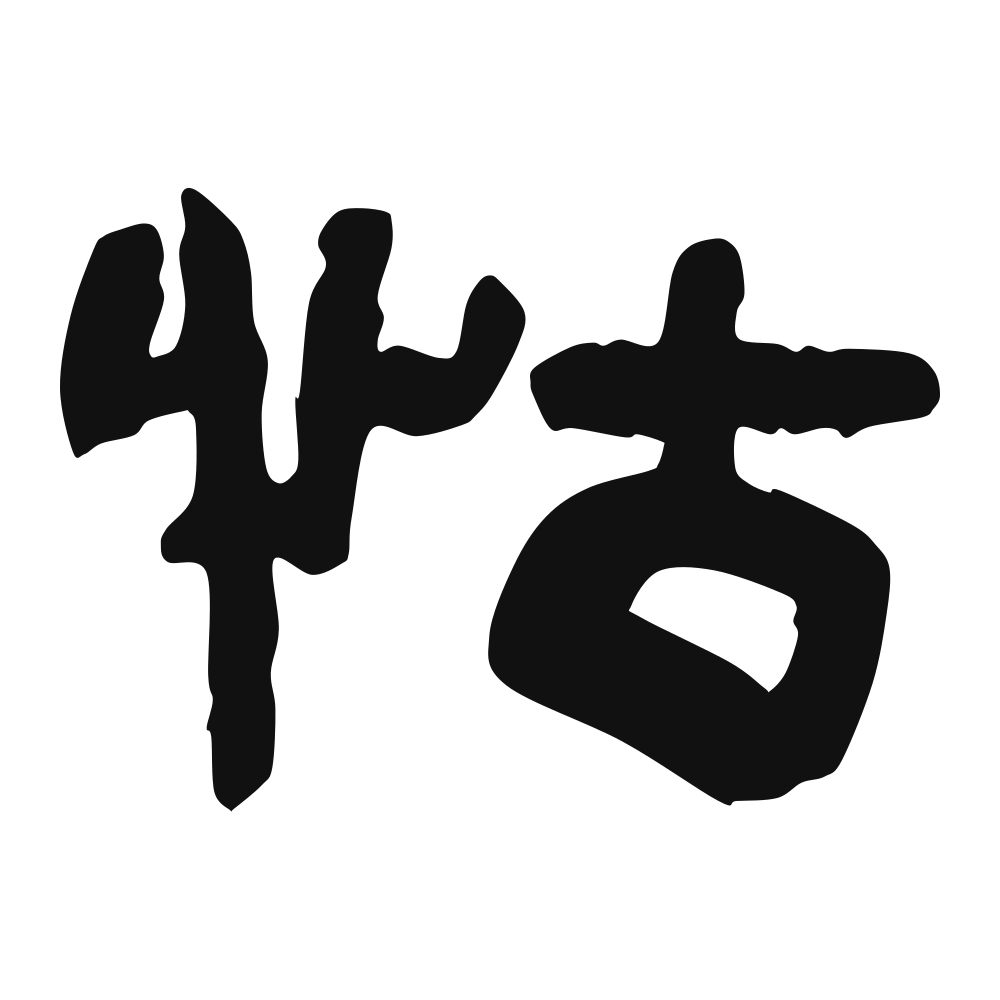
怙
to rely on; father (formal)
Closest English meanings
rely on·trust
The Calligrapher — Chén Hóngshòu 陈鸿寿
Qing 'Eight Masters of Xiling' known for clerical and running script.
Qing calligrapher (), master of clerical script/running script — known for 曼生. Qing dynasty
Cultural Story
怙 is to lean on, and then the lean itself. 詩經 asks 无父何怙 — with no father, what do you rest against? — and 失怙 became the grave phrase for a child who lost that prop. 怙恶不悛 is the man who rests on his vice and will not turn. The character is the support, wanted and refused.
Common words & phrases
- 怙恃 parents
- 失怙 lose one's father
- 怙恶不悛 incorrigible · unrepentant
Read the story behind the character
失怙 is the line an obituary uses for a father gone, 怙恶不悛 the verdict a commentary passes on the unrepentant. The prop is a parent now; the vice is a headline. We still name the lean and the loss by this old word, mostly in writing, where the bronze's weight still helps.
Why this character belongs on skin
The heart radical beside an old word for protection: 怙, to rely on — the trust a child places in a father, the confidence of someone who has never had to check over their shoulder. 怙恃 became the classical word for parents, from the Songs: what else does a child have to lean on but the ones who shelter it? And the character has a shadow usage the moralists loved — 怙恶 不悛, to rely on one's evil and reform not, a heel who uses strength as permission. Same root, two fates: leaning on something worthy builds; leaning on something crooked entitles. The character is really about the architecture of confidence. Everyone leans — on people, on discipline, on the sense of being backed. The question is whether what you lean on would hold a stranger's weight too. Ink 怙 over the heart or the shoulder blade, where the leaning lives. Choose your reliance like your spine depends on it. It does.
Own this character
Purchase delivers the original SVG of this glyph, brushed by Chén Hóngshòu 陈鸿寿, ready to place on skin, paper, or screen.