
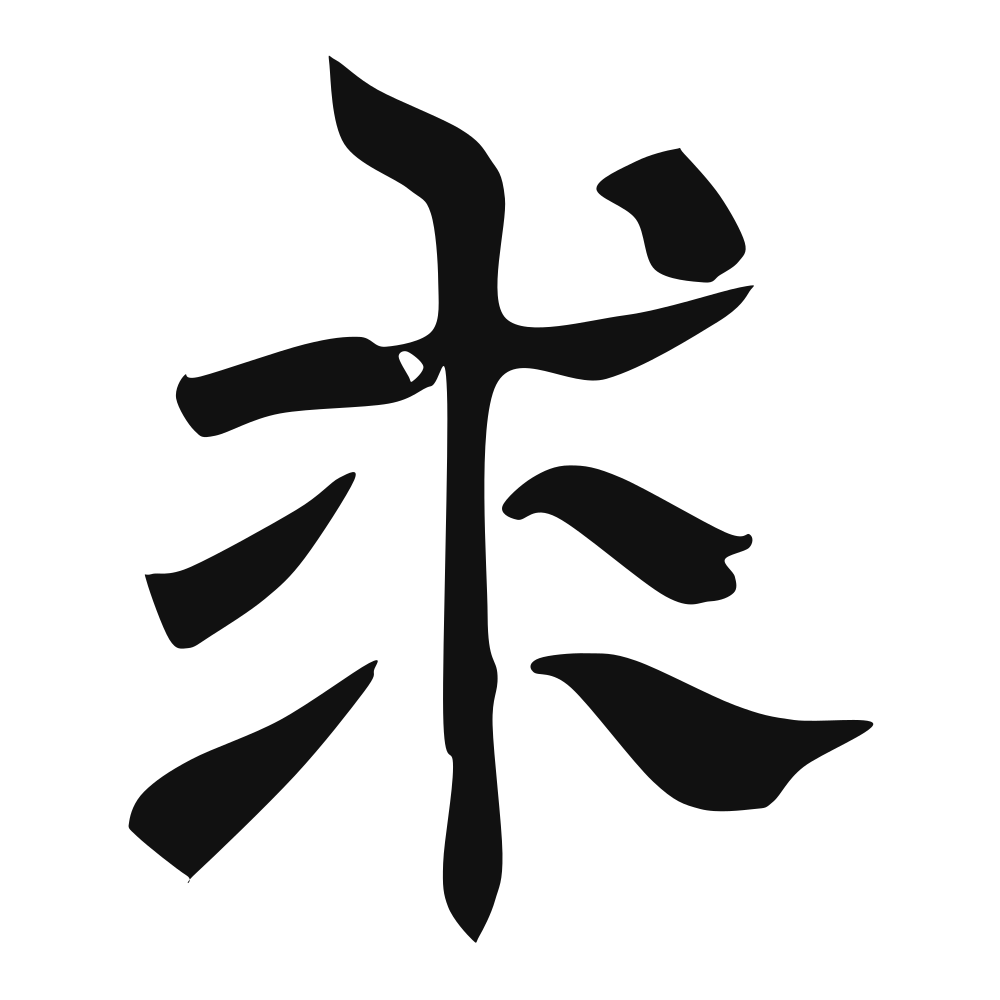
求
to seek; to look for; to request; to demand; to beseech
Closest English meanings
seek·request·beg·ask
The Calligrapher — Shì Huáirén 释怀仁
Tang monk who compiled Wang Xizhi's script into the Sacred Teachings stele.
Tang calligrapher (), master of running script — known for 集王羲之行书《圣教序》. Tang dynasty
Cultural Story
求 in oracle bone script shows a furry animal — 'to seek, to beg for.' The 說文解字 says '索也', to search. In the 詩經 one 'seeks' a worthy spouse; in prose 求 meant both asking and striving. It carried the urgency of need and the dignity of a long, hopeful search for what is missing.
Common words & phrases
- 请求 request · ask · entreat
- 要求 require · demand · ask
- 追求 pursue · seek · woo
- 求助 ask for help · seek aid
- 寻求 seek · search for · pursue
- 求救 cry for help · ask to be rescued
Read the story behind the character
求 is constant: we 請求 (request) a day off, 要求 (demand, require) good service, and 追求 (pursue, seek, woo) a dream or a partner. A lost hiker 求救 (cries for help); a student 尋求 (seeks) answers; a friend 求助 (asks for help). The character is the act of reaching out.
Why this character belongs on skin
Qiú is the reaching — the hand extended, the asking, the long search that defines a life more than any answer ever could. The character once showed a man kneeling with open hands beneath a tree, as if the seeking itself were the prayer. We are ashamed of wanting, taught to hide the reach. But qiú is not weakness; it is the engine. Every real thing you have came from a reach you were willing to make. A tattoo of qiú is the admission that you are still reaching, that the hands have not folded, that the asking — not the having — is the shape of your days. The ink is the open palm drawn where only you can see it, a vow against the closed fist. To wear it is to stay, deliberately, in the holy posture of the one who still wants.
Own this character
Purchase delivers the original SVG of this glyph, brushed by Shì Huáirén 释怀仁, ready to place on skin, paper, or screen.