
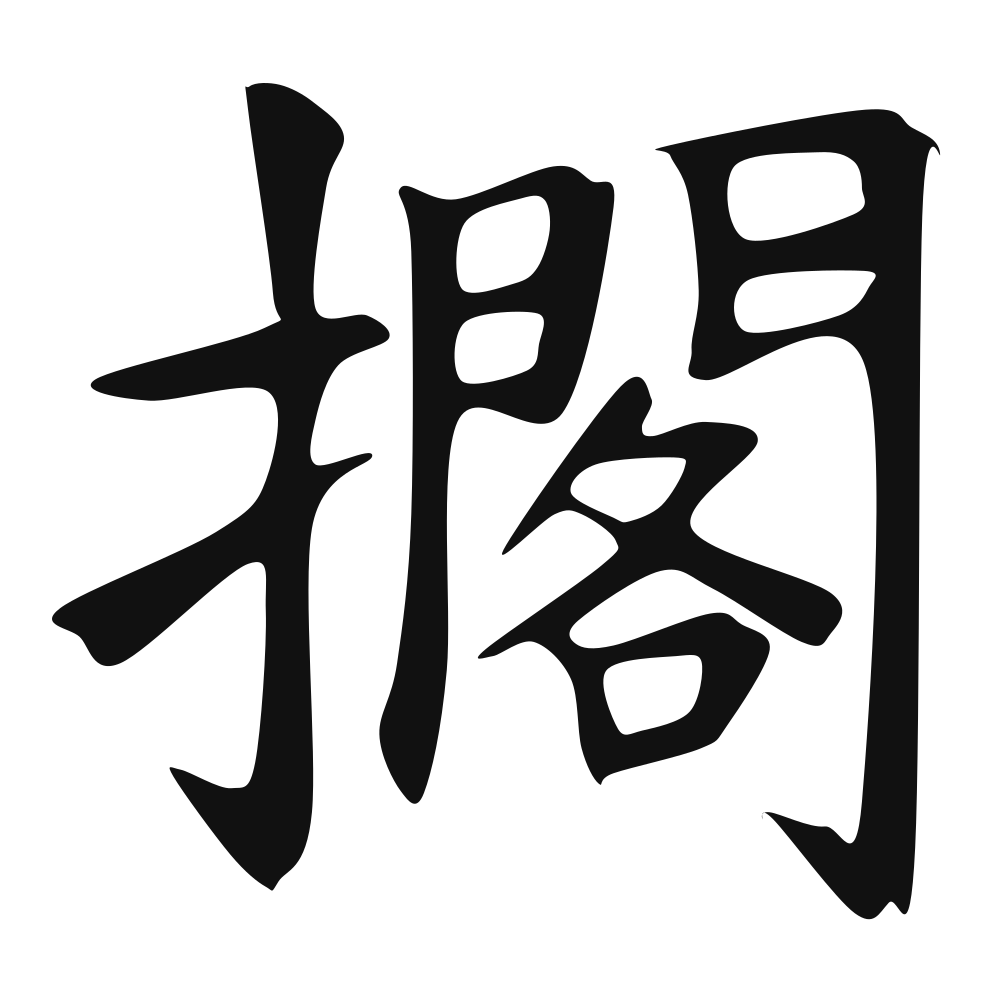
搁
to put; to place; to leave; to put aside; to shelve; to postpone; to add; to put in; to bear; to stand; to endure; Taiwan pr. [ge1]
Closest English meanings
put·place·delay
The Calligrapher — Shì Zhìguǒ 释智果
Sui monk-calligrapher and student of Zhiyong; author of the 'Heart-Form Ode' on structure
Sui calligrapher (), master of regular script — known for 《心成颂》. Sui dynasty
Cultural Story
A spoken character, 擱 is the setting of a thing down and the leaving of it there, the oar 擱 on the sand, the plan 擱 until the season turns. The books said 置 or 廢; 擱 is the plainer abandon, the one the river towns taught the tongue, and the oar on the sand was the only retirement a boatman ever got, offered by his own hand.
Common words & phrases
- 搁浅 strand · be shelved
- 搁置 shelve · put aside
- 搁下 put down
- 搁着 put aside
Read the story behind the character
A ship 擱淺, strands; a file is 擱置, shelved; you 擱下 the phone. The oar is a policy now. The setting-down-and-leaving is the same, whether it beaches a boat, freezes a reform, or merely ends a call you were not ready to end, and the shelved file is only the oar, waiting for a season that has stopped turning.
Why this character belongs on skin
The traveler sets the load on the stone and the stone accepts it without comment, and for the first time in a day the shoulders remember they are flesh. To put down is not to abandon but to grant a thing its resting place—the letter on the shelf, the grudge on the altar, the child finally lowered into sleep. We carry far past the point of need, mistaking the weight for worth. The sage sets the world aside each evening and finds the self that was underneath it. There is a courage in the setting-down, a trust that the load will wait and the back will mend. Wear this for the burdens you have finally released, and for the wisdom to stop mistaking endurance for life. The stone is always there. The load is not you.
Own this character
Purchase delivers the original SVG of this glyph, brushed by Shì Zhìguǒ 释智果, ready to place on skin, paper, or screen.