
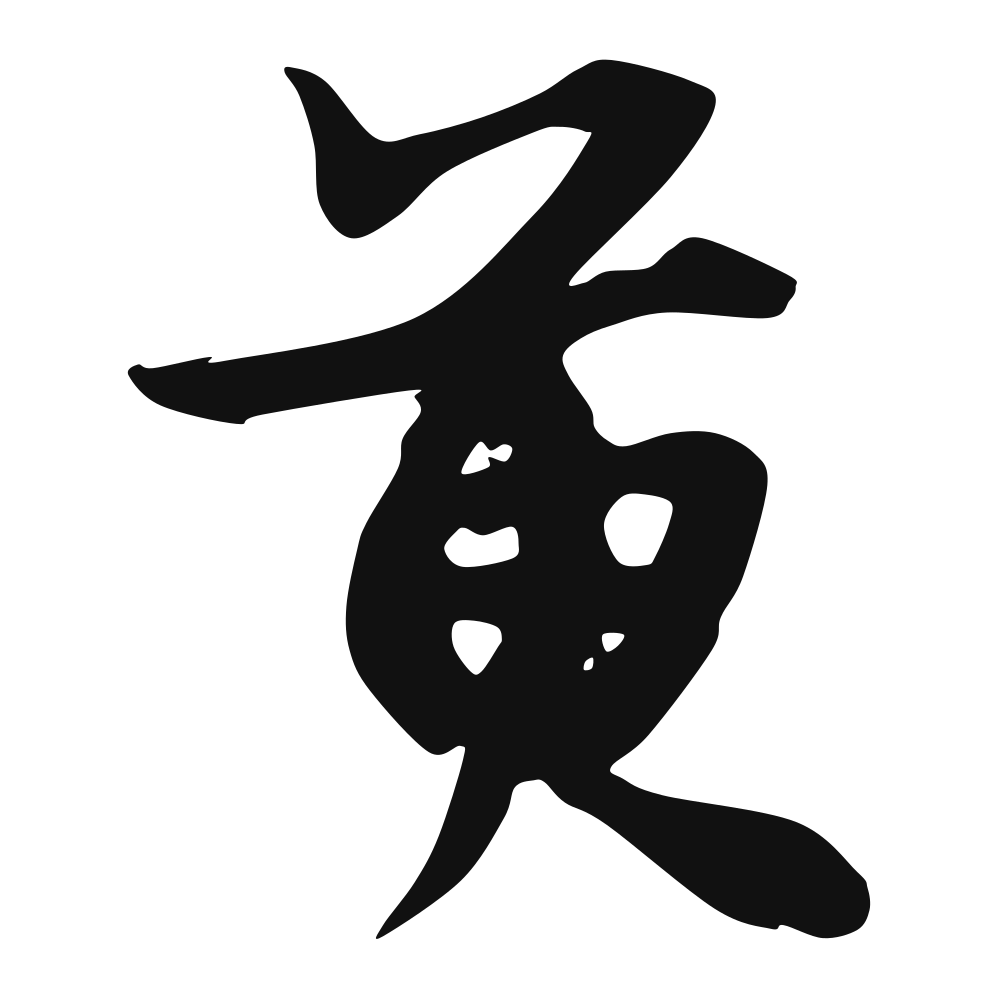
萸
usually seen in: cornel (Cornus spp.) (茱萸)
Closest English meanings
dogwood
The Calligrapher — Sòng Kè 宋克
Ming calligrapher foremost in his age for clerical-cursive script.
Ming calligrapher (), master of clerical cursive — known for 《急就章》. Ming dynasty
Cultural Story
萸 is best known through 茱萸, the dogwood or cornel whose red berries and sharp scent guarded the ancient calendar. On the Double Ninth, the ninth day of the ninth month, people climbed heights, drank chrysanthemum wine, and tucked sprigs of 茱萸 into their clothes to ward off harm. Wang Wei's immortal line — thinking of brothers climbing, and one fewer sprig among them — fixed the plant forever as a token of family and absence. 山茱萸, the cornelian cherry, was also medicine, its crimson fruit dried in herbalists' drawers.
Common words & phrases
- 茱萸 dogwood
- 山茱萸 cornelian cherry
Read the story behind the character
茱萸 still marks the autumn calendar. On the Double Ninth Festival a community center hands elders sprigs of dogwood — 茱萸 — and cups of chrysanthemum tea before the hill climb; a hiker photographs the scarlet berries of 山茱萸, cornelian cherry, glowing against a stone wall. A pharmacist points to jars of dried cornel fruit on the shelf of a traditional medicine shop, and a teacher recites Wang Wei to a class holding paper 萸 sprigs.
Why this character belongs on skin
There is a poem every Chinese child recites, and yu sits in its most famous line. Wang Wei, seventeen and alone in the capital on the ninth day of the ninth month, wrote: 'I know my brothers have climbed the heights, all wearing dogwood sprigs—yet one branch is missing,' meaning him. Every Double Ninth, families climbed hills and tucked sprigs of zhuyu, the cornel dogwood, into their clothes to ward off harm and cold. So this one character carries: protection, an autumn mountain, and the sharpest homesickness in the language. It is a leaf you wear to remember people you cannot touch. The tradition says the cornel's pungent fruit drives off evil; the poem says distance cannot be driven off at all. Both are true, and the character holds both. To tattoo yu is to confess that you, too, are the missing branch somewhere—absent from a table, a graveyard, a country, an embrace—while still believing in the climbing, the gathering, the warding. Wear it on the ninth day of your own heart. Someone far away is wearing the other sprig.
Own this character
Purchase delivers the original SVG of this glyph, brushed by Sòng Kè 宋克, ready to place on skin, paper, or screen.