
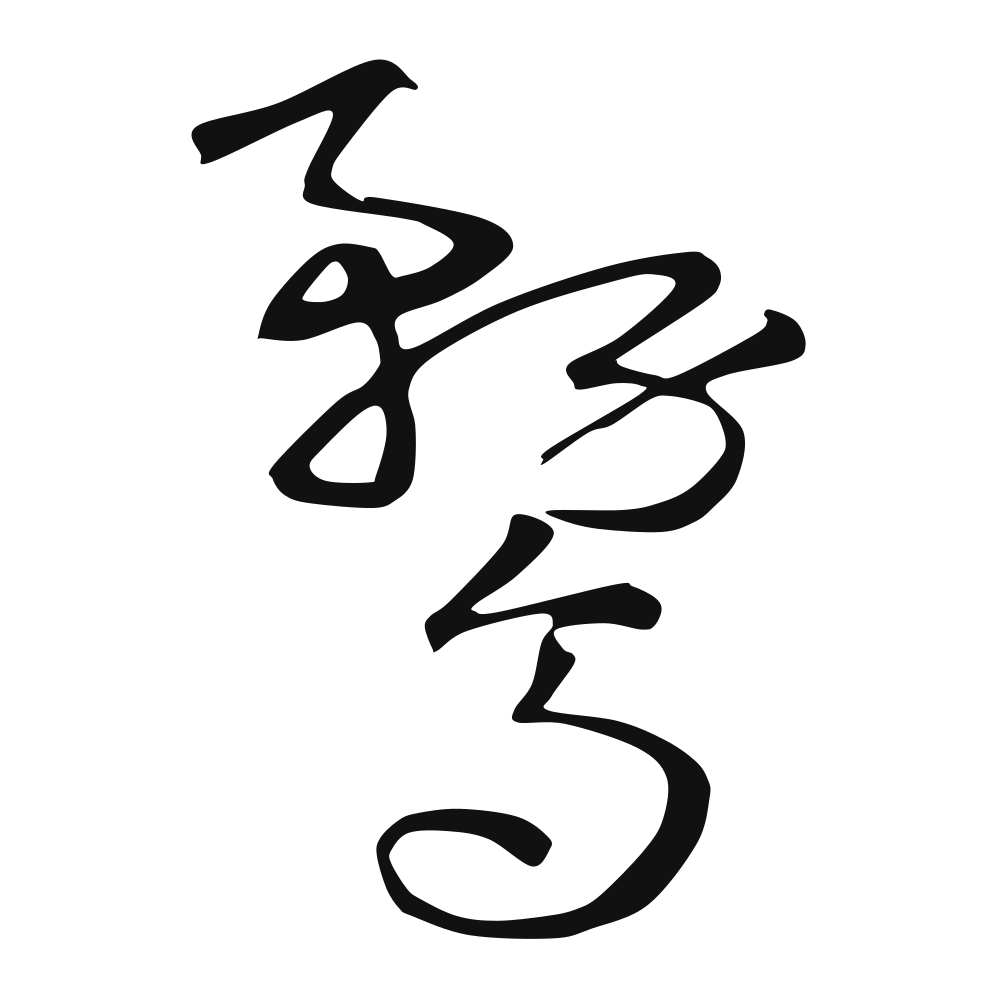
The Calligrapher — Sòng Kè 宋克
Ming calligrapher foremost in his age for clerical-cursive script.
Ming calligrapher (), master of clerical cursive — known for 《急就章》. Ming dynasty
Cultural Story
《説文解字》gives 鹜 as “舒鳧也” (the leisurely swimming duck), a phono-semantic compound from the bird radical with the sound 敄. Distinct from the barnyard 鸭, 鹜 denotes wild and wandering ducks. Wang Bo's line “落霞与孤鹜齐飞” set the lone duck against sunset as a peak of Tang elegance.
Common words & phrases
- 趋之若鹜 scramble for (like ducks) · flock to
- 孤鹜 lone duck
Read the story behind the character
The phrase 趋之若鹜 (“scramble for it like ducks”) captures crowds flocking to a fad or fortune. The 孤鹜 (lone duck) lives on in calligraphy of Wang Bo's famous line, printed on scrolls and tourist scarves, a single duck forever flying with the rosy evening clouds over the lake.
Why this character belongs on skin
A duck skims the winter river, unglamorous and utterly certain, and the character 鹜 has watched it for three thousand years. Its radical is the bird; its life is the water. Classical Chinese loved this creature for a paradox: 趋之若鹜—people chasing something like ducks to feed—mocked the crowd's scramble. But stand at the river yourself and you see the other truth: the duck never scrambles. It rides the current the Daoists keep praising, buoyant where heavier birds sink, at home on an element that would drown the rest of us. There is a version of ambition that looks like the duck—unhurried, low to the water, moving with the flow instead of against it—and it outlasts every flashier flight. To ink this character is to choose that intelligence: to be the one on the river when the flocks have chased some glitter and gone. Serenity, it turns out, is not stillness. It is paddling like hell beneath a surface of perfect calm, and knowing exactly where the current is kind.
Own this character
Purchase delivers the original SVG of this glyph, brushed by Sòng Kè 宋克, ready to place on skin, paper, or screen.