
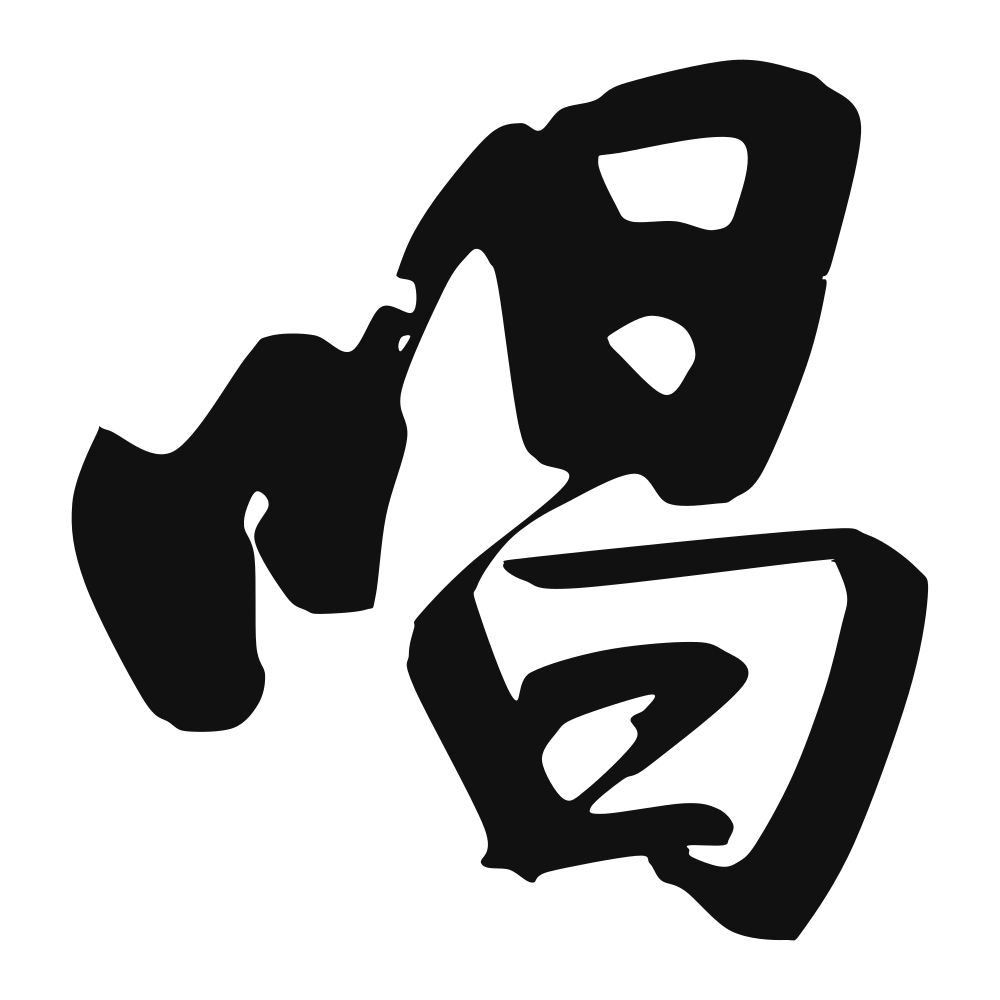
唱
to sing; to call loudly; to chant
Closest English meanings
sing·chant·perform
The Calligrapher — Chén Jìrú 陈继儒
Ming literati master of elegant running script.
Ming calligrapher (), master of running script — known for 《妮古录》. Ming dynasty
Cultural Story
In the classical tradition: 唱 pairs 口 with 昌 and means to sing, chant, and perform. The 詩經 was 歌唱, sung, not read, and 楚辭 was chanted at the river. A 合唱, chorus, joined villagers at festival; 唱片, discs, are modern, but 吟唱, chanting, carried the poet's music for millennia. To 演唱 was to give a story a voice, and the best singer 唱s the people's joys and griefs aloud.
Common words & phrases
- 唱歌 sing
- 演唱 perform · sing
- 合唱 chorus
- 歌唱 sing · praise
- 唱片 record · disc
- 吟唱 chant · sing
Read the story behind the character
In the modern world: Friends 唱歌 — sing — at KTV till midnight, and a star 演唱, performs and sings, to a sold-out crowd. The school 合唱, chorus, wins the contest, and grandma still 歌唱, sings and praises, old revolutionary songs. You play a 唱片, a record, on the turntable, or 吟唱, chant and sing, a lullaby to the baby. 唱 is how China turns feeling into sound.
Why this character belongs on skin
The body sings before it understands why. To chant is the oldest obedience—the monks at dawn, the soldiers' song across the water, the woman at the sink who hums without knowing the tune is hers. The mouth-radical opens and the self pours out in a line that needs no argument. Confucius said music was the truest governance, for a people that sings together cannot easily be lied to. Love, too, is a song you did not choose; it arrives in the throat unbidden and suddenly you are singing to a ceiling at two in the morning. We are ashamed of our own voices and so we mouth the words of others. Ink this where breath becomes sound, and let it license you: open the mouth, let the real note out, the one the world has not approved.
Own this character
Purchase delivers the original SVG of this glyph, brushed by Chén Jìrú 陈继儒, ready to place on skin, paper, or screen.