
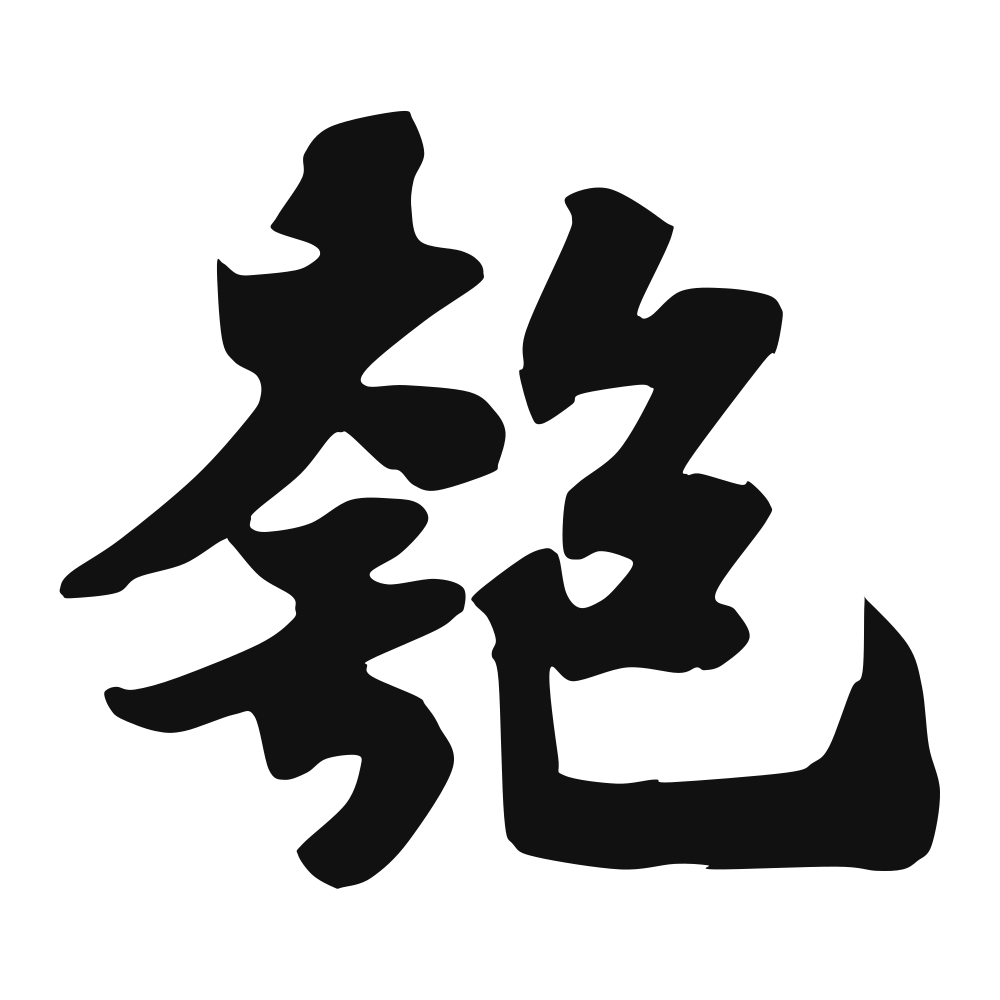
匏
bottle gourd; Lagenaria vulgaris
Closest English meanings
gourd
The Calligrapher — Sū Shì 苏轼
Song literatus whose spontaneous running script shaped the literati ideal.
Song calligrapher (1037–1101), master of running script/regular script — Song poet-statesman and polymath whose expressive running script made personality, not rules, the point. Song dynasty
Cultural Story
Confucius asks, “吾岂包瓜也彻,焉能系而不食” — am I a bitter gourd, hung on the wall and never eaten? The 包 was the long gourd, dried as a cup and a float. The Odes sing “包有苦叶,” bitter leaves at the ford, a girl waiting for her ferry and her man.
Common words & phrases
- 匏瓜 gourd · calabash
- 匏樽 gourd cup
- 匏笙 gourd sheng
Read the story behind the character
A tea house serves 包瓜-shaped cups at a heritage fair; 包簋 is the gourd ladle a calligrapher keeps for rinsing his brush. 包笙, the gourd reed-organ, surfaces in a folk troupe's video, and a market stall sells 包 as a dried ornament. The word now marks the craft corner of a culture that once ate the thing.
Why this character belongs on skin
Among the eight tones of ancient Chinese music—the metals, stones, silks, bamboos, skins, clays, woods—one voice was a vegetable. 匏: the gourd, dried and fitted with pipes, the breath-box of the sheng, whose reeds sound like wind crossing a valley floor. Confucius ranked it among the instruments of ritual, and so the humble calabash stood in courts beside bronze bells, breathing chords. What a quietly subversive pedigree: the aristocratic orchestra kept alive by a farmer's drying rack. There is a lesson smuggled in with the tuning—dignity is not a birthright of bronze; resonance can grow on a vine. The gourd had to die to its softness, dry in the sun, hollow itself out before it could sing, which is more than metaphor if you've ever been emptied by loss and found a voice in the emptiness. Ink this character for the part of you that went hollow and came back harmonic. The breath through it is your own.
Own this character
Purchase delivers the original SVG of this glyph, brushed by Sū Shì 苏轼, ready to place on skin, paper, or screen.