
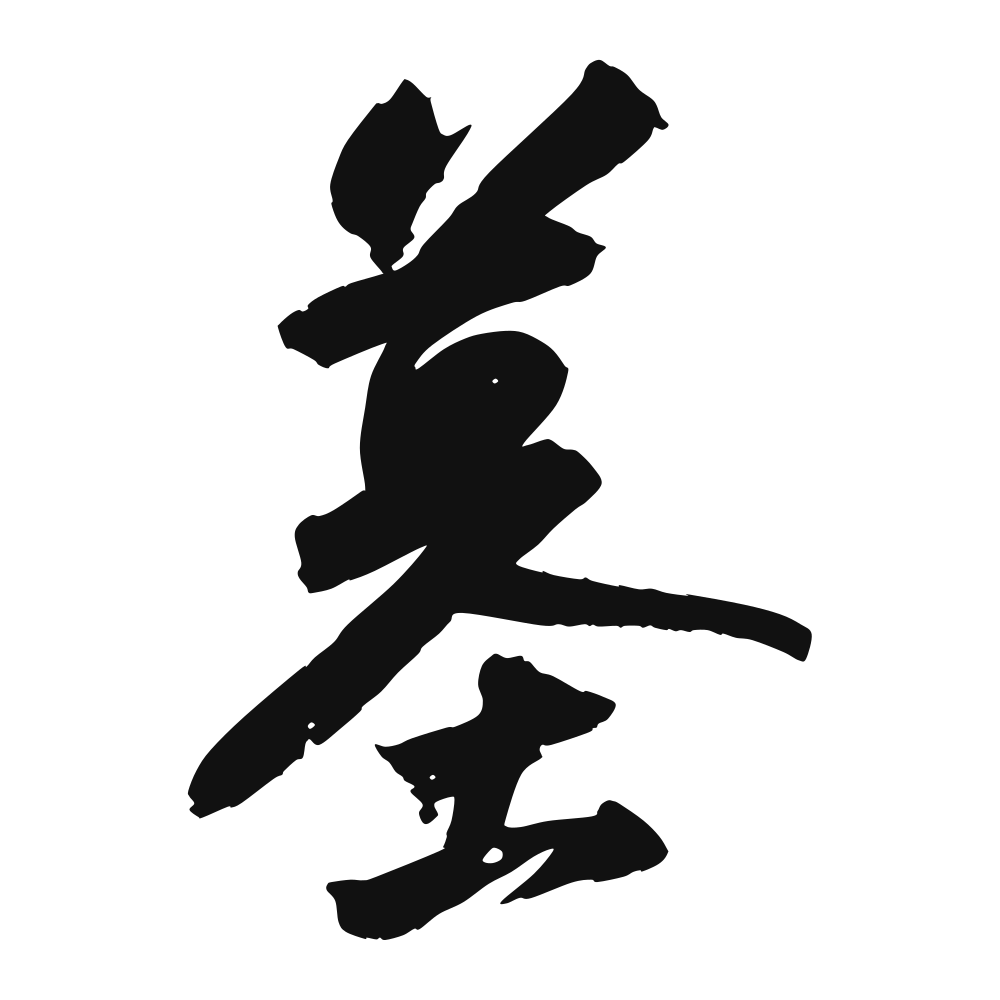
墓
grave; tomb; mausoleum
Closest English meanings
tomb·grave·cemetery·mound·sepulcher
The Calligrapher — Sū Shì 苏轼
Song literatus whose spontaneous running script shaped the literati ideal.
Song calligrapher (1037–1101), master of running script/regular script — Song poet-statesman and polymath whose expressive running script made personality, not rules, the point. Song dynasty
Etymology & Meaning · 字义溯源
2 · The Character: 墓 Mù (4th tone). The Shuowen Jiezi entry reads 「墓,丘也。从土莫声」; Duan Yucai emends to 「丘墓也」 and quotes Zheng Xuan: 「墓,冢茑之地,孝子所思慕之处」 — the burial ground, the place where a filial child goes to long for the dead; 莫 (dusk) is phonetic but the resonance with 慕 'to yearn' is not accidental. The classical texts are technical about it: 《礼记·檀弓上》 「古也墓而不坟」 — anciently one buried without raising a mound; 《扬子·方言》 「凡葬无坟谓之墓」; 《周礼·春官》 even lists a 墓大夫, an officer of graves. 《系辞下》 traces coffin-burial itself to the hexagram Da Guo. Grading: this is a funerary word, full stop — the plainest 'no' in the entire character set. Nothing pairs it into safety. If the sound is what the client loves, offer 慕 (to admire, to long for) instead.
Cultural Story
墓 is the burial mound. The 秦始皇陵 (First Emperor's tomb) at Xi'an still guards its army of terracotta soldiers underground; 墓志 (epitaph) texts record a life in carved stone. The Tang poet 杜牧 mused at 墓 of fallen beauties by the road. Each 清明 (Qingming), families 扫墓 (sweep tombs) with food and paper offerings. The 墓 is where memory meets earth.
Common words & phrases
- 坟墓 grave · tomb · burial · sepulcher
- 墓地 cemetery · graveyard · burial ground · tombs
- 墓碑 tombstone · gravestone · monument · stone
- 墓志 epitaph · inscription · memorial · tomb text
- 扫墓 tomb-sweeping · visit grave · mourn · honor
- 墓穴 tomb · grave · vault · burial chamber
Read the story behind the character
Families 扫墓 at 墓地 (cemeteries) each Qingming with flowers and incense; a 墓碑 (tombstone) is engraved by a shop near the gate. 坟墓 (graves) dot the ancestral hills of the countryside; archaeologists open a 墓穴 (tomb) for a documentary crew. Grave-relocation news uses 墓 to name what must move for a new rail line. The rite has barely changed in a thousand years.
Why this character belongs on skin
Grass growing over earth, and beneath it, the unspoken. 墓 is the grave—its top radical is vegetation, because every grave in its true form is a green mound in a field, rain-worn, visited, slowly becoming landscape. The Chinese did not hide death; they made graves into appointments. Qingming comes each spring and families sweep the tomb, pour wine, talk to the ones who cannot answer, and the character stands at the center of that tenderness. Buddhists read it as a door, not a wall; Stoics kept skulls on desks for the same reason a grave keeps grass—to remind the living that time is spending us. This is not a morbid character. It is the most honest one. It says: I know the arithmetic of my days, and I refuse to live as if I don't. Memento mori for the skin. For those who want mortality as a companion rather than a threat, this small grave in ink is a quiet, bracing vow.
Own this character
Purchase delivers the original SVG of this glyph, brushed by Sū Shì 苏轼, ready to place on skin, paper, or screen.