
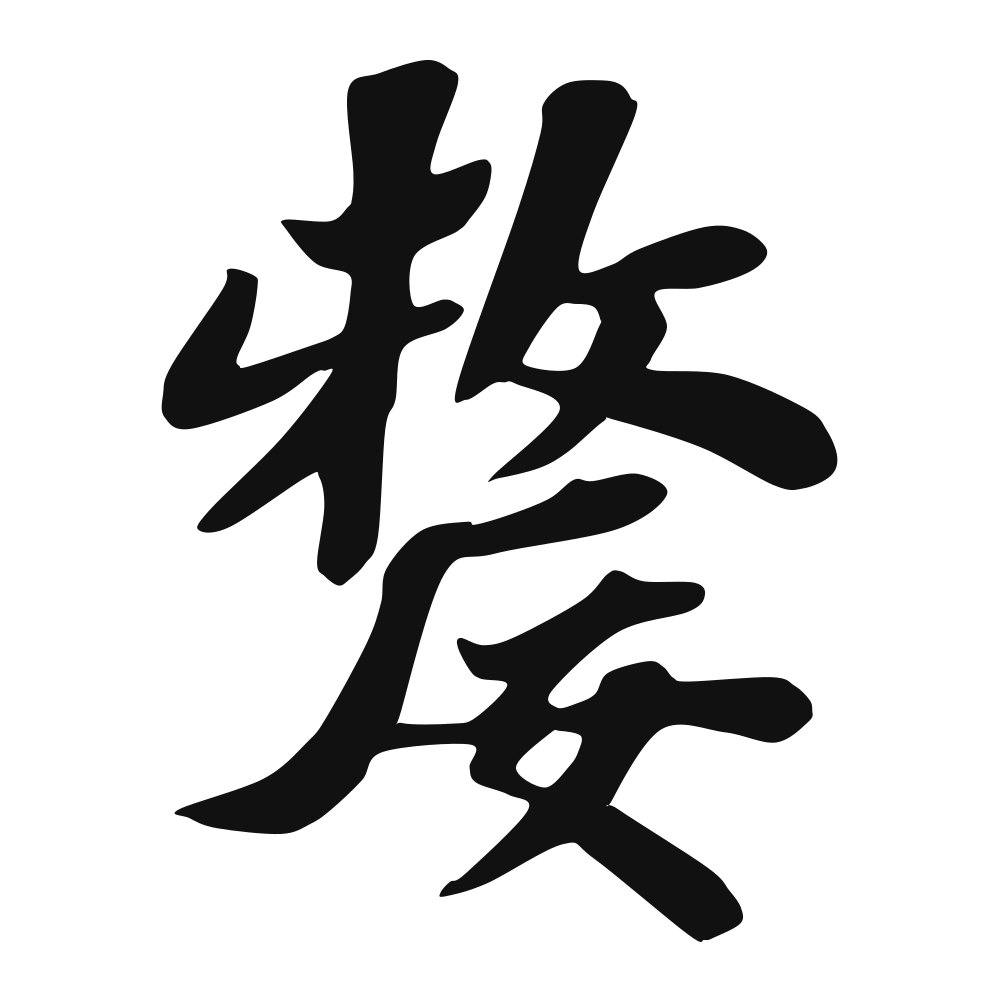
The Calligrapher — Sū Shì 苏轼
Song literatus whose spontaneous running script shaped the literati ideal.
Song calligrapher (1037–1101), master of running script/regular script — Song poet-statesman and polymath whose expressive running script made personality, not rules, the point. Song dynasty
Cultural Story
Su Shi's 'Red Cliff' hears 'the widowed woman of the lonely boat weep,' 泣孤舟之嫠妇, and the 'Zuo Zhuan' praises a 嫠 who 'does not mind her warp but fears the realm's fall' — 嫠不恤纬. The widow here stands for loyalty beyond her own loss, a figure of political devotion as much as grief.
Common words & phrases
- 嫠妇 widow
- 嫠不恤纬 widow not worrying about warp · concern for state
Read the story behind the character
Relief funds still use 嫠妇 for widows left poor by disaster, and editorials invoke 嫠不恤纬 when citizens fret for the country over private want. The character is rare in speech but ready in obituaries and charity appeals, carrying a classical weight of selfless sorrow the modern welfare form can never match.
Why this character belongs on skin
嫠 is the widow — and behind the flat translation, one of Chinese literature's most steadfast figures. The widow of the Tang poets kept the cold house, kept the loom, kept faith with a man who no longer required anything of her. Du Fu wrote of 嫠妇 weeping in her tower; the historians praised the 嫠 who refused to remarry, not for the refusal but for the depth of what it testified. There is courage in loving something that is gone. To carry this character is to declare that your heart does not dissolve with circumstance — that some attachments are structural now, load-bearing, part of the house. The dead do not need you. You love them anyway. That is the whole tattoo.
Own this character
Purchase delivers the original SVG of this glyph, brushed by Sū Shì 苏轼, ready to place on skin, paper, or screen.