
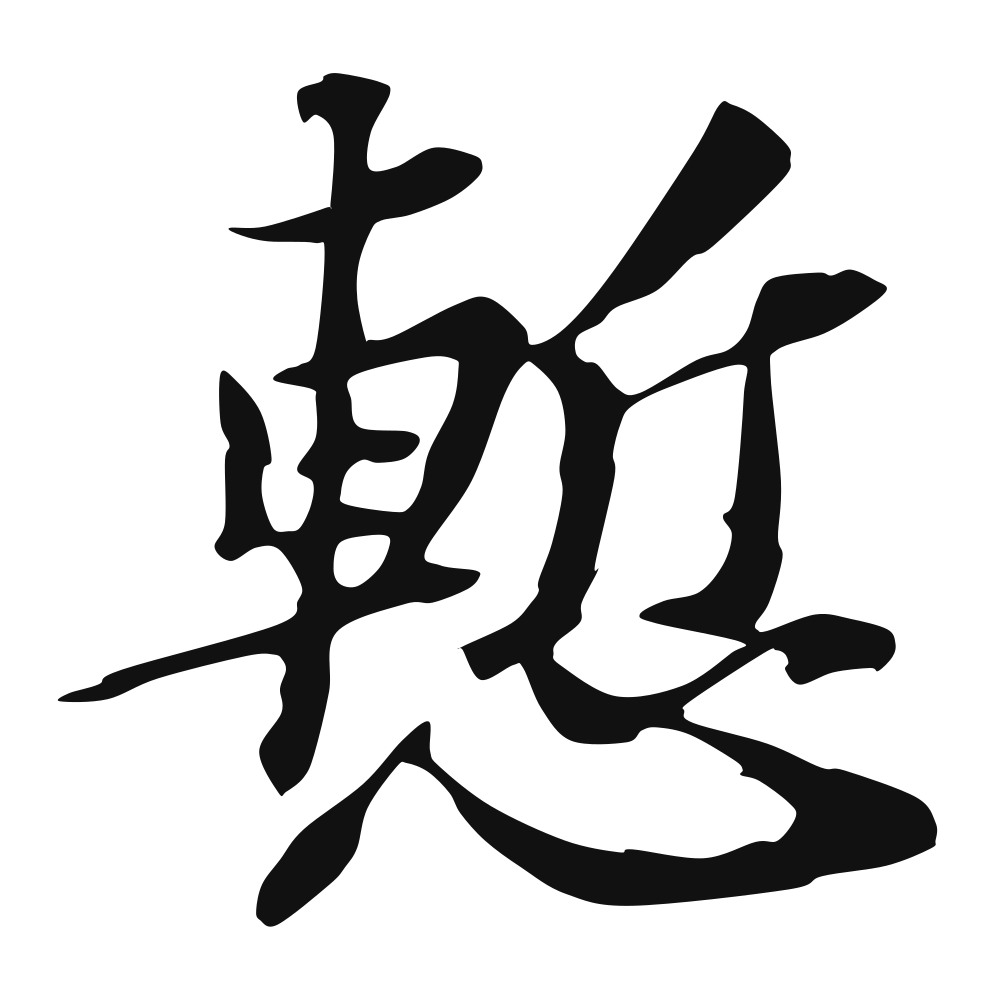
The Calligrapher — Sū Shì 苏轼
Song literatus whose spontaneous running script shaped the literati ideal.
Song calligrapher (1037–1101), master of running script/regular script — Song poet-statesman and polymath whose expressive running script made personality, not rules, the point. Song dynasty
Cultural Story
惭 is the flush of falling short. The 論語 leaves a man 惭 who cannot match the words he has spoken, and the mirror of self-regard is the oldest use. The heart with 斩, to cut, is shame that severs you from the person you claimed to be. It is the inward wince, not the public one.
Common words & phrases
- 惭愧 ashamed · embarrassed
- 羞惭 ashamed · abashed
- 自惭 feel ashamed
- 大言不惭 brag shamelessly
Read the story behind the character
惭 is the everyday shame: 惭愧 the thanks that admits you did not deserve the help, 羞惭 the lie that got found out. 大言不惭 is the blowhard who brags without blinking, the negative example everyone laughs at. It names the gap between who you are and who you announced.
Why this character belongs on skin
Shame is not the enemy of honor; it is its first true witness. The character pairs the heart with a blade being cut down, and that is exactly right — cán is the inward wince when you have fallen short of your own measure, not the world's. The Stoics called it the conscience that keeps a man honest in the dark; the Buddhists name it the beginning of repentance, the door through which transformation enters. To feel 惭 is to still possess a standard higher than comfort. A warrior who feels nothing has merely grown numb; the one who flinches at his own failure is still alive, still capable of becoming better than he was. Wear this ink where only you can see it, a private oracle. Let it sting a little. That sting is the proof you have not sold your soul for ease, that somewhere inside you a clean fire still refuses the cheap and the cowardly.
Own this character
Purchase delivers the original SVG of this glyph, brushed by Sū Shì 苏轼, ready to place on skin, paper, or screen.