
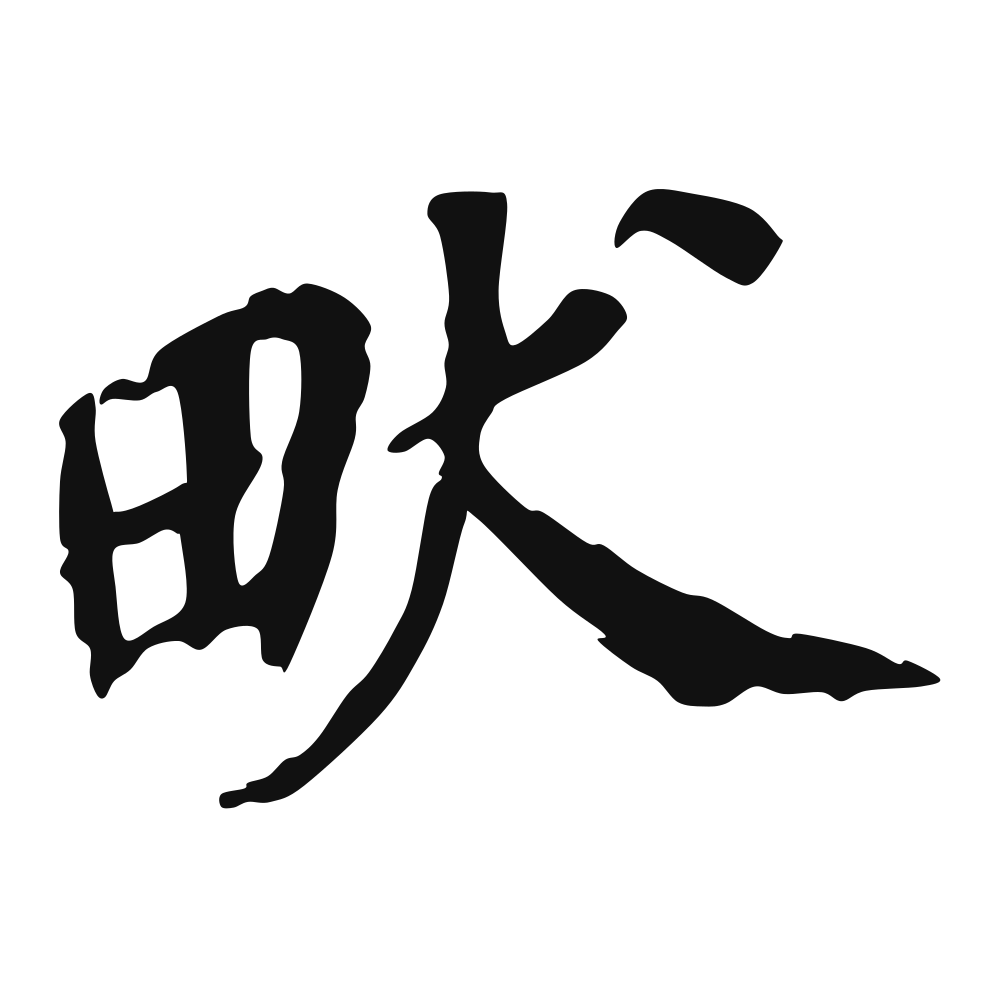
The Calligrapher — Sū Shì 苏轼
Song literatus whose spontaneous running script shaped the literati ideal.
Song calligrapher (1037–1101), master of running script/regular script — Song poet-statesman and polymath whose expressive running script made personality, not rules, the point. Song dynasty
Cultural Story
Quan is the furrow-ditch between ridge and ridge — the small engineering that made dry-land farming work, channeling water exactly where seedlings waited. Classical texts treat it as the emblem of humble origin: Mencius opens his roll call of the great with Shun, who rose from 畎亩, furrow and field.
Common words & phrases
- 畎亩 fields · farmland
- 畎浍 field ditches
Read the story behind the character
The character is now almost purely literary — 畎亩 survives in essays and speeches as a learned way to say 'from the lowest soil', and 畎浔 appears in old irrigation treatises. Farmers dig the ditches still; only the word for them has grown scarce.
Why this character belongs on skin
There is a humility in a furrow — a long, patient line drawn through earth by someone who knows the ground will answer. 畎 is that groove in a field, the narrow channel that carries water to roots, the smallest architecture of survival. The ancients spoke of 畎亩, the furrows and fields, as the place where sages hid before they were found — Shun plowed there, a king in the mud before the crown found him. Daoism loves this: the Dao moves like water in a low channel, unnoticed, unstoppable, finding every seed. A furrow is not a wound; it is an agreement with the land. You open yourself a little, and the world grows through you. Ink holds a line the way a field holds rain. To wear 畎 is to confess that your deepest work has always been quiet, horizontal, close to the dirt — and that everything green in your life came up through it. Let the skin be plowed. Something is planted already.
Own this character
Purchase delivers the original SVG of this glyph, brushed by Sū Shì 苏轼, ready to place on skin, paper, or screen.