
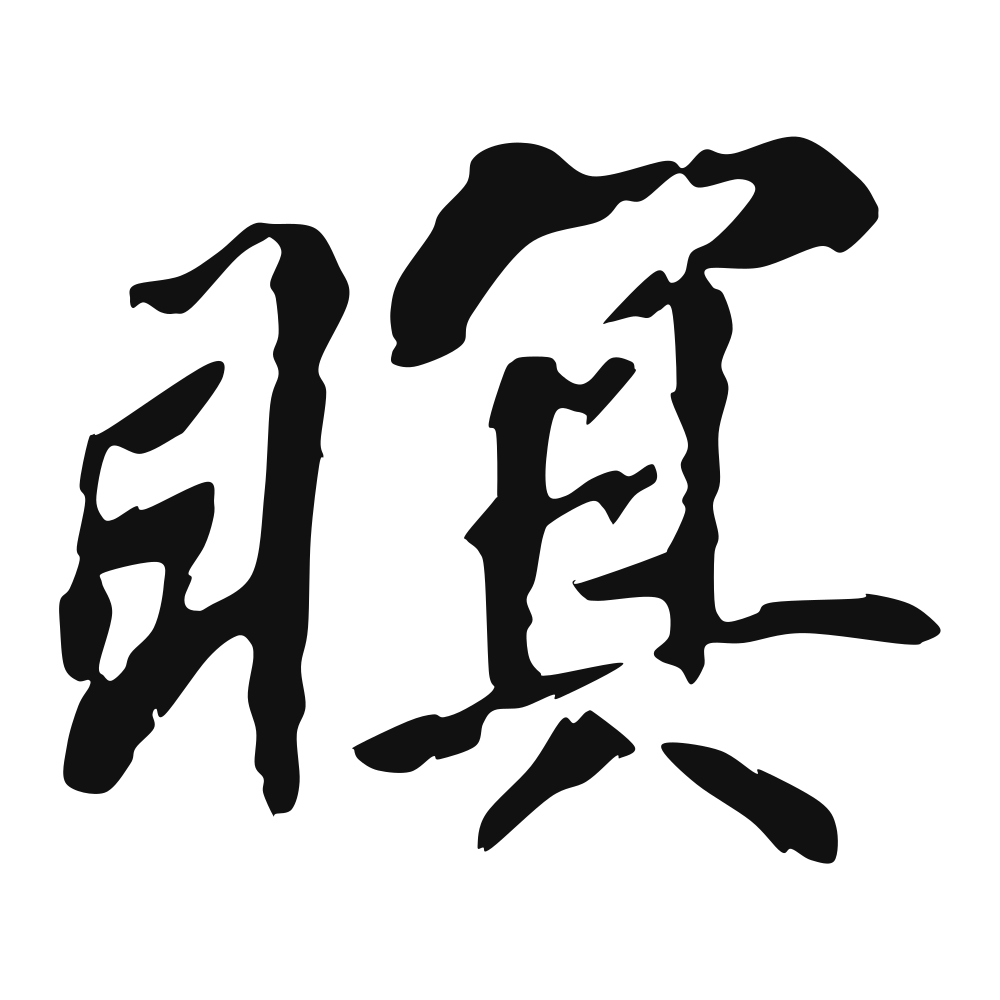
瞑
to close (the eyes)
Closest English meanings
to close eyes·dark
The Calligrapher — Sū Shì 苏轼
Song literatus whose spontaneous running script shaped the literati ideal.
Song calligrapher (1037–1101), master of running script/regular script — Song poet-statesman and polymath whose expressive running script made personality, not rules, the point. Song dynasty
Cultural Story
To 瞑 is to let the eyelids fall, especially for the last time. Ancient writers treated a peaceful closing of the eyes as the seal on a well-finished life; hence 死不瞑目, dying with eyes unclosed because a wrong remains unavenged — a phrase at home in Han historical narrative and later in opera and fiction. The same eye that closes shades into 冥, the dark of the underworld.
Common words & phrases
- 瞑目 close eyes (in death)
- 死不瞑目 die with eyes unclosed (unavenged)
Read the story behind the character
Modern Chinese rarely 瞑s outside the theater of grief. In costume dramas the dying general grips a son's hand and refuses to 瞑目 (close his eyes in death) until revenge is promised; novelists still write 死不瞑目 (die with eyes unclosed, unavenged) of unresolved injustice. Meditation teachers, meanwhile, borrow the gentler sense — lowered lids, quiet breath — giving this somber character a calmer afterlife.
Why this character belongs on skin
The eyes close and the world does not end, which is the whole argument. This character means to shut the eyes — lids lowering toward sleep, toward meditation, and, at the far edge, toward death: the poets also used it for the final closing, and for the vow of one who will not 瞑目 — will not rest — until something is done. Three meanings, one gesture: release, depth, resolve. The mystics say the eyes are for the world, but the inward gaze has its own landscape, and it takes discipline to visit — Plotinus wept at his own vision; the Zen sitter crosses a country with no miles in it. Everything loud is outside; everything true is behind the lids. This is ink for people who go there — over a closed eye it is almost too perfect, the permanent dusk. Let it mark the turn: out there for noise, in here for truth.
Own this character
Purchase delivers the original SVG of this glyph, brushed by Sū Shì 苏轼, ready to place on skin, paper, or screen.