
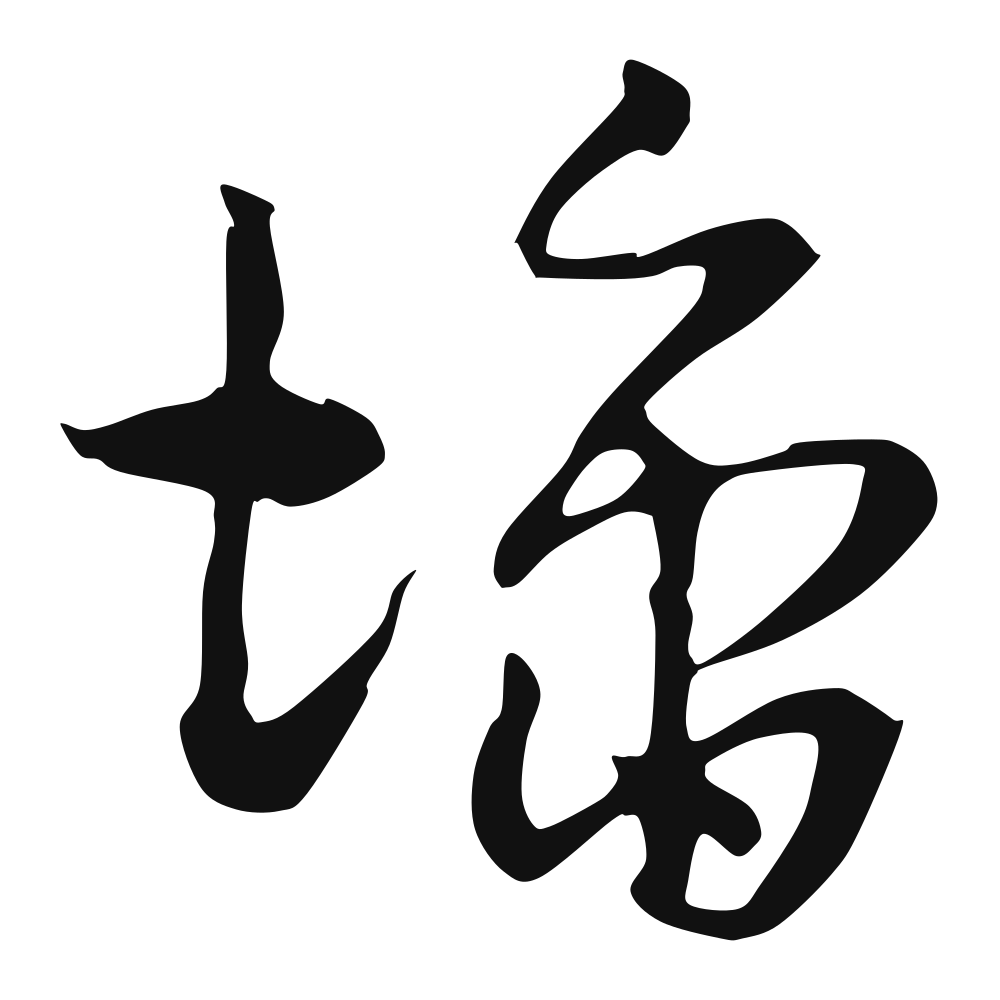
墉
fortified wall; city wall
Closest English meanings
wall·city wall
The Calligrapher — Sūn Guòtíng 孙过庭
Tang cursive master and author of the key treatise 'Shu Pu'.
Tang calligrapher (约646–691), master of cursive script — known for 《书谱》. Tang dynasty
Cultural Story
墉 is a wall, especially a city wall. The Classic of Poetry sings of 墉 built high and true by the builders of old; the 洛邑 (Luoyi) eastern capital rose behind 城墉 of rammed earth. 高墉 (high wall) appears in the 易经 (Book of Changes) as a metaphor for defended virtue. 墉垣 simply means walls. The character is the city made vertical.
Common words & phrases
- 城墉 city wall
- 墉垣 walls
- 高墉 high wall
Read the story behind the character
The word appears on plaques at restored 城墉 and in essays on the 墉垣 of old towns along the rivers. A 高墉 now describes a modern perimeter wall around a gated compound or factory. Few speak 墉 in daily conversation, yet it frames every photograph of a surviving rampart — the long line that once defined a city's edge.
Why this character belongs on skin
Every city that meant to survive its century raised a 墉 — the high rammed-earth wall, white-faced, thorned with watchtowers, on which sentries walked at night above the sleeping streets. The character is ancient and absolute: protection made into architecture. But walls tell two stories at once. Outside, they say keep out; inside, they whisper something shyer — you are safe here, the children may sleep. And every wall ever built has also been a confession of fear, a monument to the possibility of loss. The I Ching hints at the truth that finally undoes them: walls stand until the moment they must fall, and what they defended survives or perishes by other, softer means. We build them still, out of habit, out of hurt — around the heart most of all. Inked on the skin, 墉 can be worn either way: as armor, or as a promise that this one, unlike the others, has a gate.
Own this character
Purchase delivers the original SVG of this glyph, brushed by Sūn Guòtíng 孙过庭, ready to place on skin, paper, or screen.