
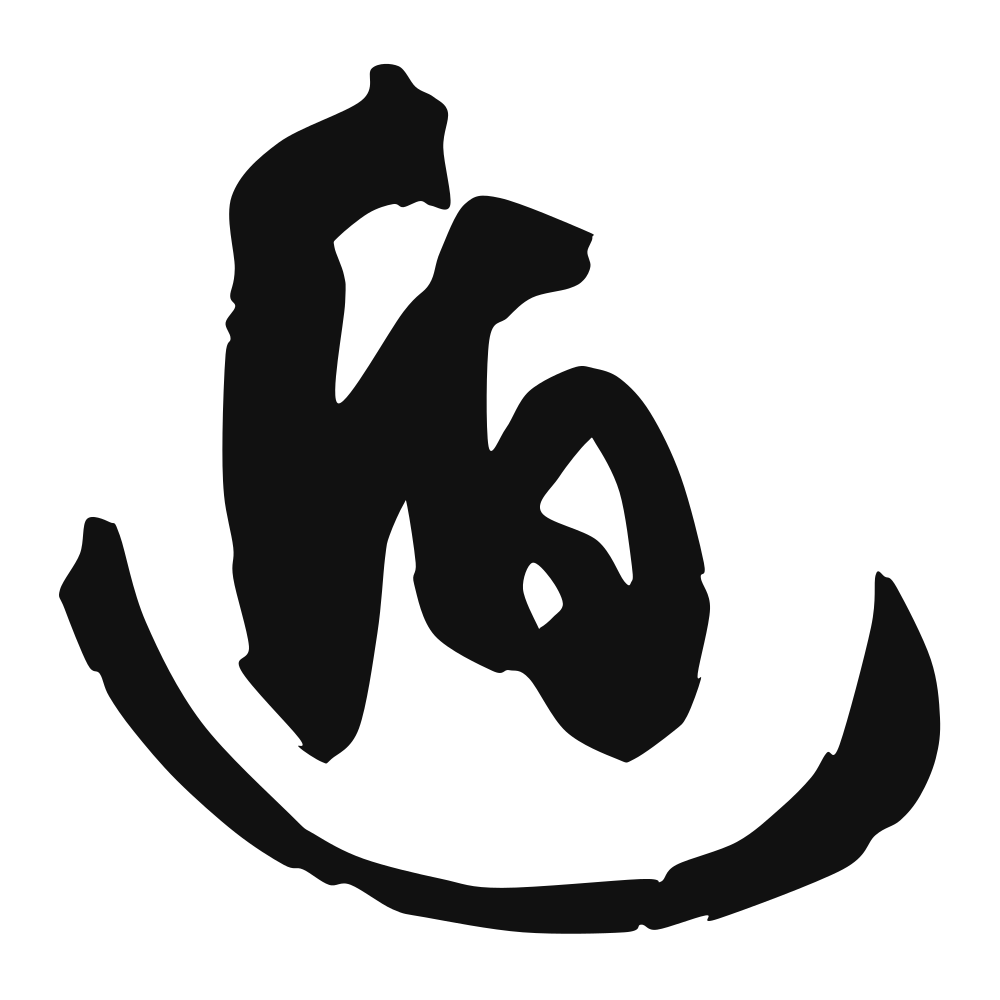
遁
to evade; to flee; to escape
Closest English meanings
to flee·to escape·to hide
The Calligrapher — Sūn Guòtíng 孙过庭
Tang cursive master and author of the key treatise 'Shu Pu'.
Tang calligrapher (约646–691), master of cursive script — known for 《书谱》. Tang dynasty
Cultural Story
Dun is vanishing with intention. The Book of Changes devotes a hexagram to it — retreat at the right moment — and praises the hidden sage who 'withdraws from the world without gloom': disappearance as philosophy, not defeat.
Common words & phrases
- 逃遁 flee · escape
- 遁世 retire from the world
- 遁词 evasion · subterfuge
- 隐遁 live in seclusion
Read the story behind the character
Dun haunts modern narrative: taodun (flee and vanish) the suspect gone before the roadblock, dunshi (withdraw from the world) the influencer who deletes everything, yindun (seclusion) the coder who left Shanghai for a Dali courtyard. Even dunci (evasion) — the excuse that lets someone slip the question.
Why this character belongs on skin
遁 is the escape stroke: to slip away, vanish, go to ground. Its finest hours are holy ones—the 遁世 hermit, the one who flees the world not from cowardice but from clarity. The I Ching has a hexagram of Retreat, and it is counted auspicious: knowing when to withdraw, the sage said, is greater than knowing when to advance. Christ vanished into the wilderness; the Buddha left the palace at night; Zhuangzi's turtle dragged its tail happily in the mud rather than be venerated dead in a temple. There is a sensual, secret liberty in this character—the door easing shut behind you, the crowd thinning, your name becoming a rumor. We are hunted by notification, obligation, the endless audit of being seen. To ink 遁 is to keep the vanishing art alive in your skin: the promise that part of you can always get out, and does, silently, whenever it chooses.
Own this character
Purchase delivers the original SVG of this glyph, brushed by Sūn Guòtíng 孙过庭, ready to place on skin, paper, or screen.