
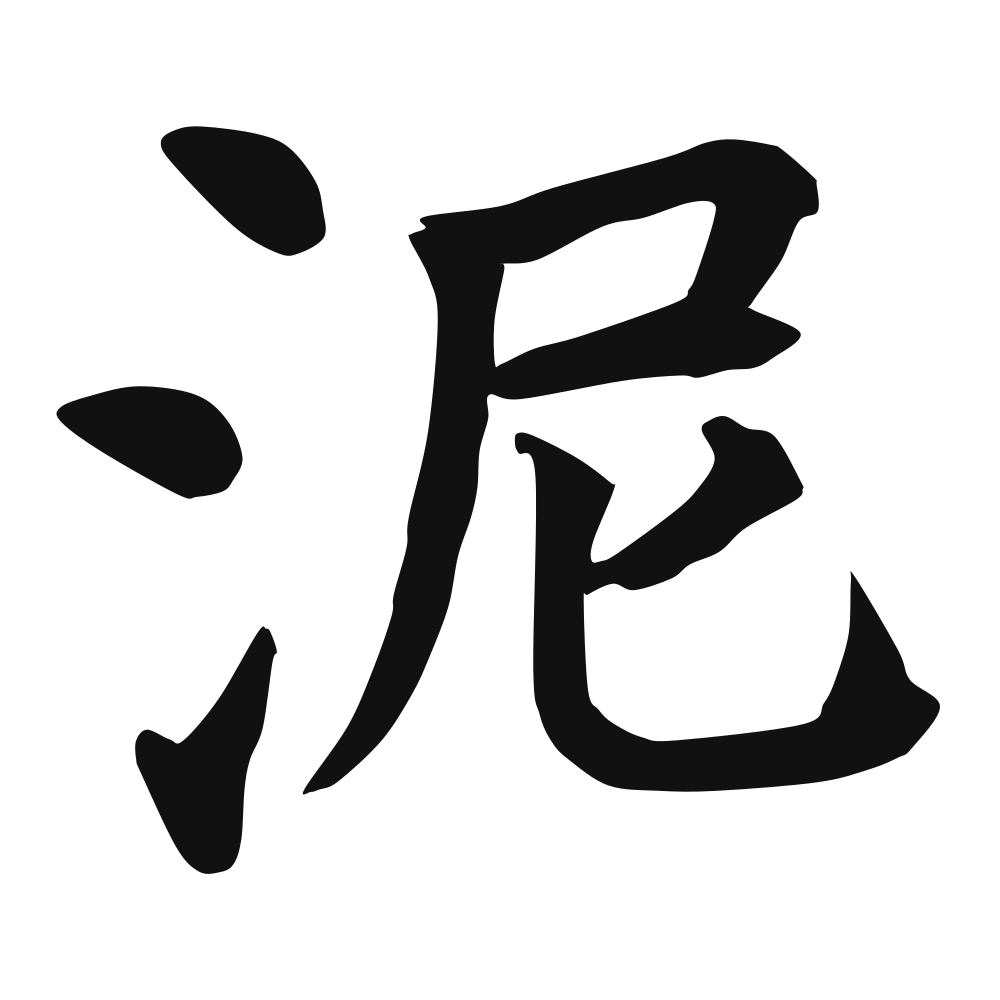
泥
mud; clay; paste; pulp; restrained
Closest English meanings
mud·clay
The Calligrapher — Suǒ Jìng 索靖
Jin calligrapher famed for zhangcao (clerical-cursive script); author of the Essay on Cursive Script.
Jin calligrapher (), master of clerical cursive — known for 《月仪帖》. Jin dynasty
Cultural Story
泥 is wet earth that clings; the 說文 says mud from water and soil. Potters used 泥土 to shape vessels, and the 論語 compares the noble man to 泥 uncorrupted by the world. Builders later mixed 水泥 to raise walls and bridges.
Common words & phrases
- 泥土 earth · soil
- 水泥 cement
- 泥巴 mud
- 泥浆 mud · slurry
- 泥泞 muddy
Read the story behind the character
Kids mold 泥巴 (mud) into little dragons. Workers pour 水泥 (cement) for the new floor. A boot sinks in the 泥浆 (mud, slurry) by the river. After rain the yard is 泥泞 (muddy). The 泥土 (earth) smells sweet when the first spring rain falls.
Why this character belongs on skin
Before the wall, before the bowl, before the figure that would stand in the temple, there was only wet earth pressed between two palms. 泥 is the mud, the clay, the humble first matter of every made thing. The sage Zhuangzi laughed at the turtle who preferred the mud of the ditch to the honors of court; to be muddy is to be free, unpolished, alive. We are taught to rise above it, but 泥 is where we come from and where we return. To wear this character is to claim the ground without flinching. Let it sit at the base of the spine, the root of you. The lotus, they say, rises from exactly this. And so will you, if you stop pretending the dirt beneath you was ever something to escape.
Own this character
Purchase delivers the original SVG of this glyph, brushed by Suǒ Jìng 索靖, ready to place on skin, paper, or screen.