
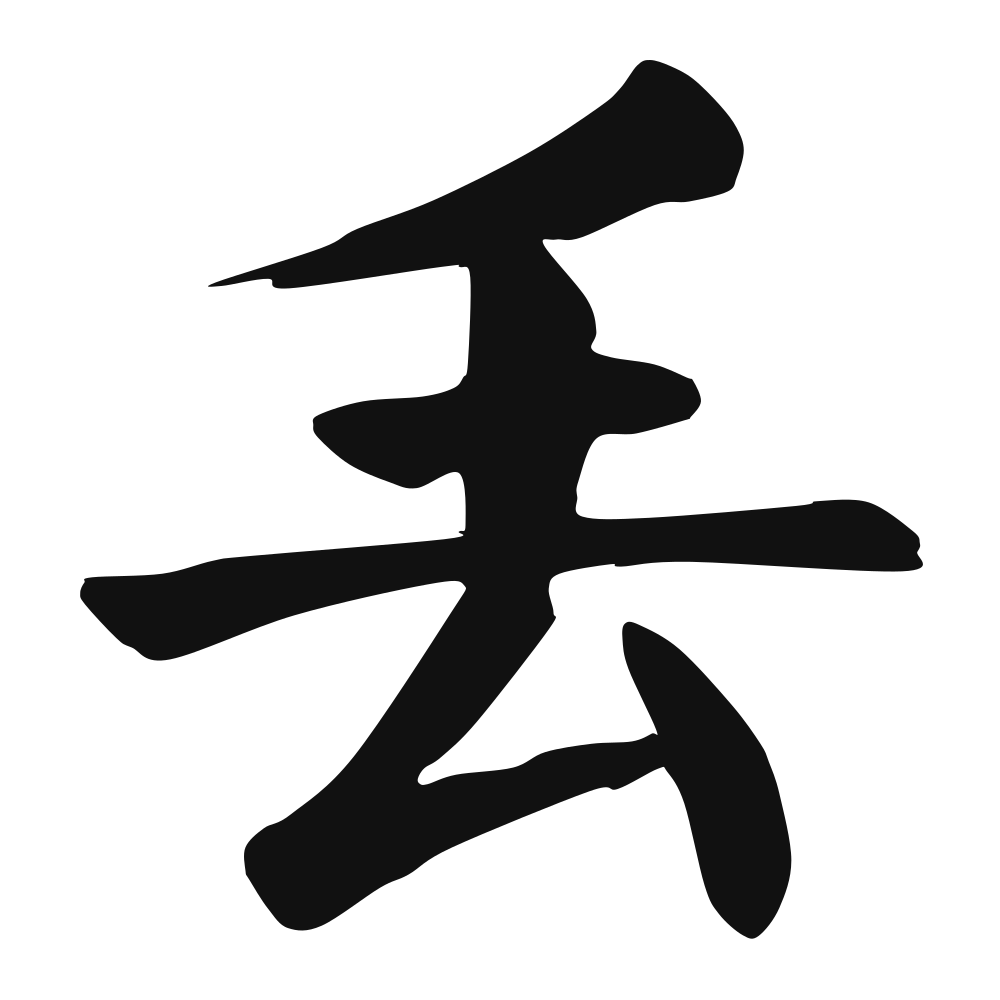
丢
to lose; to put aside; to throw
Closest English meanings
lose·throw·misplace
The Calligrapher — Táo Hóngjǐng 陶弘景
Liang Daoist recluse and calligrapher; master of running script, author of letters on calligraphy
南朝梁 calligrapher (), master of running script/cursive script — known for 《瘗鹤铭》. Liang dynasty (Southern Dynasties)
Cultural Story
丢 carries the same hand-letting-go picture as its variant 丟, and like it, it belongs to the spoken tongue rather than the Confucian shelf. The old books preferred 失 and 棄 for loss and casting-off. 丢 slipped in from the market and the courtyard, the word a mother used when a child wandered off or a bowl hit the floor. It is common speech, written down late.
Common words & phrases
- 丢失 lose · missing
- 丢脸 lose face
- 丢下 leave behind · abandon
- 丢弃 discard · throw away
Read the story behind the character
丢弃 the packaging, 丢下 your umbrella on the train, 丢失 the ticket, 丢脸 before the whole meeting. It is one of the first verbs a learner meets because it is one of the first disasters, the lost item, the abandoned thing, the face left on the floor. The pair 丢 and 丟 are the same word in two forms; dictionaries list both, speech uses whichever the hand learned.
Why this character belongs on skin
There is a relief in the thrown-away. Not the loss that wounds but the one that frees — the key dropped in the river, the letter finally burned, the version of yourself you carried too long and set down at last. 丢 is that letting go, the discard, the thing released from your hands because holding it was costing more than losing it. We in the West are hoarders of pain, filing our wounds like documents we might need. But 丢 knows the wisdom of the empty hand. To wear it is to celebrate the drop. It is the ink for the one who has lost something on purpose, who understands that freedom is mostly subtraction. Some things are lighter once they hit the ground. Let this character be the small, defiant gesture of a hand opening.
Own this character
Purchase delivers the original SVG of this glyph, brushed by Táo Hóngjǐng 陶弘景, ready to place on skin, paper, or screen.