
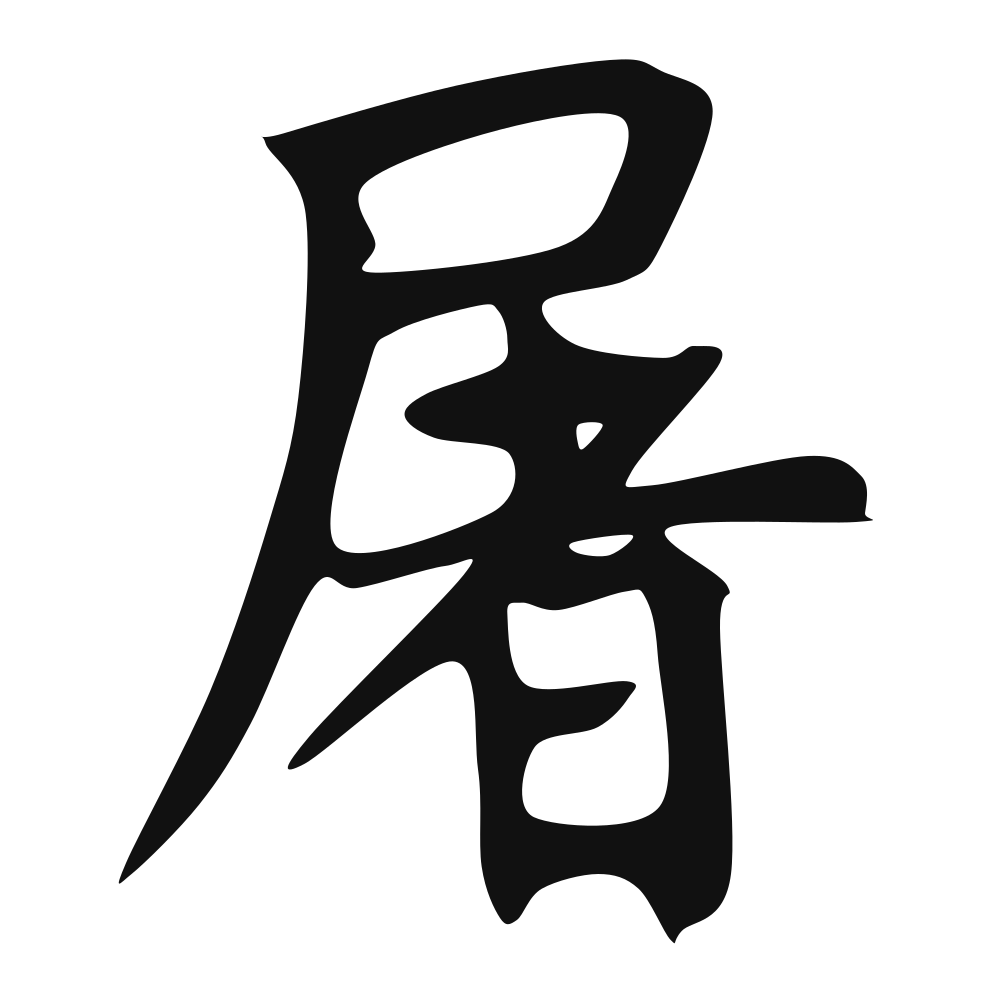
屠
surname Tu; to slaughter (animals for food); to massacre
Closest English meanings
to slaughter·to massacre·butcher
The Calligrapher — Wáng Ānshí 王安石
Song statesman and reformer famed for his vigorous running script.
Song calligrapher (), master of running script — known for 《楞严经旨要》. Song dynasty
Cultural Story
屠 shows a 者 and 尸, meaning to slaughter or massacre; the Shuowen gives to butcher. A 屠夫 (butcher) worked the market, and 屠刀 (butcher's knife) was both tool and symbol of violence. History recoiled at a 屠杀 (massacre), and to lay down the 屠刀 was to repent of one's killing.
Common words & phrases
- 屠杀 massacre · slaughter
- 屠夫 butcher · slaughterer
- 屠宰 to slaughter · butchery
- 屠刀 butcher's knife · cleaver
Read the story behind the character
The 屠夫 (butcher, slaughterer) at the market hones his 屠刀 (cleaver), and farms 屠宰 (slaughter) livestock for meat. News of a historic 屠杀 (massacre) shocks a class, and put down the 屠刀 urges mercy. The character stays visceral — the blade, the blood, the weight of taking life — never a light word.
Why this character belongs on skin
The butcher's hand moves without flinching, and Zhuangzi's cook tells the lord he has found the Dao in the spine of an ox — his blade never dulls because it travels the empty spaces between the bones. To slaughter is the hard honesty of ending, the necessary death that feeds the living. We avert our eyes from the kill and then wonder why we fear our own mortality. The warrior, the surgeon, the one who ends a love that is already dead — all practice this same severance. To carry this word is to own your capacity for the clean cut, the mercy of not prolonging what must finish. Let it be inked where your strength lives: I can end what needs ending. Not cruelty, but the discipline of the blade that knows exactly where the joint opens, and spares everything that is not already gone.
Own this character
Purchase delivers the original SVG of this glyph, brushed by Wáng Ānshí 王安石, ready to place on skin, paper, or screen.