
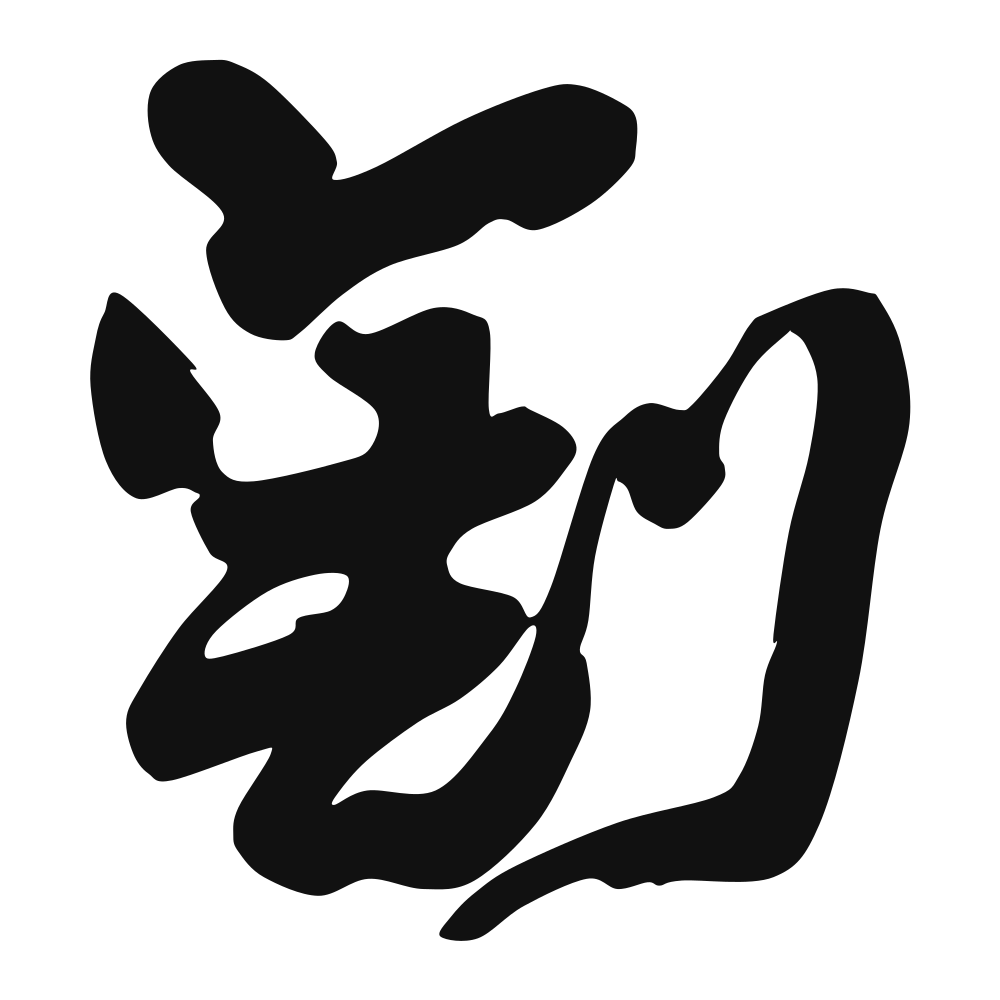
The Calligrapher — Wáng Duó 王铎
Late-Ming cursive master of monumental, turbulent brushwork.
明末清初 calligrapher (1592–1652), master of cursive script/running script — late-Ming master of wet-ink, falling-and-rising running cursive. late Ming–early Qing
Cultural Story
(Guan Ning, finding his friend Hua Xin eager for rank, 割席 and sat apart, ending the friendship on the mat; the 世说新语 keeps the cut as a lesson in choice. The character 割 is the knife that severs a bond, not only a field. It names the parting done on purpose.
Common words & phrases
- 割草 mow grass
- 切割 cut · slice
- 割让 cede
- 收割 harvest · reap
- 割除 cut off · remove
Read the story behind the character
The tractor 割草 along the verge. The combine 收割 the wheat by noon. The treaty 割让 the port in the old year. The surgeon 割除 the growth. The word names the reap, the cede, and the cut that takes a part away. The tractor 割草 along the verge, the combine 收割 the wheat by noon, and the surgeon 割除 the growth.
Why this character belongs on skin
The character is blunt about its anatomy: a blade (刀) set into 害 — harm, injury — 割 is cutting as damage, then cutting as release. Farmers 割 the wheat at exactly the right hour and call it harvest; surgeons 割 the tumor and call it mercy; the old monks 割断 — severed — their attachments and called it freedom. Everything depends on the hand that holds the knife. There is something bracingly honest in claiming this character: it admits what love and loss and growing up actually involve, that some things must be cut and the skill of a life is knowing when. Wear 割 as the harvester's mark. The blade, pointed outward at the right moment, is a tool. Yours.
Own this character
Purchase delivers the original SVG of this glyph, brushed by Wáng Duó 王铎, ready to place on skin, paper, or screen.