
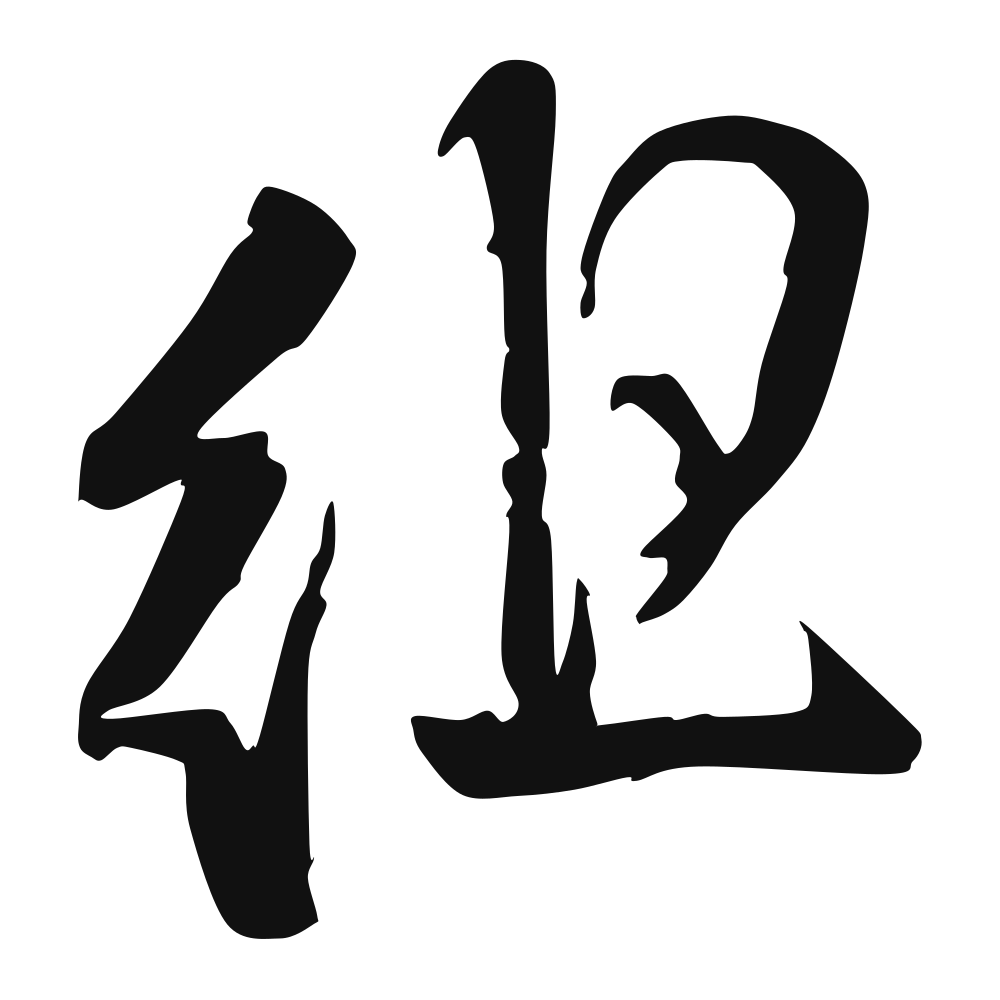
The Calligrapher — Wáng Duó 王铎
Late-Ming cursive master of monumental, turbulent brushwork.
明末清初 calligrapher (1592–1652), master of cursive script/running script — late-Ming master of wet-ink, falling-and-rising running cursive. late Ming–early Qing
Cultural Story
徂 is to set out and, by a shade, to pass away. 詩經 sings 我徂東山, I went east to the war, and the histories use 徂落 for a ruler who died — the journey and the ending sharing one word, as if death were only the longest march.
Common words & phrases
- 徂往 go to
- 徂岁 past years
- 徂落 die · pass away
Read the story behind the character
徂 has gone quiet; you meet it in 詩經 recitation and the odd epitaph, 徂岁 for years gone, 徂往 for a departure no one expects back. The war is a poem now and the death a carved line. A classical word for leaving, kept mostly by those who still read the leaving aloud.
Why this character belongs on skin
徂 is movement with grief in it — the walking radical carrying 且, and the old poems use it for going that is also passing away: 日月其徂, the Book of Songs sighs, the sun and moon are slipping past us. Time itself is the traveler this character describes. It appears in elegies and marching songs alike, because going-to and going-from are the same word when you are mortal. The Romans had tempus fugit carved into sundials; the Chinese had 徂 pressed into poems for three thousand years. There is no remedy offered, only the honest verb. But feel what honesty does to a day once you accept it: the coffee is 徂 even as you drink it, the hand you are holding is 徂 even as it holds yours — and suddenly, impossibly, you are present. That is the character's whole gift. Not morbid, but clarifying, the way a funeral clarifies. Ink 徂 small, somewhere you pass daily in the mirror, and let it finish its sentence: it passes, so look. It goes, so go with your eyes open.
Own this character
Purchase delivers the original SVG of this glyph, brushed by Wáng Duó 王铎, ready to place on skin, paper, or screen.