
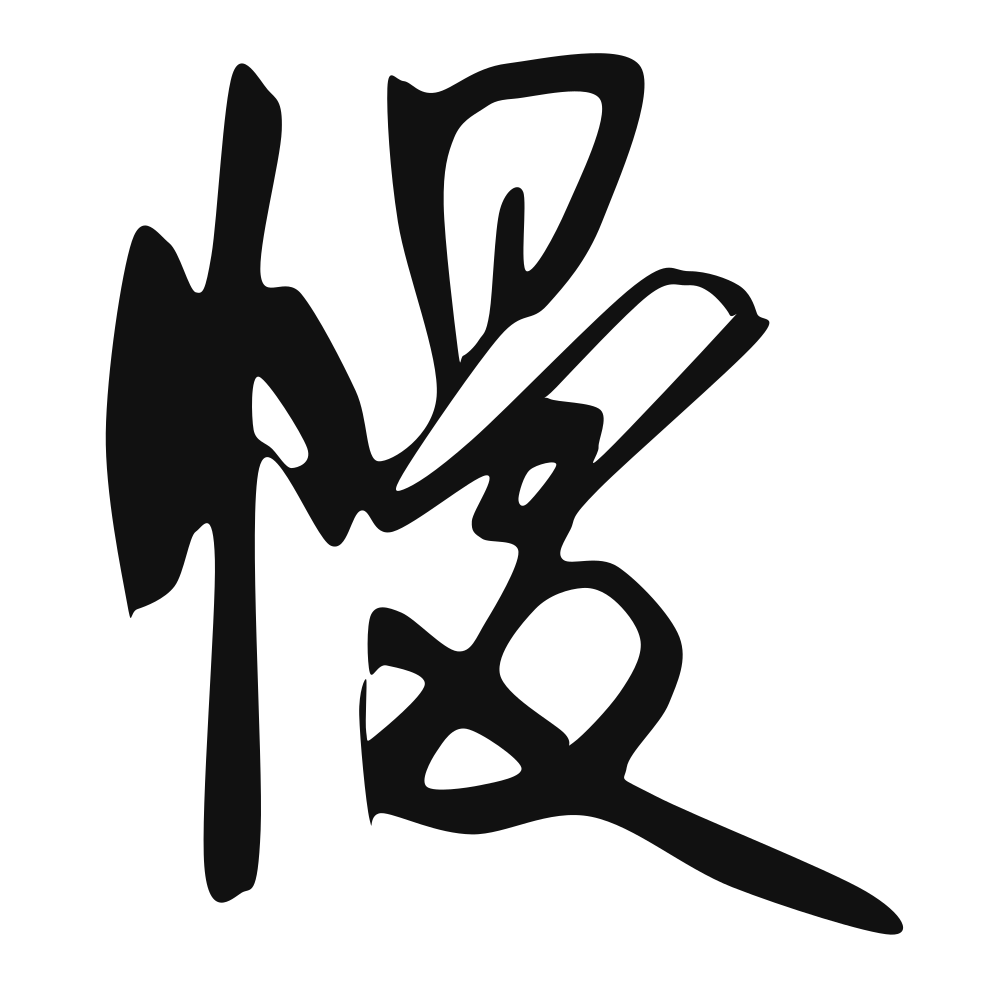
The Calligrapher — Wáng Duó 王铎
Late-Ming cursive master of monumental, turbulent brushwork.
明末清初 calligrapher (1592–1652), master of cursive script/running script — late-Ming master of wet-ink, falling-and-rising running cursive. late Ming–early Qing
Cultural Story
慢 had two old bodies: the slow and the proud. The 論語 warns that 慢 is how a man insults his guests by neglecting them, and the histories damn the 傲慢 general. The heart with 曼, long, is a pace or a posture drawn out. It is the slight delivered by taking your time.
Common words & phrases
- 慢慢 slowly · leisurely
- 慢车 slow train · local train
- 傲慢 arrogant · haughty
- 缓慢 slow · sluggish
- 怠慢 to neglect · to slight
Read the story behind the character
慢 is the pace and the slight: 慢慢 the instruction to breathe, 慢车 the local that stops everywhere, 傲慢 the rich man's stare. 怠慢 is the host's failure you feel as insult. It names both the unhurried and the disrespectful, often in the same evening.
Why this character belongs on skin
The radish grows slowly. The oak grows more slowly still, and outlives every fast thing in the forest. 慢 carries the radical for the heart beside the word for unhurried, and that pairing is the whole teaching: slowness is not laziness but a feeling of the heart, a way of loving what passes through you. The monks who swept the temple path swept it slowly because the sweeping was the point. You have been sprinting through a life meant to be walked. Imagine the ink arriving one stroke at a time, unhurried as dusk, refusing to apologize for taking its time. Slow is not falling behind. Slow is finally arriving. Wear 慢 and let it argue with every clock you obey.
Own this character
Purchase delivers the original SVG of this glyph, brushed by Wáng Duó 王铎, ready to place on skin, paper, or screen.