
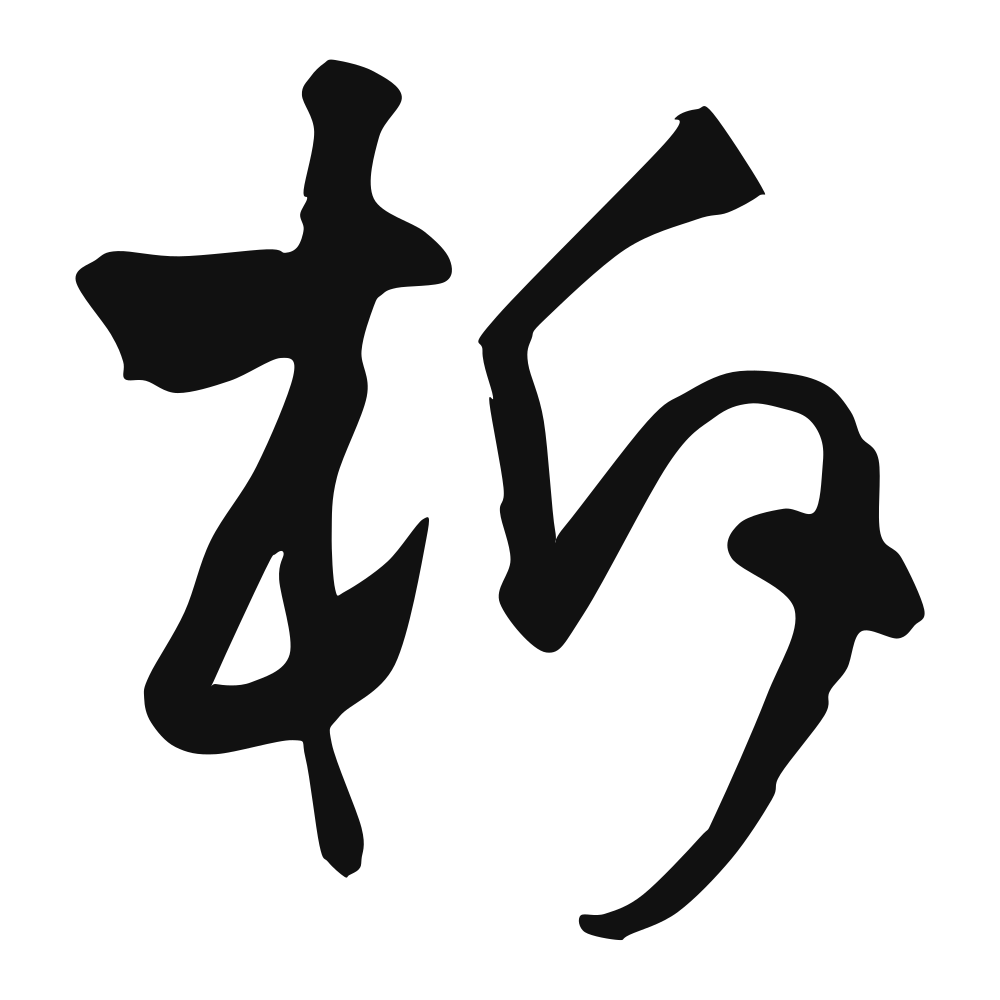
柝
watchman's rattle
Closest English meanings
watchman's clapper·wooden rattle
The Calligrapher — Wáng Duó 王铎
Late-Ming cursive master of monumental, turbulent brushwork.
明末清初 calligrapher (1592–1652), master of cursive script/running script — late-Ming master of wet-ink, falling-and-rising running cursive. late Ming–early Qing
Cultural Story
柝 is the watchman's clapper, the wooden rattle banged through the night to mark the watches and warn of thieves — the 易經 mentions it, and the 木蘭詩 has the sentry 击柝 while the captain drums. Two sounds, a city's sleep kept by wood on wood. The character is the night's own clock, struck on a post.
Common words & phrases
- 击柝 beat the watchman's clapper
- 柝声 clapper sound
Read the story behind the character
柝 is a near-dead word: 击柝 and 柝声 survive only in period drama and the 木蘭詩 quotation. You will not hear it on a street — the night watch is now a sensor and a CCTV blink. The character is a sound fossil, the wooden knock that once told a town the hour was safe.
Why this character belongs on skin
There is a sound you only hear when everything else is silent: wood striking wood, two beats in the deep cold, the night watchman walking the walls of an ancient garrison. The character 柝 is that instrument—a split of wood hollowed and clapped to keep the hours, so soldiers knew when to sleep and when to trust the dark. In the old military texts it meant alarm as much as order: strike the 柝 and the camp stirs, a thousand men waking at once to one small wooden voice. There is something erotic in that, if you are honest—the idea of a body marked by sound, called and answered through darkness. Du Fu heard it on frontier nights. Whoever wore it carried vigilance as a second skin, the willingness to stay awake while others dreamed. This ink is for the one who keeps their own hours, who strikes the wood and means it.
Own this character
Purchase delivers the original SVG of this glyph, brushed by Wáng Duó 王铎, ready to place on skin, paper, or screen.