
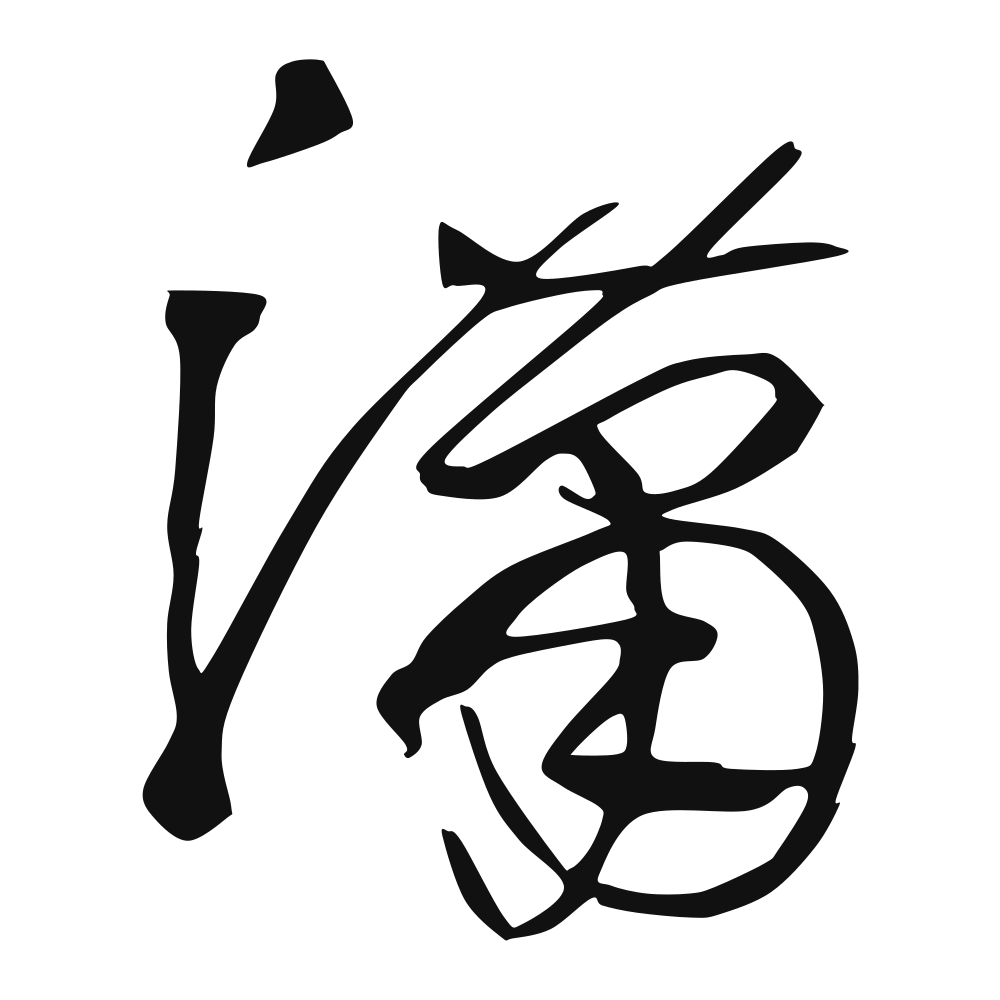
潇
(of water) deep and clear
Closest English meanings
free·easy·clear water·graceful
The Calligrapher — Wáng Duó 王铎
Late-Ming cursive master of monumental, turbulent brushwork.
明末清初 calligrapher (1592–1652), master of cursive script/running script — late-Ming master of wet-ink, falling-and-rising running cursive. late Ming–early Qing
Cultural Story
潇 is a literary water character, the name of the 潇水 that joins the Xiang in Hunan to form the famed 潇湘 (Xiao-Xiang), a river pair soaked in poetry and painting. The Chu Ci and later scroll titles evoke 潇湘 as the archetype of misted, melancholy southern water. From this grace came 潇洒 (free and easy, unconstrained, natural), the ease of one who flows like that clear stream. Rain 潇潇 (patterning, rustling) on the river reeds became the sound of gentle, lingering sorrow in a thousand poems.
Common words & phrases
- 潇洒 free and easy · unconstrained · natural
- 潇湘 Xiao-Xiang · river name
- 潇潇 pattering · rustling
Read the story behind the character
潇 gives modern Chinese its word for effortless cool. Someone who quits a stressful job to travel is called 潇洒 (free and easy, unconstrained, natural), enviable and unbothered. A calligrapher's brush moves 潇洒 across the page. The old 潇湘 (Xiao-Xiang) rivers still draw painters, and weather apps borrow 潇潇 (patterning, rustling) for a soft, persistent rain. From lifestyle brags to rainy-day moods, 潇 is the character for moving through life with grace and not a wasted ounce of tension.
Why this character belongs on skin
Water radical under a sound: 潇 was the name of a river in Hunan—the Xiao, sister to the Xiang, where poets were exiled and wrote their best lines—and from those rainswept banks the word came to mean a certain way of moving through the world. 潇洒: carefree, debonair, effortless—a knight with rain in his hair who loses gracefully and leaves without a scene. 潇潇 is the sound of wind and rain together, the weather of the wandering poet. This is charm with a spine beneath it: not the fop's polish but the swordsman's lightness, the man who has already accepted loss and therefore walks loose. Jianghu fiction is built on such figures—dust on their sleeves, no fixed address, hearts they refuse to embalm. There is deep freedom in it, the Daoist kind: riding the wind, unattached, courteous to everyone and owned by no one. You have a version of that person; you meet them in good weather and after good wine. Ink this character as a standing invitation—walk lighter, want less, let the rain fall where it likes. The river Xiao never hurried and is still famous.
Own this character
Purchase delivers the original SVG of this glyph, brushed by Wáng Duó 王铎, ready to place on skin, paper, or screen.