
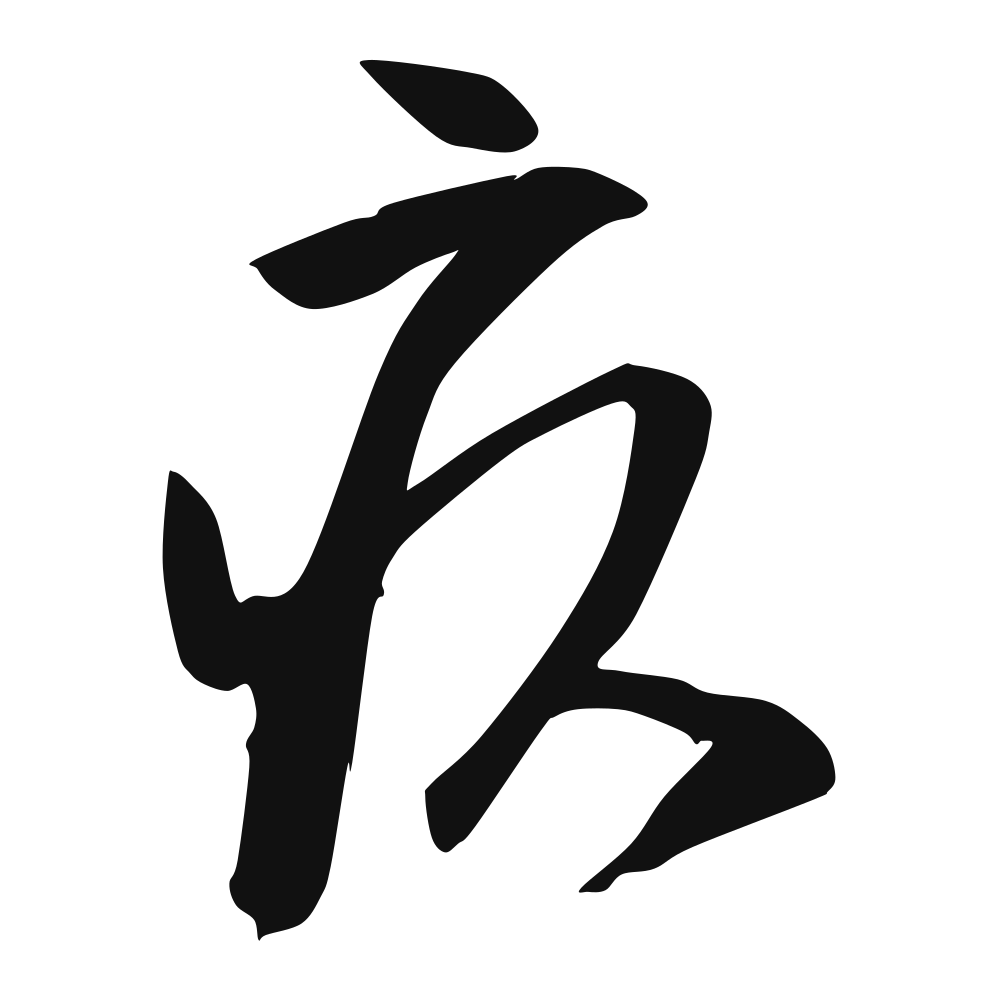
疚
chronic disease; guilt; remorse
Closest English meanings
guilt·remorse·regret
The Calligrapher — Wáng Duó 王铎
Late-Ming cursive master of monumental, turbulent brushwork.
明末清初 calligrapher (1592–1652), master of cursive script/running script — late-Ming master of wet-ink, falling-and-rising running cursive. late Ming–early Qing
Cultural Story
疚 is an ache with no wound: 久, "long-lasting," lodged inside the sickness radical. The Shijing confesses 忧心孔疚 — my anxious heart is deeply pained. Mencius turned it into a moral compass: to feel 疚 before heaven and men is proof that a conscience still lives and breathes.
Common words & phrases
- 內疚 guilt · remorse
- 愧疚 remorse · guilty conscience
- 負疚 to feel guilty · to bear a guilty conscience
Read the story behind the character
Guilt has gone digital: a missed call from mom triggers 内疚 (guilt, remorse); a friend's wedding forgotten leaves 愧疚 (a guilty conscience) for weeks. Memes joke about 负疚 (bearing guilt) after one more midnight snack, then prescribe bubble tea and a long apology text as absolution.
Why this character belongs on skin
The thing you did, or failed to do, wakes you at the hour when the house is silent. 疚 is remorse—the sick ache of the heart that knows it wronged another, the guilt that lives in the chest like a stone that will not be swallowed. The character joins illness with a word for long-dwelling; it meant the lingering sickness of an unsettled debt to someone's trust. The Buddhists name 疚 as the fire that can either consume or be fed into amendment. To wear 疚 is not to wallow but to stay honest—to carry the memory of having hurt, and let it teach the hand to be gentler. It is the scar that reminds you where the blade went in, so you never swing it again. Let it mark your breast, over the heart that owed and paid. Some erase their faults; this mark keeps the account open. Wear the remorse and you carry the proof that you were capable of both the wound and the change.
Own this character
Purchase delivers the original SVG of this glyph, brushed by Wáng Duó 王铎, ready to place on skin, paper, or screen.