
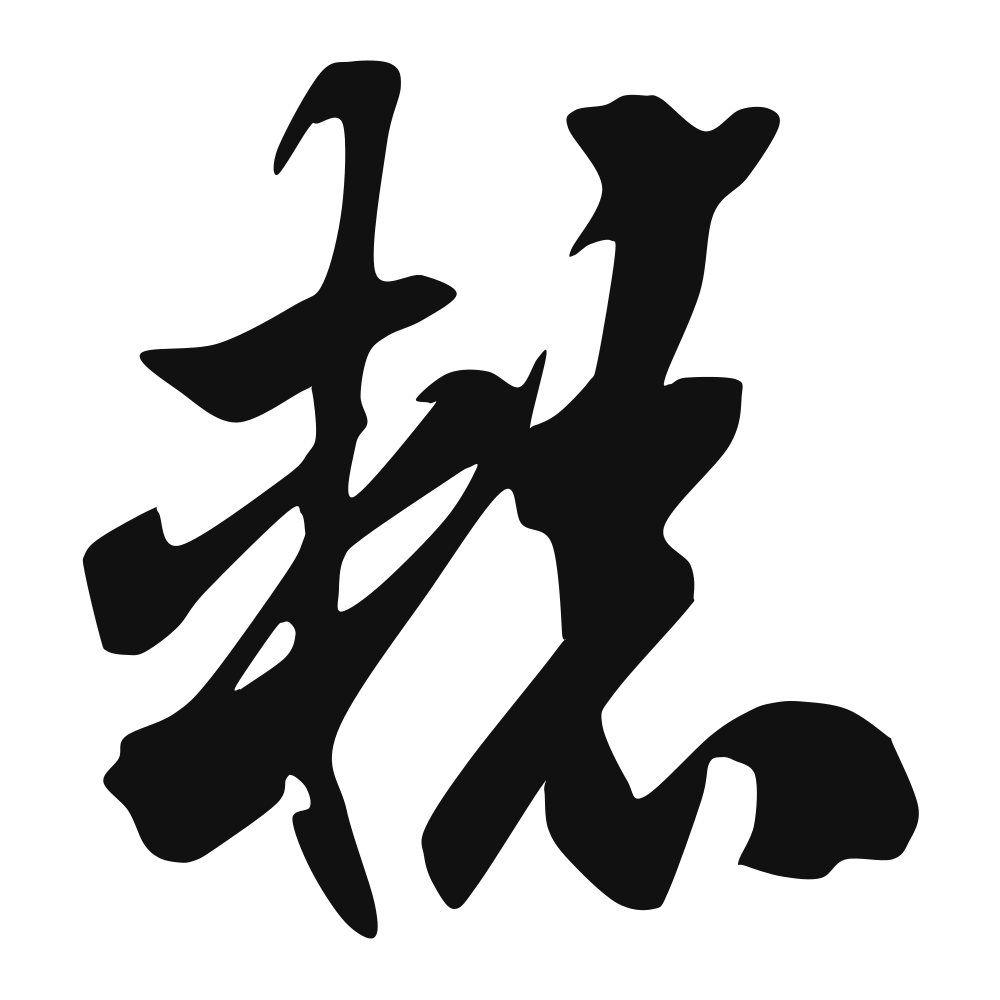
辕
shaft of a cart or carriage; (bound form) entrance gate of a military camp or yamen; (fig.) government office
Closest English meanings
shaft·yamen gate·carriage pole·crossbar
The Calligrapher — Wáng Huīzhī 王徽之
Jin calligrapher of cursive script, Wang Xizhi's son famed for the New-Moon Letter (Xinyue tie).
Jin calligrapher (), master of cursive script — known for 王羲之之子. Jin dynasty
Cultural Story
In the Zhan Guo Ce a traveler insists on driving south while his carriage shafts point north — 南辕北辙, 'north shafts, south cart' — and is told he will only go further wrong. The character 辕 is the shaft the horses pull, the bar that decides a cart's direction. 辕门 was the commander's camp gate; 行辕 his field headquarters, power pitched where the army pointed for the season.
Common words & phrases
- 车辕 shaft of a cart · carriage pole
- 辕门 gate of commander's camp · yamen gate
- 南辕北辙 act contrary to one's goal · opposite direction
- 驾辕 pull a cart · be in the shafts
- 行辕 field headquarters · temporary yamen
Read the story behind the character
A manager's plan is called 南辕北辙 by his own team, effort aimed straight away from the goal, just as the fable warned. The old 辕门 survives in place names and in the 行辕 of a traveling official in period dramas. The shaft that steered a war cart now steers only metaphors about mistaken direction, the wooden bar become a way of saying someone is pulling hard the wrong way.
Why this character belongs on skin
Two long poles of seasoned wood, running from the yoke back to the carriage — the shafts through which a horse's pull becomes a journey. 辕 is that honest junction: animal to axle, power to direction, and from it came the idiom 南辕北辙, the man whose horse ran gloriously south while he urgently needed to go north. Speed is worthless without alignment; effort without direction is just expensive scenery. The warrior texts praised good shafts because armies travel on them, and the metaphors stack naturally — we are all hitched to something, a career, a person, a hunger, and the whole question of a life is whether the pull and the path agree. Confucius asked it plainly: whither do you go, and is your ox pointed there? Ink 辕 on the forearm, along the line of tendon where grip lives. Let it be a compass disguised as a word: every morning, check the harness. Make sure the horse you are feeding is actually pulling you toward the country you meant to reach.
Own this character
Purchase delivers the original SVG of this glyph, brushed by Wáng Huīzhī 王徽之, ready to place on skin, paper, or screen.