
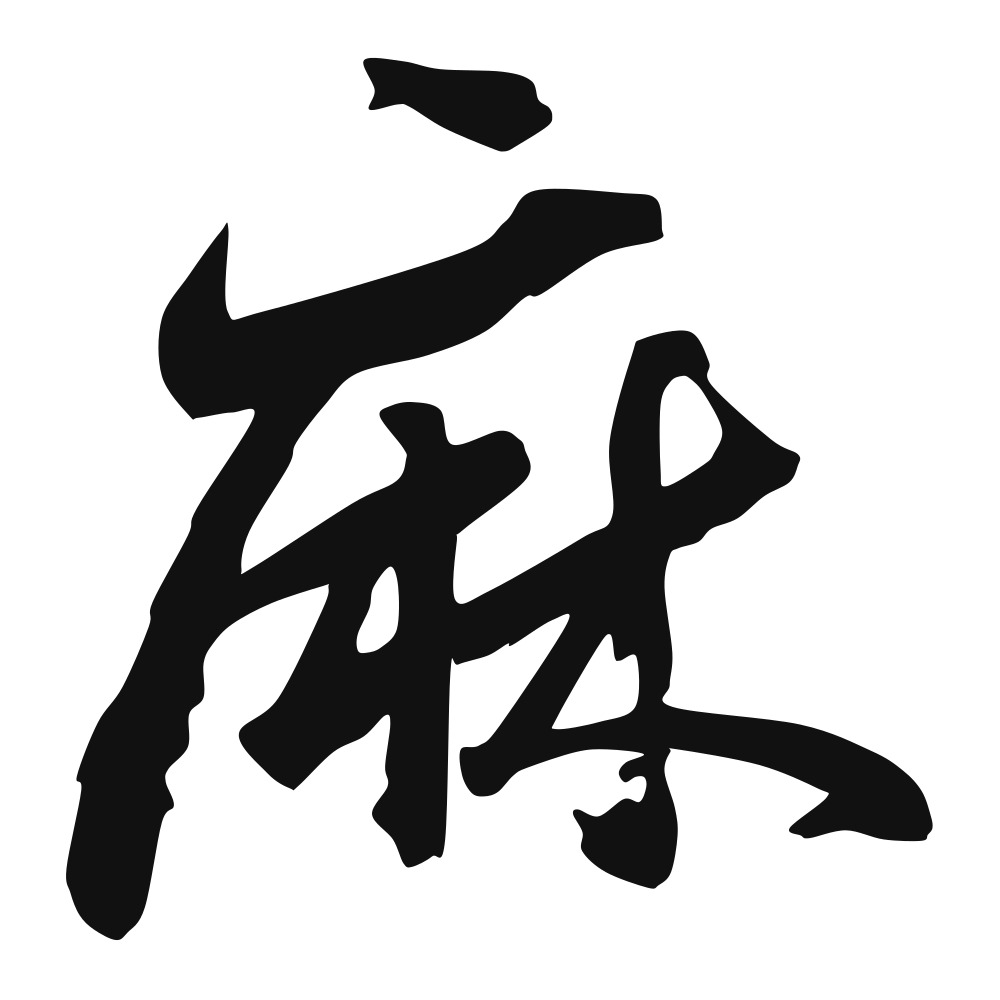
麻
hemp (variant of 麻[ma2]); surname Ma; generic name for hemp, flax etc; hemp or flax fiber for textile materials; sesame; (of materials) rough or coarse; pocked; pitted; to have pins and needles or tingling; to feel numb
Closest English meanings
numb·hemp·sesame
The Calligrapher — Wáng Huīzhī 王徽之
Jin calligrapher of cursive script, Wang Xizhi's son famed for the New-Moon Letter (Xinyue tie).
Jin calligrapher (), master of cursive script — known for 王羲之之子. Jin dynasty
Cultural Story
《説文解字》explains 麻 as “人所治,在屋下” (plants processed by people under the roof), a compound of two fiber stalks under a roof, the hemp plant. Grown for strong bast fiber and oily seed, hemp clothed and lit the ancients. Its tingling numbness gave the character its “numb” sense.
Common words & phrases
- 麻烦 trouble · bother
- 麻木 numb
- 麻将 mahjong
- 麻药 anesthetic
- 麻花 fried dough twist
Read the story behind the character
We call a hassle 麻烦 (trouble, bother), feel 麻木 (numb) in cold limbs, and play 麻将 (mahjong) for hours. Doctors use 麻药 (anesthetic) before surgery, and vendors fry 麻花 (fried dough twist) at festivals. From fiber to numbness to fun, 麻 threads through daily Chinese life.
Why this character belongs on skin
Numbness is the body's honest letter. 麻 is the hemp plant, tough fiber spun into cloth and rope, and also the prickling loss of feeling when you have sat too long on a feeling or a leg. The ancients beat hemp for a living and knew the roughness was strength. To ink 麻 is to mark the times you went numb to survive—the hospital wait, the war, the grief that taught your nerves to switch off—and to honor the roughness as armor, not failure. The Buddhists speak of equanimity that can look like distance. Let this character lie along your arm or your shin as a quiet record of what you endured without flinching, and a promise that the feeling will return. The tingling is the proof you lived through it.
Own this character
Purchase delivers the original SVG of this glyph, brushed by Wáng Huīzhī 王徽之, ready to place on skin, paper, or screen.